A New Dawn for Stadia: My Journey Through Google's Gaming Renaissance
Google Stadia's journey is masterfully chronicled through its pivotal 2026 Connect stream, unveiling a revolutionary gaming ecosystem. The platform boldly expanded with blockbuster titles like PUBG and Star Wars Jedi: Fallen Order, while pioneering exclusive, creative experiences such as Crayta, redefining cloud-based play.
As I sit here in 2026, my controller resting on my lap, I find myself reflecting on the journey of Google Stadia—a journey that began not with a roar, but with a quiet, persistent hum of potential. I remember the day vividly when the new Stadia Connect stream painted the horizon with promises. It wasn't just an announcement; it was an invitation to a world where the boundaries between player and creator, between solitary adventure and shared chaos, began to blur and dissolve like morning mist. That day, the library of this streaming sky opened its gates wider, and I stepped through.
🌅 The First Light: Battlegrounds and Galactic Legends
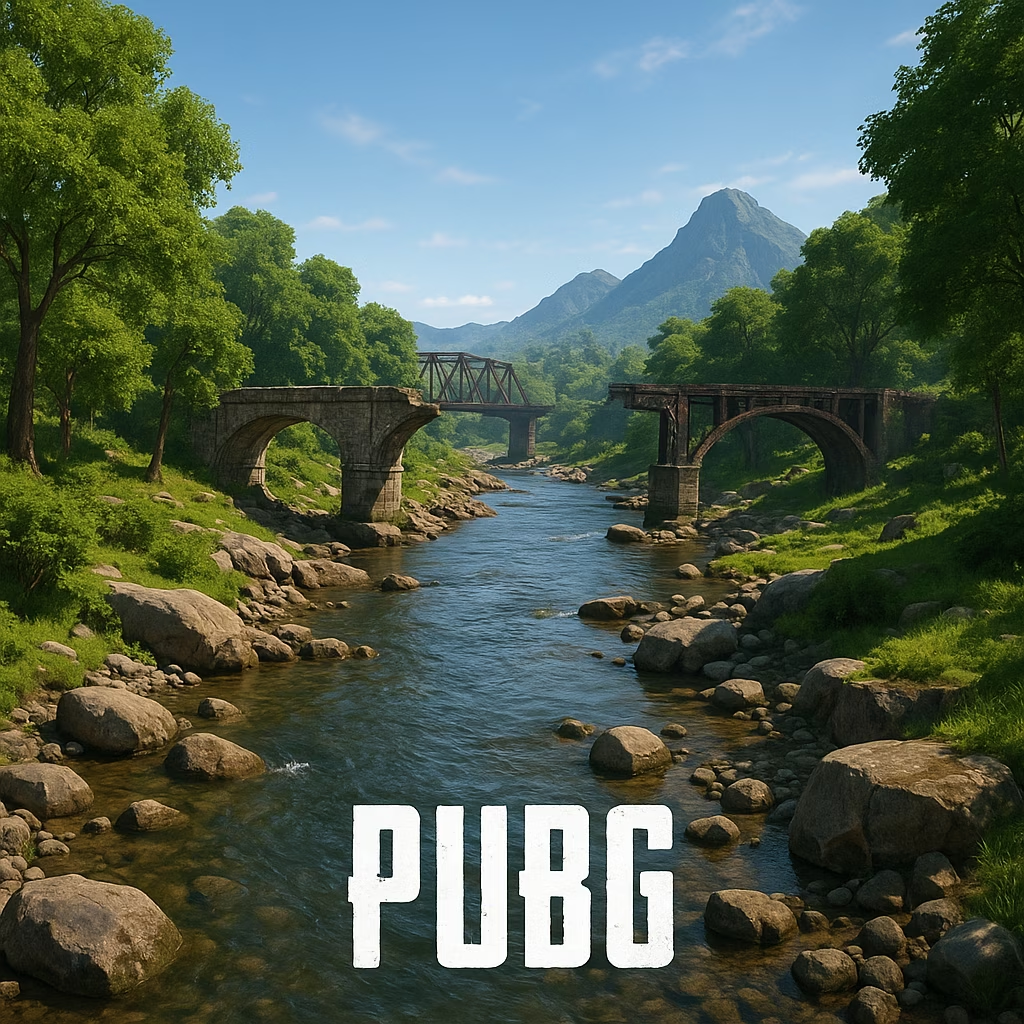
The first ray of light to break through was the arrival of PlayerUnknown's Battlegrounds. It landed not as a distant promise, but as an immediate reality, available right after the digital curtain fell on the Connect stream. I recall the choice laid before us: the $29.99 base version, a straightforward key to the battlegrounds, or the $39.99 Pioneer Edition—a treasure chest holding the base game, the Survivor Pass: Cold Front, and an exclusive skin set that felt like a badge of honor for early travelers on this cloud-based path. For us Pro members, it was a gift, the Pioneer Edition arriving in our digital libraries without a price tag, a gesture that felt like a warm welcome. This wasn't just adding a game; it was integrating a pillar of the battle royale pantheon into this new ecosystem.
Then came the whisper from a galaxy far, far away. Google, in a move that sent ripples of excitement through the community, announced a trio of titans from EA would soon grace Stadia's servers. The crown jewel was Star Wars Jedi: Fallen Order, its arrival slated for that very fall. I could almost hear the hum of a lightsaber and feel the weight of a Padawan's journey waiting in the wings. Alongside it, the familiar, annual rhythms of sports were promised for the winter—the strategic clashes of Madden and the global pitch battles of FIFA. These weren't just ports; they were statements that Stadia was ready to host the full spectrum of our digital lives, from isolated survival islands to epic galactic sagas and weekend stadium triumphs.
🎨 The Canvas of Creation: Stadia's Exclusive Tapestry
But the true poetry of that Connect, for me, lay in the original brushstrokes—the games born for this platform, painting experiences you couldn't find elsewhere. They spoke to a future where Stadia was not just a conduit, but a cradle for innovation.
-
Crayta: Promised as first on Stadia and free for Pro members that summer, it was described as an all-ages universe of creation. It wasn't merely a game; it was a toolbox, a sandbox, a shared dream where we could build multiplayer worlds and offer them to the community. The potential felt infinite.
-
Get Packed: Slated for April 28, this was cooperative chaos distilled into pure fun. For 1-4 players, the task was to help the town of Ditchlington move—a premise that evoked the frantic joy of Overcooked, but with furniture instead of food. It promised laughter and friendly panic.
-
Wave Break: This one caught my eye with its aesthetic—a vibrant, 1980s Miami Vice-inspired arcade skateboarding game. It wasn't about realism; it was about style, neon, and the pure, unadulterated joy of pulling off tricks in a sun-drenched, retro-futuristic world.
-
Embr: Starting its early access journey on May 21, first on Stadia and PC, this was a fiery proposition. A game about firefighting that utilized Stadia's unique Stream Connect feature, it asked us to join an elite squad, save lives, and battle infernos together. It turned heroism into a coordinated, digital effort.
These titles formed a constellation of exclusive experiences, each a different color on Stadia's evolving palette.
⚔️ The Gathering Horde and Timeless Journeys
The announcements rolled on, bringing beloved experiences into the fold, making the cloud feel more like home. On May 1, Zombie Army 4: Dead War would be free for Pro members. Rebellion's acclaimed cooperative shooter, where we team up to fight waves of undead Nazi soldiers, was a perfect fit for Stadia's promise of seamless, jump-in-together play. The promise of the "Blood Count" add-on coming soon only added to the anticipation.
Then, a different kind of magic arrived on April 28: Octopath Traveler. This throwback, turn-based JRPG from Square Enix and Acquire was a masterpiece of pixel art and intertwined narratives. Bringing its HD-2D beauty and deep, strategic combat to Stadia felt like preserving a cherished storybook in a new, ever-accessible format. It was a testament that this platform could hold both the frenetic future and the resonant echoes of gaming's past.
Completing this wave was the madcap strategy of Rock of Ages 3, rolling in come June. The absurd tower defense premise—barreling through enemy defenses as a giant, destructive boulder—promised pure, unscripted fun, a reminder that games could be both clever and silly.
🏔️ The Foundation Becomes a Frontier
All these revelations were cast in a new, transformative light by Google's pivotal decision around that time: making the base version of Stadia free for anyone with a Google account. This wasn't just a price drop; it was a paradigm shift. The barrier to entry evaporated. The gateway to this growing library, to experiences like the ones just announced, was now open to all. The controller and the Chromecast Ultra were no longer tolls on the bridge; the bridge itself was now public domain. This move reshaped the entire narrative from a closed beta into an open frontier.
Looking back from 2026, that Stadia Connect was a turning point. It was the moment the service stopped just talking about potential and started densely populating its universe. It blended the immediate thrill of PUBG, the blockbuster allure of Star Wars, the creative fire of exclusives like Crayta and Embr, and the curated quality of titles like Octopath Traveler. And all of it was suddenly accessible on a foundation that asked for nothing but a Google account to begin the journey.
As I launch into a game today, whether it's building a new world in Crayta, surviving the battlegrounds, or losing myself in a JRPG epic, I feel the echoes of that Connect. It was the dawn I witnessed, the moment the cloud stopped being a vague promise and became my playground, my canvas, and my portal. The games announced were the seeds; what we have today in 2026 is the forest. And I am still wandering through it, forever grateful for that first, wide-eyed glimpse of the horizon.