Battle Royale Esports: Shroud's Critique on Luck vs. Skill in Competitive Gaming
Battle royale esports face criticism for luck-driven gameplay and mid-game lulls, challenging their potential as skill-based competitions.
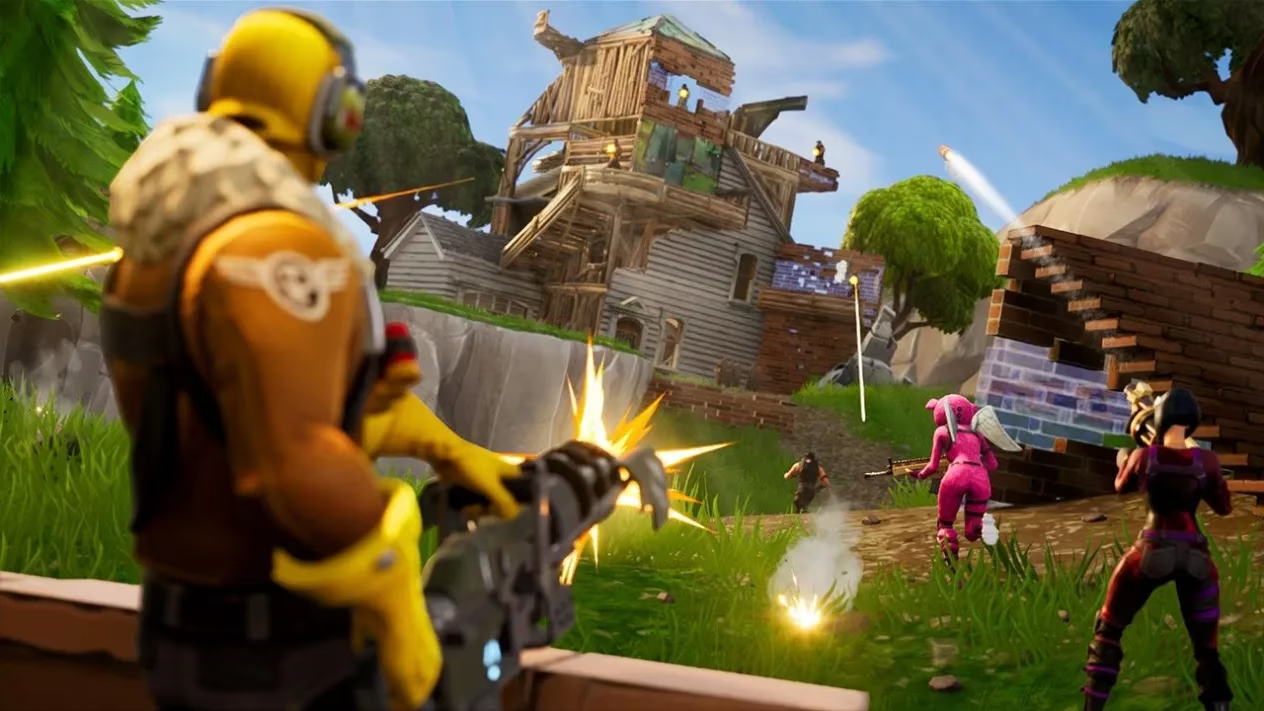
The battle royale genre has been a dominant force in gaming for years, with titles like Fortnite, Apex Legends, and PUBG consistently topping Twitch viewership charts and attracting millions of players across all platforms. Despite its massive popularity, the genre's suitability for high-level competitive esports remains a hotly debated topic. Professional players and streamers have voiced significant concerns, arguing that fundamental design elements, particularly the heavy reliance on luck, hinder its potential as a truly skill-based competitive spectacle.
The Core Criticism: A Luck-Driven Mid-Game Lull
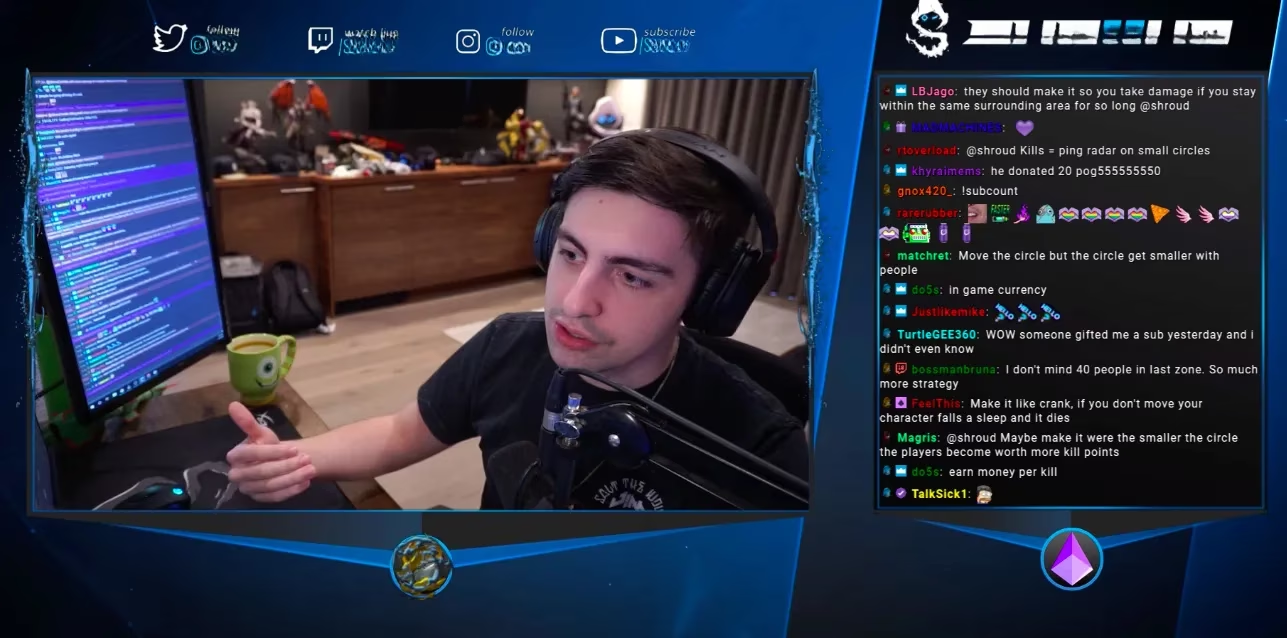
During a recent live stream, renowned professional player and streamer Michael "shroud" Grzesiek delved deep into this issue with his audience. While acknowledging the success of major tournaments like the Fortnite World Cup, shroud pointed out a critical structural flaw. He argued that the mid-game phase in most battle royales becomes painfully slow and uninteresting. 🎮
"What makes the game less interesting is the mid-game, because the mid-game everyone is hiding. Then the late game is a clusterf**k because everyone's been hiding the mid-game."
His analysis breaks down a typical match into three problematic stages:
-
Early Game (Luck-Based): The initial drop and loot scramble are inherently random. Players acknowledge this as a genre staple.
-
Mid-Game (The Hiding Simulator): Once players secure basic gear, many adopt ultra-passive, camp-heavy strategies to survive, leading to extended periods of inactivity.
-
Late Game (Chaotic Climax): The shrinking playzone forces all these hidden survivors into a small area simultaneously, creating a frenzied, often random, final showdown.
The Result: Skill Gets Buried in the Chaos
Shroud's main contention is that this structure ultimately diminishes the role of consistent skill. He emphasized that when 30-40 players are still alive in the final circles, victory often depends less on tactical mastery or pinpoint aim and more on sheer, unpredictable luck.
"There needs to be something there... so that there isn't 40 people at the very end. Because then it's not a matter of skill, it's who the f**k gets the luckiest to win the game and it shouldn't be that," he stated. "To determine a win for the whole match with luck? No, no."
A Widespread Sentiment Among Pros
Shroud's critique is far from an isolated opinion. It echoes the frustrations of many professional gamers who compete in battle royale esports. Common complaints include:
-
RNG (Random Number Generation) governing loot quality and zone placement.
-
The third-party problem, where teams get ambushed while fighting, often with little counterplay.
-
A perceived misalignment between what makes a game fun for casual players and what makes it fair for competitive pros.
The Developer's Dilemma: Catering to the Masses
Despite these critiques from the skilled elite, major developers like Epic Games (Fortnite) and Respawn (Apex Legends) face a difficult balancing act. Their primary focus often leans towards maintaining engagement for the vast casual player base, which dwarfs the professional scene. Features or changes that might make the game more "competitive" could alienate the majority who play for fun and spectacle. Therefore, while pro feedback is heard, it doesn't always drive fundamental design shifts. Don't expect shroud to be hired as a game balance consultant anytime soon! 😅
The Path Forward: Can BR Evolve for Esports?
So, is battle royale doomed to remain a casual-friendly genre with a messy competitive scene? Not necessarily. The genre is still evolving. Some potential solutions and trends being explored include:
| Proposed Solution | How It Addresses the Problem | Example/Potential |
|---|---|---|
| Dynamic Mid-Game Objectives | Forces player movement & interaction, reducing camping. | Apex Legends' moving Ring Consoles or Warzone's Contracts. |
| Ranked Mode Adjustments | Tailors circle speed, loot pools, and scoring to incentivize aggression. | Separate competitive rule sets with higher stakes for eliminations. |
| Improved Spectator Tools | Makes chaotic end-games easier to follow for viewers. | Better overhead maps, predictive tracking, and squad highlighting. |
While the classic, luck-influenced battle royale formula is here to stay for public matches, the future of its esports incarnation may require bold tweaks. The core tension between accessible, chaotic fun and pure, measurable skill remains the genre's greatest challenge. As viewership for events like the Fortnite Champion Series in 2026 continues to show, the audience is there—but the question persists: will developers find a way to satisfy both the casual droves and the competitive purists like shroud? Only time, and perhaps a little less RNG, will tell. 🤔