Battle Royale Games in Esports: The Luck Factor & Why They Can't Sustain
Battle royale esports in 2026 face challenges with competitive integrity and viewer engagement, as luck often overshadows pure skill.
As a long-time esports fan and occasional player, I've been thinking a lot about the current state of competitive gaming in 2026, especially regarding the battle royale genre. It's wild to look back on the late 2010s and early 2020s when games like Fortnite and Playerunknown's Battlegrounds exploded in popularity and seemed poised to dominate the esports scene. Massive tournaments with multi-million dollar prize pools! Everyone was forming teams! But fast forward to now, and the landscape looks very different. Let's dive into why the initial hype for battle royale esports didn't translate into long-term stability.
The Core Issue: Victory Isn't Just About Skill
Let's be real. While there are incredibly skilled players in these games, the final outcome often feels like a lottery. 🎲 Think about it:
-
Loot RNG: You can land in the perfect spot, but if the game doesn't spawn a decent weapon or shield near you, you're starting at a massive disadvantage against someone who found a legendary item right off the bat.
-
Circle (Safe Zone) Luck: The final few circles can favor players who happened to be camping in the right building, while forcing the most aggressive, high-kill players into a deadly open-field run.
-
Third-Party Chaos: In a 100-player free-for-all, even if you win a tough 1v1 fight, the noise likely attracted three other teams. Your skill got you the kill, but pure chance determined whether you'd get ambushed immediately after.
This creates a fundamental tension. For casual play, this randomness is fun! It gives newer players hope and creates wild, memorable moments. But for a serious, watchable esport? It undermines competitive integrity. Viewers and sponsors want to see the best players and teams consistently rise to the top based on merit, not just who got the lucky final circle.
The Viewing Experience: Too Much Downtime, Not Enough Action
Compare watching a top-tier Counter-Strike or Valorant match to a battle royale tournament. The difference in pacing is night and day.
| Traditional Tactical FPS | Battle Royale |
|---|---|
| Round time: ~2 minutes | Match time: 20+ minutes |
| Constant action & strategy from start | Long looting/camping phases |
| Victory condition: Objective/Kills | Victory condition: Be the Last Alive |
| Team fights are frequent and focused | Meaningful engagements often only in final minutes |
As a viewer, it's tough to stay engaged when your favorite pro might be hiding in a bush or looting empty houses for 15 minutes. The most exciting part is condensed into the final chaotic scramble, which, as we discussed, is heavily influenced by RNG. It's hard to build narrative tension or highlight individual skill over such a long, unpredictable format.
The Player & Team Dilemma: Impossible Consistency
This is the biggest killer for a sustainable esports ecosystem. In games like CS:GO, organizations sign players because they have proven, repeatable skill. A team like Team Liquid or FaZe Clan is expected to perform at a high level every tournament. Upsets happen, but they're notable because they're rare.
In battle royales, consistency is almost a myth. A player can win a tournament one week and fail to even qualify for the finals the next. Why? Because skill alone can't guarantee:
-
Good loot spawns every game.
-
Favorable zone pulls.
-
Avoiding being targeted by multiple teams early.
This makes it a terrible investment for esports organizations. Sponsors want to attach their brand to winners. If a team's performance is a rollercoaster dictated by random number generation, it's a risky bet. Why pour millions into salaries, coaches, and analysts when a bad circle rotation can erase all that preparation?
The Economic Reality Hits Hard
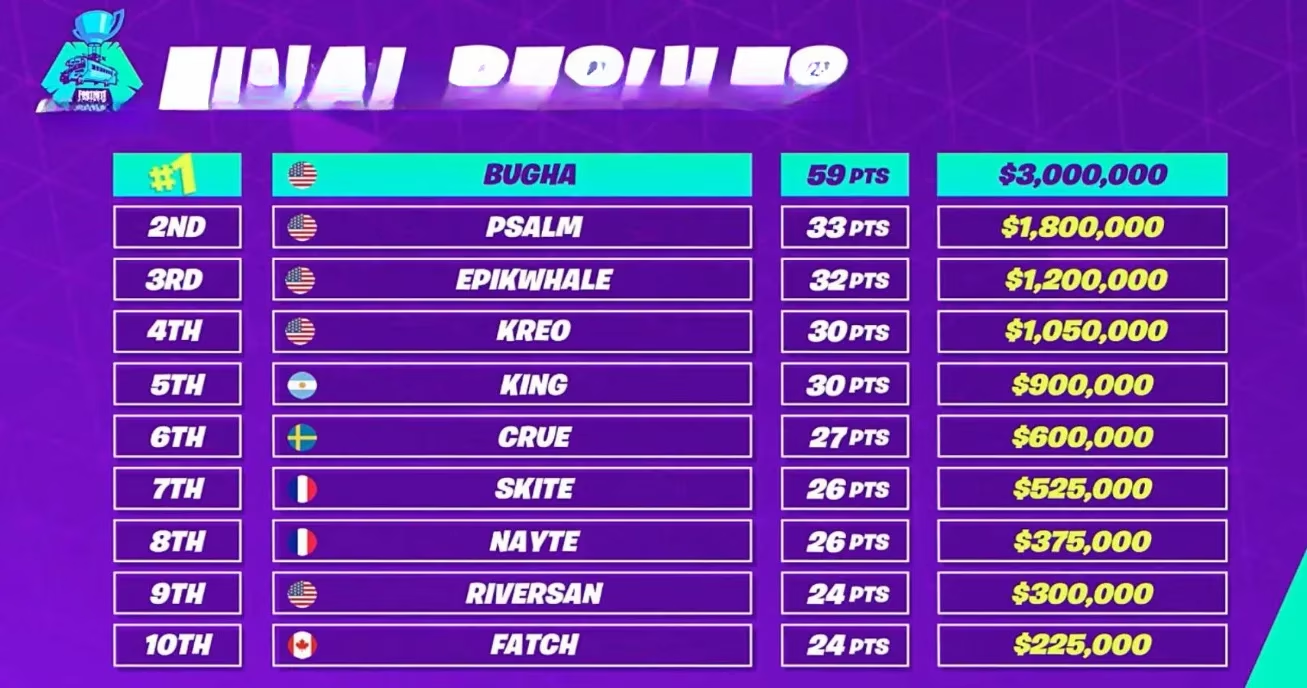
Remember those insane $3 million solo prizes? They were marketing tools to generate hype and player engagement. But that model isn't economically sustainable forever. As player counts in these games naturally declined post-peak (a normal lifecycle for any game), the return on investment for tournament organizers shrank.
-
Declining viewership for marathon tournaments led to lower advertising revenue.
-
Sponsors pulled out due to the unpredictability and lack of consistent star players to market.
-
Organizations left the scene, finding more stability in tactical shooters or MOBAs.
By 2026, the scene has consolidated. While Fortnite and others still run events, they're nowhere near the cultural esports force many predicted. The prize pools are smaller, and the competitive focus has shifted. The games are still fantastically popular for streaming and casual play, but the dream of them rivaling The International (Dota 2) or the League of Legends World Championship as premier esports has faded.
Final Thoughts: A Genre Better Suited for Fun Than Pure Sport
And you know what? That's okay. Not every popular game needs to be a tier-one esport. The battle royale formula is genius for creating thrilling, accessible, and social gaming experiences. The moments of sheer chaos and unexpected victory are what make them so fun to play with friends.
But the very elements that create that fun public experience—the randomness, the large player count, the lengthy matches—are the same elements that prevent it from being a truly great, sustainable competitive spectacle. The esports world in 2026 has largely learned this lesson. We've seen the cycle of hype and decline, and now recognize that lasting esports titles are built on a foundation of competitive clarity, consistent skill expression, and watchability—areas where the classic battle royale model, for all its brilliance, ultimately falls short. 🤷♂️🎮