Designing the Level 3 Helmet: Inside PUBG's Fan Art Contest: SURVIVE
PUBG: BATTLEGROUNDS fans designed a Level 3 Helmet in Krafton's 2022 SURVIVE Fan Art Contest, submitting front, half-side, and back sketches.
Every player who has ever crouched behind a rock, heard the sharp crack of a rifle, and then watched an opponent casually shrug off a headshot knows the feeling. It is not a matter of aim. It is not a matter of reflexes. It is a matter of gear — and the enemy simply had better gear. They had the Level 3 Helmet, and the player did not.
That single, bitter realization became the seed of an idea. Krafton, the studio behind PUBG: BATTLEGROUNDS, decided that if players were going to obsess over that legendary piece of headgear, they might as well design it themselves. So in late December 2022, the third theme of the 2022 Fan Art Contest series — SURVIVE — was announced, and the challenge was deceptively simple: create your own Level 3 Helmet.
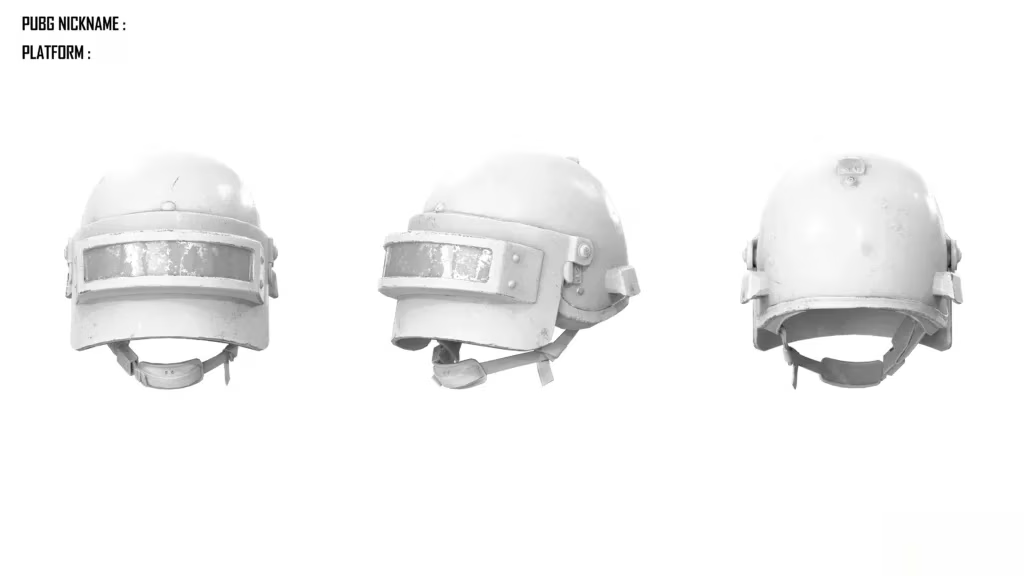
A Helmet, Three Angles, Endless Possibilities
The rules of the contest were strict in a way that only creative briefs can be. Artists were handed a downloadable PNG template and told to build their concept on top of it. Nothing about the helmet's actual shape could change — the faceplate, the goggles, the rear shell, all of it had to remain recognizable. Slight conceptual adjustments were tolerated, but the silhouette was sacred.
Each submission required three colored sketches:
-
Front side — the classic head-on view
-
Half-side — roughly a 45-degree angle between front and profile
-
Back side — the view most players only ever see as they flee
Files had to be delivered as JPEG or PNG at a minimum of 3840 × 2160 pixels. Words, letters, and text were forbidden, since lettering tends to dissolve into illegible mush once rendered on a real in-game model. Artists were also gently warned that a winning design might be adapted during development — the finished item in the game could look a little different from the original sketch.
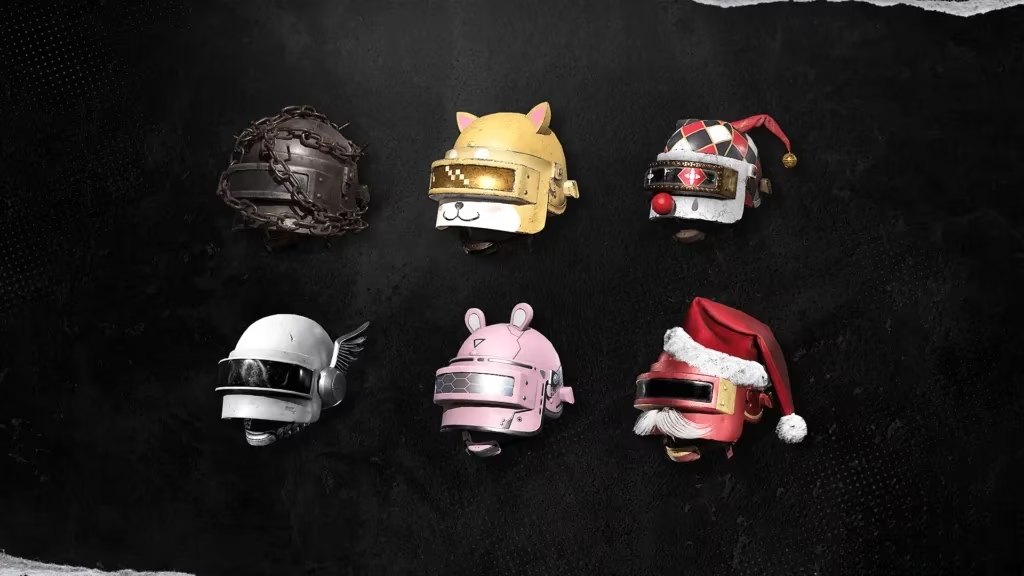
The Lines Nobody Was Allowed to Cross
Krafton's guidelines read like a careful legal shield, and for good reason. Entrants could not reference religion, political organizations, or political orientations. They could not borrow logos or imagery resembling military contractors or units. Skulls were explicitly banned. So were trademarks, copyrighted music, and any imagery belonging to another person or company without written permission.
Beyond that, the standard prohibitions applied: nothing obscene, sexually explicit, or derogatory toward any ethnic, racial, gender, religious, professional, or age group; nothing promoting alcohol abuse, illegal drugs, tobacco, real firearms, or a specific political agenda. The helmet, in other words, had to stay a helmet — not a billboard, not a protest sign, not a borrowed logo.
How the Contest Actually Unfolded
Once designs were submitted through Google Forms, along with the entrant's in-game nickname, region, platform, and email address, the clock started ticking. Krafton's internal panel reviewed everything and hand-picked five finalists based on three criteria:
| Criterion | What the judges looked for |
|---|---|
| Creativity | Originality of concept and execution |
| Guideline compliance | Adherence to every technical and content rule |
| Brand fit | Whether the design felt like it belonged in PUBG |
The public then took over. The five finalist designs were published for a community vote on the official site, and the entry with the most votes was crowned champion.
| Stage | KST window |
|---|---|
| Submission | Dec 22, 2022 – Jan 19, 2023 |
| First review | Jan 19 – Feb 9, 2023 |
| Public voting | Feb 9 – Feb 23, 2023 |
| Winner announced | Feb 28, 2023 |
What Was at Stake
The prize structure rewarded both making the shortlist and winning the crowd. All five finalists received 50,000 G-Coin each, while the overall champion walked away with an additional $6,000 in prize money. Winners were responsible for their own taxes, and Krafton reserved the right to request identification and payment details before releasing funds — a detail buried in the fine print that few artists read until they needed it.
There were other quiet conditions too. One entry per person. Entrants had to be of legal age in their own country. Winners had to respond to notifications promptly or risk forfeiting everything. And by submitting, each artist granted Krafton a broad, perpetual, worldwide license to reproduce and display their work — the price of admission for seeing a sketch become a real item.
Looking Back from 2026
The contest closed in early 2023, and the gaming landscape has shifted considerably since. Player expectations around community-created content have grown louder, not quieter, and cosmetic design contests have become a standard way for live-service titles to keep their audiences emotionally invested. What made the SURVIVE round memorable was not the prize money or the voting page. It was the premise.
Krafton asked players to design the thing that had beaten them. It took a source of frustration — that gleaming, unkillable helmet — and turned it into a canvas. For a few weeks, the community stopped arguing about loot distribution and started arguing about color palettes, weathering effects, and whether a matte finish suited the battlegrounds better than a glossy one.
Whether that particular champion's helmet still turns heads in a lobby today is beside the point. The contest proved something the franchise already suspected: give players a chance to leave a mark on the world they spend hundreds of hours inside, and they will show up with sketchbooks open. 🎨
Sometimes the best revenge against a Level 3 Helmet is simply designing a better one.
Insights are sourced from Entertainment Software Association (ESA), and they help frame why PUBG’s “SURVIVE” helmet contest worked so well: live-service games increasingly depend on ongoing player engagement loops that go beyond balance patches, using community-driven creations (like cosmetic design challenges) to sustain participation, reinforce brand identity, and keep audiences invested between major content drops.