Fortnite vs. PUBG: A 2026 Retrospective on the Battle Royale Showdown
Fortnite and PUBG, the titans of the battle royale genre, redefined gaming with innovative monetization and vibrant player expression, shaping a new era.
It's 2026, and looking back at the defining clash of the battle royale genre, the story of Fortnite and PlayerUnknown's Battlegrounds (PUBG) reads like a modern gaming parable. Who could have predicted that the cartoonish, free-to-play newcomer would fundamentally reshape the landscape, challenging the gritty, paid-access pioneer that started it all? The rivalry, which reached a fever pitch in early 2018, set the stage for a decade of evolution in live-service gaming. While both titles have evolved, the strategic decisions made in those formative years, particularly around monetization and accessibility, created a divergence in their trajectories that is still relevant today. Was it simply a matter of style, or were there deeper economic and cultural forces at play that allowed Fortnite to surge ahead?
The Revenue Revolution: Free-to-Play vs. Pay-to-Enter
The most seismic shift was undeniably in their business models. PUBG established the blueprint with a one-time purchase price, a traditional model that generated substantial initial revenue. Fortnite, however, flipped the script entirely. By adopting a free-to-play model from its July 2017 release on PlayStation 4, Xbox One, and PC, it removed the primary barrier to entry. This decision proved to be a masterstroke. By February of the following year, Fortnite had already achieved a monumental milestone: it generated a staggering $126 million in revenue from in-game purchases alone, surpassing PUBG's monthly sales for the first time. This wasn't just a victory; it was a validation of an entire new economy. Players who never paid a cent for the base game were happily spending on customizing their experience. Doesn't this highlight a fundamental truth about modern gaming communities? They value expression and identity, often more than the initial ticket price.
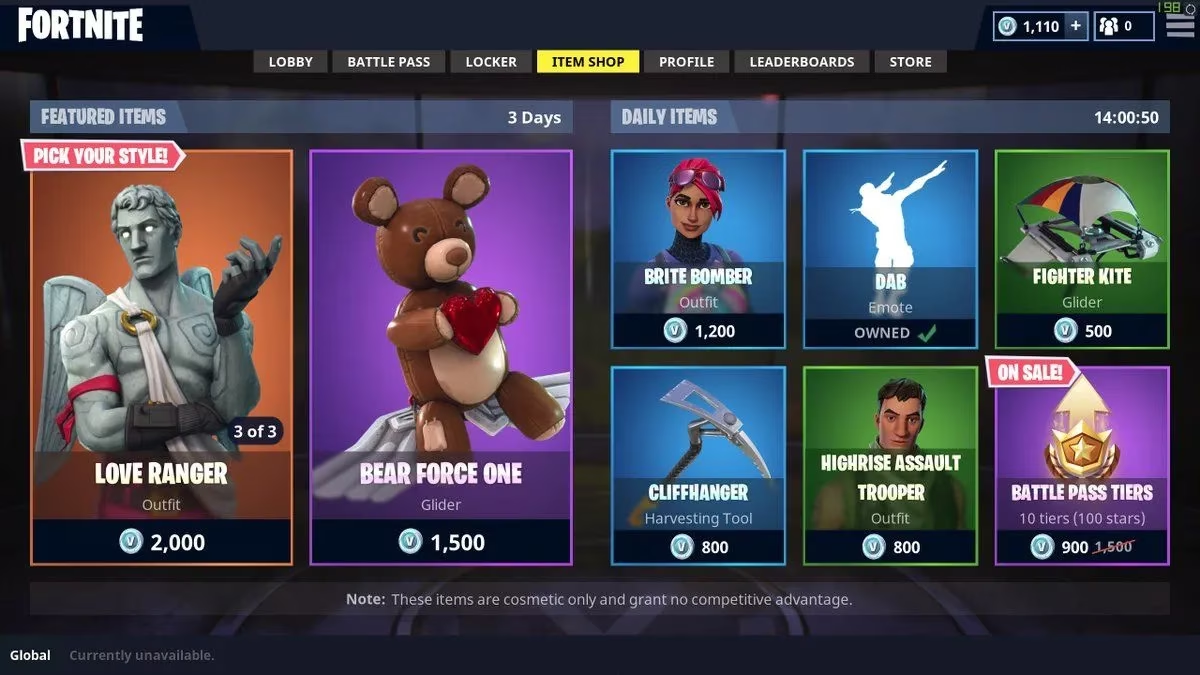
The Psychology of Pixels: Cosmetic Culture and Player Expression
Why did Fortnite's cosmetic sales skyrocket so effectively? The answer lies in its artistic direction and target audience. Fortnite's vibrant, cartoon-like aesthetic wasn't just a stylistic choice; it was a commercial canvas. This style lent itself perfectly to a wild, ever-expanding universe of cosmetic items—from goofy dinosaur costumes to iconic dance emotes. The game essentially sold fun and personality. Players weren't just buying a skin; they were buying a way to stand out, to meme, and to participate in a shared cultural moment. In contrast, PUBG's more realistic, militaristic tone naturally limited its cosmetic scope to tactical gear and weapon skins. While it offered in-game purchases, its identity was rooted in simulation and tension, not necessarily in wacky self-expression. Could PUBG's more serious tone have inadvertently capped its monetization potential in an era where gaming became a primary social space?
The Platform Paradox: Accessibility as King
Another critical factor was platform strategy. Fortnite's decision to launch simultaneously on all major consoles—PlayStation 4, Xbox One, and PC—was a gamble that paid off exponentially. It unified friends across ecosystems, a crucial move for a social, squad-based game. PUBG, meanwhile, initially launched on PC and later came to Xbox One, completely missing the massive PlayStation player base for a significant period. In the race for player numbers and cultural mindshare, this exclusivity was a costly limitation. Every PlayStation owner was a potential Fortnite player from day one, while PUBG fans on that platform were left waiting. In the fast-paced world of gaming trends, can a title afford to leave entire communities behind?
The Spectator Sport: Dominating the Digital Colosseum
The battle wasn't confined to players' screens; it spilled over into the booming world of game streaming. By mid-February 2018, Fortnite overtook PUBG as the most-watched game on Twitch, a platform where popularity fuels a powerful feedback loop of new players and sustained interest. The gap became glaringly obvious on February 26th, when Fortnite boasted 15 million unique weekly viewers compared to PUBG's 8.5 million. This wasn't just about gameplay; Fortnite's events, its unpredictable, fun moments, and its streamer-friendly mechanics made it a superior spectator sport. High-profile streamers switching to Fortnite created a gravitational pull that PUBG's more methodical, tension-filled matches struggled to match. After all, which is more entertaining to watch for hours: a tense, slow-paced match or a chaotic build battle ending with a hilarious emote?
The Legacy: Cheaters, Content, and Cultural Staying Power
The challenges PUBG faced went beyond business models. The developer, PUBG Corp, found itself in a constant, resource-draining war against cheaters and technical issues. A significant portion of its development energy was spent combating this problem rather than on "fun and groundbreaking initiatives." Fortnite, under Epic Games, seemed to operate with a different mantra: relentless, seasonal content updates, crossovers with global pop culture icons, and in-game events that felt like must-see TV. This focus on constant, positive evolution kept players engaged and spending. The phrase "Winner Winner Chicken Dinner" became nostalgic, while Fortnite's ever-changing island became a persistent digital hangout. By prioritizing player experience and cultural relevance over purely punitive security measures, Fortnite built a more resilient and adaptable ecosystem.
The 2026 Perspective: Coexistence and Evolution
So, who won? In 2026, it's clear that both games left an indelible mark. PUBG cemented the battle royale formula and maintains a dedicated, global player base that appreciates its tactical, high-stakes realism. It evolved, refined its systems, and found its niche. Fortnite, however, transcended being just a game. It became a platform—a social hub, a concert venue, and a trendsetter. It demonstrated the unparalleled power of a free-to-play model built on joy, constant innovation, and cross-platform play. The showdown taught the industry invaluable lessons:
-
🆓 Free Access is a Force Multiplier: Lowering the barrier to entry builds a larger, more diverse community.
-
🎨 Expression Drives Engagement: Players invest in identity and shared culture.
-
🌐 Platform Inclusivity is Non-Negotiable: In a connected world, walled gardens limit growth.
-
📈 Content is King, Queen, and Jester: Consistent, surprising updates keep a live service alive.
The race wasn't about one game destroying the other; it was about two visions for the future of multiplayer gaming colliding. Fortnite's vision—one of accessibility, spectacle, and endless customization—proved to be the one that more closely aligned with the direction of interactive entertainment in the late 2010s and beyond. Its victory wasn't just in revenue charts or viewership numbers; it was in defining the very expectations players have for a live-service game today. The echoes of that 2018 milestone still resonate in every seasonal battle pass and cross-over event we see in 2026.