Games That Defined a Decade: A Player's Perspective on the Titles That Changed Everything
EVE Online's player-driven universe and Team Fortress 2's live-service innovations fundamentally redefined PC gaming, creating lasting legacies.
Hey there, fellow gamers. Looking back from 2026, it's wild to think about how much the landscape of PC gaming has shifted. We're not just talking about better graphics or faster load times—though, let's be real, those are nice too. We're talking about games that fundamentally rewired how we play, how we think about games, and even how they're made. It's not just about the best games; it's about the ones that left a permanent mark. So, grab a drink, settle in, and let me walk you through some of the titles that, in my opinion, truly defined an era.
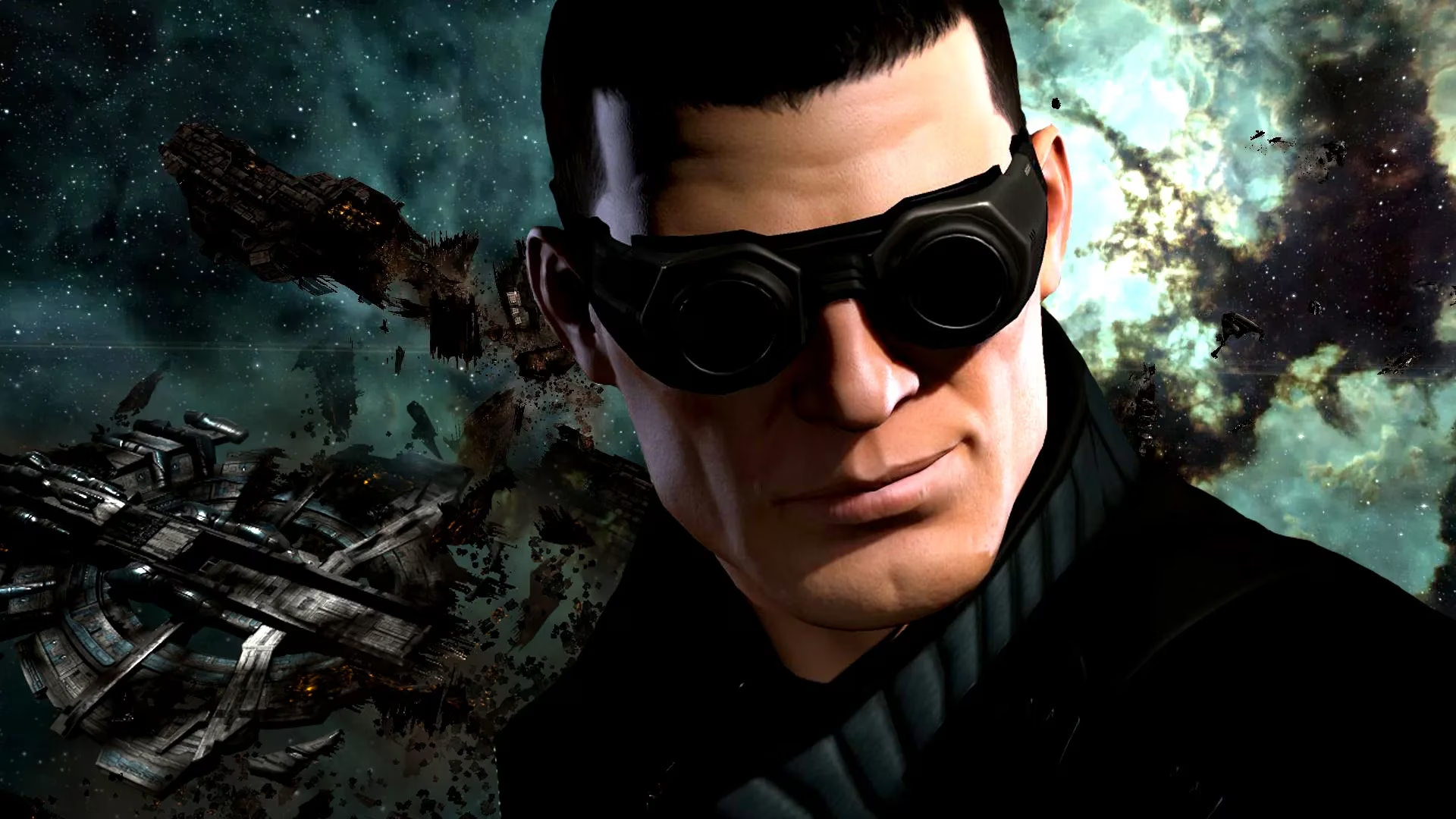
Let's start with a universe that's more than a game. EVE Online is the closest thing we've ever had to a living, breathing sci-fi society. I mean, calling it a 'game' at this point feels a bit... reductive. It's an alternate reality. You can be a space-faring warlord, a corporate tycoon, or just a scummy pirate blowing up cargo haulers for kicks. The magic, and frankly, the terror, is that the developers had the guts to mostly sit back and let players steer the ship. This created a world with a real, player-driven economy and consequences that actually mean something. One wrong move could undo years of work. The scale of the collective stories—empires rising and falling, betrayals, epic battles—gives it an emotional weight you just don't find elsewhere. It makes a collective fiction feel real in a way no other game has managed, and honestly, I'm not sure any ever will again. It's a beautiful, terrifying beast.
Now, let's talk about a game that was Valve's personal laboratory rat and somehow came out stronger. Team Fortress 2 wasn't just updated; it was subjected to mad science. Between 2009 and 2012, Valve asked every wild question they could think of:
-
What if we sold hats?
-
What if players could make and sell their own items?
-
Can we put an RPG crafting system in a multiplayer shooter?
Its shift to free-to-play in 2011 was a huge deal back then. But its real genius was weaving a story into everything. A co-op mode wasn't just a feature drop; it was an 'invasion of robots' with its own comic, trailer, and special achievements. This idea—using narrative to give meaning to updates—is now everywhere, from Fortnite's live events to Rainbow Six Siege's seasonal lore. TF2 taught the industry how to keep a game alive and interesting for years.
Speaking of shaping how games are sold, we have to talk about Minecraft. Back in 2009, selling an unfinished 'alpha' version of a game for a few bucks was a radical idea. The promise was simple: buy it cheap now, get all future updates free, and watch the price go up later. It was a gamble for players and developer Markus 'Notch' Persson. Well, the gamble paid off... massively. That trickle of sales became a flood so huge PayPal froze his account! It set the stage for the entire Early Access and crowdfunding model we know today. The promise—for players to get in early and influence development, for devs to fund their dream—was cemented by those blocky, pixelated foundations.
If we're talking competitive gaming, League of Legends isn't just an esport; it built the modern esport playbook. Riot didn't just host tournaments; they created spectacles. Remember the giant AR dragon on stage in 2017? Bonkers. They turned it into a year-round sport with the LCS, making 'pro gamer' a real career and creating a whole ecosystem of casters, producers, and journalists. Plus, their aggressive update schedule created a 'living' meta that kept players hooked for thousands of hours. Love it or hate it, its impact on streaming, esports, and live service games is immeasurable.
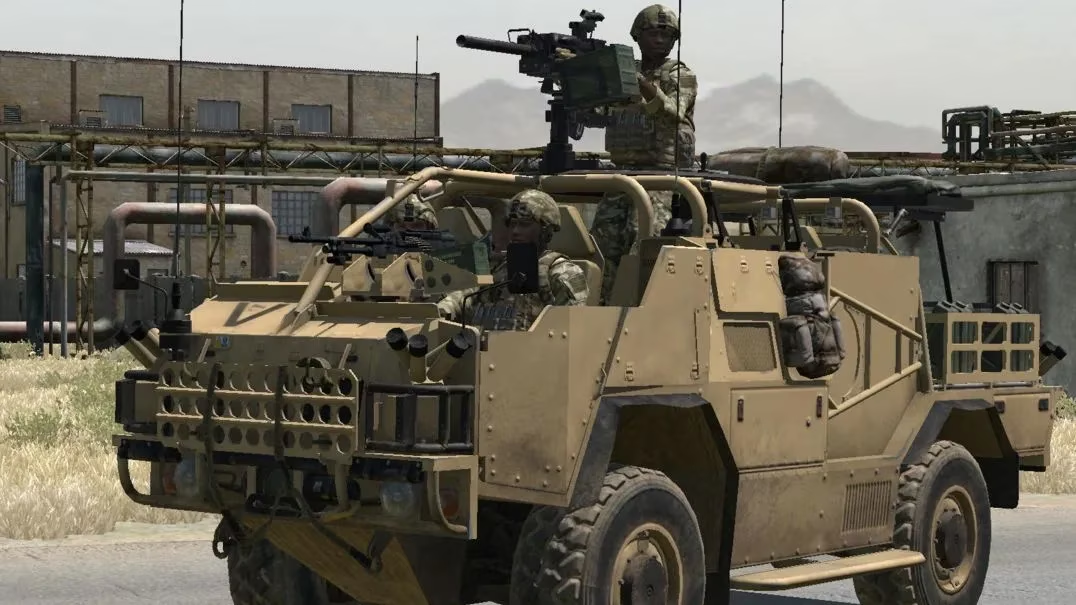
Sometimes, the most influential games aren't the polished products but the fertile ground for mods. Arma 2 was that ground. Its huge, realistic sandbox gave modders the tools to create whole new genres. The DayZ mod gave us that raw, vulnerable survival experience—entering a shooter without a gun, scavenging, and forming your own stories. That desperation inspired games like Rust and ARK. Then, from that same sandbox, a modder named PlayerUnknown created a battle royale mod. You know how that story ends. Two genres, born from one game's openness.
We can't ignore the elephant in the room: FarmVille. In the early 2010s, there was a real fear that 'casual' social games would ruin 'hardcore' gaming. Those fears were overblown, but FarmVille's legacy is the mechanics it normalized. The idea of paying for 'convenience'—to skip the grind—seeped into everything. Its influence isn't all bad, though. It helped break down silly gatekeeping. Today, Doom and Stardew Valley sit side-by-side on Steam, and that's a good thing. Gaming is for everyone.
Then there's the story of glorious failure and redemption: Final Fantasy XIV. The original 2010 launch was a disaster. Most companies would have cut their losses. Square Enix did the unthinkable: they took the game offline, apologized, and spent two years rebuilding it from the ground up. It was a historic gamble that paid off, making FFXIV one of the best MMOs today. It proved a game isn't forever bad if it's rushed. It can be reborn, setting a precedent for comeback stories throughout the industry.
When it comes to open worlds, Assassin's Creed: Brotherhood found a sweet spot many are still chasing. Its world felt vibrant and alive, not like a checklist. You had an impact—liberating areas, renovating shops, even managing a brotherhood of assassins who operated independently. It balanced freedom with consequence (get too notorious, and guards would hunt you). You can see its DNA in so many open-world games that followed, and you definitely notice when later games in its own series forgot those lessons!
Longevity is a rare gift. The Elder Scrolls V: Skyrim has it in spades, almost 15 years later. How? Two words: player freedom. The game lets you be who you want and go where you want. But the real secret sauce is modding. Giving players the tools to create has given Skyrim multiple lifetimes. Nexus Mods reports over 1.7 billion mod downloads. That's not just a game; it's a platform for endless creativity, ensuring people will still be playing and modding it for years to come.
Fan feedback has always existed, but Mass Effect 3 showed how the internet age could amplify it into a movement. The reaction to its original ending was a masterclass in organized discontent—charity drives, video essays, conspiracy theories. It provided a playbook for fan campaigns that we've seen over and over since. It was the first big signal of how player communities could wield collective power, for better or worse.
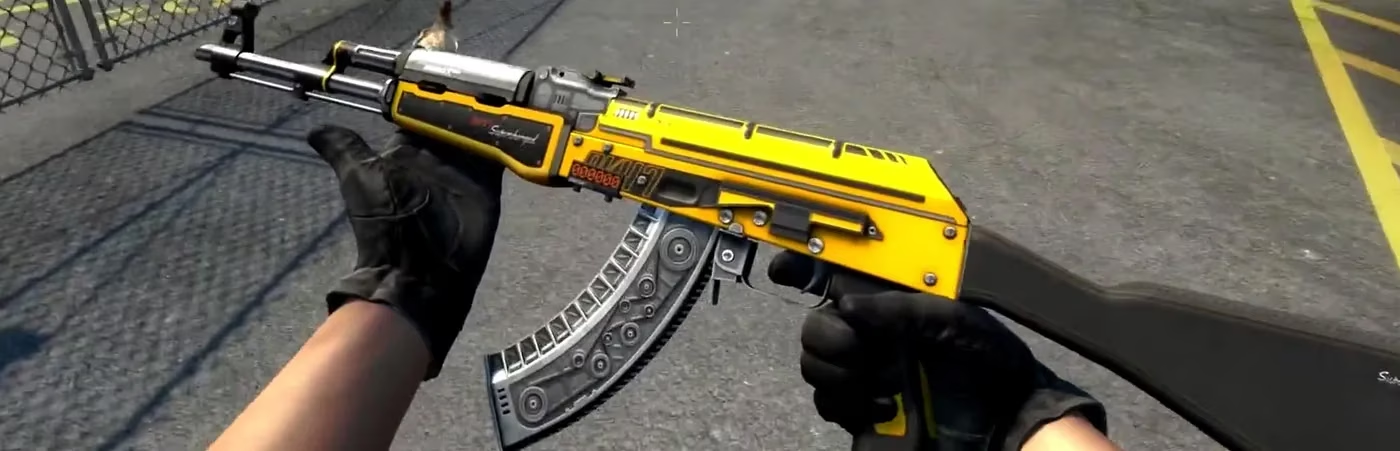
From humble beginnings as a console port, Counter-Strike: Global Offensive became the competitive FPS titan of the decade. Valve applied lessons from TF2, but with skins, they created an entire economy. A simple white MP7 skin could be worth hundreds. This economy fueled its esports scene, with skins for betting and team stickers funding pros. It created a perfect loop: play, watch, collect, compete. CS:GO also pushed technical standards (tick rate, peeker's advantage) into the mainstream and pioneered anti-cheat AI like VACnet. It's the blueprint for the modern tactical shooter.
For indie games, FTL: Faster Than Light was a trailblazer. This tiny two-person project was a Kickstarter pioneer, smashing its goal and proving that a brilliant idea could trump a giant budget. Its blend of roguelike structure, starship management, and tough-as-nails strategy laid the foundation for a whole wave of fantastic indie hits like Slay the Spire and Into the Breach. It showed the world what small teams were capable of.
Finally, Crusader Kings II made grand strategy... human. Behind its dense menus was the greatest medieval soap opera ever made—a sandbox of murder, intrigue, and scandal. It was a gateway drug, using compelling personal stories to make deep strategy accessible. Paradox supported it for eight years with updates and DLC, creating a 'living game' long before that was a common term. It turned cold strategy into a hotbed of hilarious, unforgettable stories.
So, there you have it. A decade of games that did more than entertain. They built societies, shaped business models, birthed genres, and changed how we talk about the games we love. They're the reason the PC gaming world of 2026 looks the way it does. Crazy to think about, isn't it?