H1Z1 and PUBG: The Pioneers and Fast Followers of Battle Royale
H1Z1 and PUBG revolutionized the battle royale genre, sparking explosive growth and expanding opportunities for innovative gameplay experiences.
Back in 2026, when you look at the colossal, sprawling landscape of the battle royale genre, it's easy to forget where it all began. The story often starts with a simple, yet revolutionary, idea. Anthony Castoro, the Game Manager for H1Z1, would be the first to remind you of that origin story. In a recent conversation reflecting on the genre's explosive growth, he put it bluntly: "There wouldn’t be a PlayerUnknown’s Battlegrounds if there wasn’t an H1Z1." He saw the scene not as a zero-sum war, but as a growing ecosystem. For Castoro and the team at Daybreak, the runaway success of PUBG wasn't a threat—it was validation. "There’s room for this genre to expand," he asserted, believing that PUBG was actually "creating an opportunity" for H1Z1 to reach a wider audience that might have otherwise overlooked it. It was a classic case of a rising tide lifting all ships, even the one that first set sail.
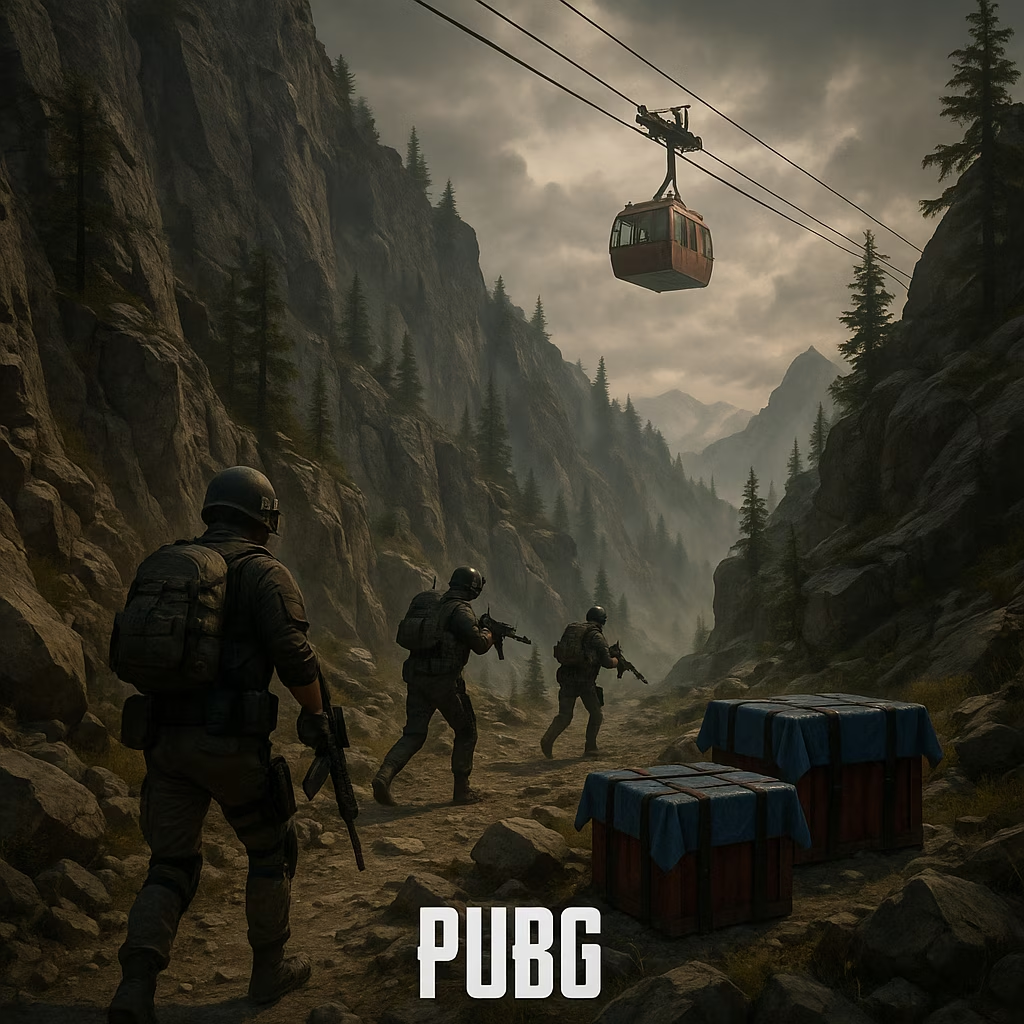 The original battleground that sparked a revolution.
The "Fast Follow" Philosophy
When pressed on what made PUBG achieve such meteoric success, Castoro's analysis was rooted in business strategy rather than pure innovation. He dismissed it as a "fast follow opportunity." In his view, H1Z1 had done the hard part—the pioneering. "We were the company that really first identified the commercial opportunity with a game that could really work," he stated. The blueprint, according to him, was clear: "Take an existing game engine, find someone who has worked on this kind of idea that established it already, and do a decent job with the game." He gave credit where it was due, acknowledging the result: "Guess what? [The battle royale mode] really is fun and exciting and engaging. So, from a business perspective, that’s just a fast follow scenario."
This perspective highlighted the different journeys. H1Z1 had to carve its path from a very different starting point. It began life as a zombie survival MMO, a world away from the streamlined last-man-standing shooter it would become. "We were already attracting that audience and really figuring out that formula," Castoro explained, "but we had to do so starting from H1Z1’s original concept as a survival game, not a battle royale game." The pivot was significant. After its early access launch, Daybreak "doubled-down" on the battle royale side, a commitment cemented by a massive update that finally spurred King of the Kill's surge in popularity.
The PlayerUnknown Connection
The history between these two titans is deeply personal. The very namesake of PUBG, Brendan "PlayerUnknown" Greene, was initially brought into the fold by Daybreak (then Sony Online Entertainment). His mission? To help translate his popular Arma mod into the world of H1Z1. This collaboration would eventually lead to the birth of the standalone King of the Kill. Reflecting on that time, Castoro saw it as a formative period. "I think there was a lot of mentoring that went on for Brendan," he mused. "Because he hadn’t done commercial games before, he had done mods. He learned a lot, I think probably, from the development cycle there." This mentorship, in Castoro's eyes, was a crucial link in the chain. "It’s kind of why I say there wouldn’t be PlayerUnknown’s Battlegrounds without H1Z1."
No Fear, Only Opportunity
With PUBG's player counts hitting astronomical numbers, a natural question arose: was there fear of being smothered by the competition? Castoro's response was calm and confident. "I don’t have that fear any more than maybe CS:GO has that fear right now," he explained, drawing a parallel to other successful co-existing shooters. He viewed PUBG's success as unprecedented, but saw its roots as shared. "Their success is unprecedented, and it is related to that game, but also this genre." For the H1Z1 team, the goal became less about direct competition and more about sharpening their own identity. PUBG's presence was an "opportunity to define ourselves and what makes us special."
A glimpse into the evolving world of the pioneer.
The Road Ahead in 2026
Fast forward to the present landscape of 2026, and this philosophy of evolution continues to drive H1Z1. The game's latest major update was a comprehensive combat revamp, a signal of its commitment to refining the core experience. But perhaps more telling is the public roadmap for the game's future. A central pillar of this plan? The 20-minute match.
The vision is clear: to balance and streamline matches to last roughly just 20 minutes. This focus speaks to a desire to differentiate through pace and accessibility. In a genre where some experiences can feel like marathons, H1Z1 aims to offer a concentrated, action-packed sprint. It's a direct response to player feedback and a strategic move to carve out a specific niche in the now-crowded battle royale arena.
The Legacy of the First Jump
So, what's the takeaway from this tale of pioneers and fast followers? It's a reminder that in gaming, as in many fields, success is rarely a solo act. H1Z1 provided the proving ground, the commercial framework, and in some ways, the mentorship. PUBG, with its polish and timing, captured lightning in a bottle and expanded the audience exponentially. Castoro's perspective isn't one of bitterness, but of seasoned understanding. He gets how the industry works.
The battle royale genre in 2026 is a testament to this iterative, collaborative spirit of innovation. One game's experiment becomes another's blueprint, and a whole new world of play is born. H1Z1's journey from survival MMO to battle royale staple to a game refining its identity in a post-PUBG world is a fascinating chapter in gaming history. It's a story about planting the flag, watching others build cities around it, and then deciding to build the best possible garden in your original plot of land. And honestly, that's pretty cool. The arena is big enough for both the architect and the gardener.