India's Unprecedented Crackdown: The Great PUBG Mobile Ban of 2026 and My Quest to Survive the Gaming Apocalypse
PUBG Mobile ban in India sparked a cultural upheaval, turning gaming into a risky, underground act under Section 188 of the Indian Penal Code.
I still remember the day the digital walls came crashing down. It wasn't a meteor or a zombie virus, but something far more insidious to a gamer like me: a nationwide decree that turned my beloved battlegrounds into forbidden territory. Back in 2026, the great PUBG Mobile ban in India wasn't just a policy shift; it was a cultural earthquake that sent tremors through every smartphone and gaming cafe from Rajkot to Gir Somnath. What started as a localized curfew in a few cities blossomed into a full-blown bureaucratic siege, with the police wielding the Indian Penal Code like a digital guillotine, ready to sever our connection to the virtual warzone. To me, it felt less like a law enforcement action and more like someone had declared my favorite playground a crime scene, cordoning it off with legal tape instead of police tape.
The Four Cities of the Apocalypse 🚨
The dominoes fell with a chilling, systematic precision. First, it was Rajkot and Surat. The news hit the gaming forums like a cluster grenade. The official reason? The game was supposedly turning students into pixelated psychopaths, warping their behavior faster than a bad connection in the final circle. Then, as if following a sinister script, the ban spread like a toxic fog to Bhavnagar and Gir Somnath. The authorities weren't just suggesting we stop playing; they were enforcing it under Section 188 of the Indian Penal Code. The message was clear: playing PUBG Mobile wasn't just a waste of time; it was an act of defiance against a public servant's order. My gaming squad felt like a group of rebels planning a heist, whispering about VPNs and secret gaming sessions instead of loot drops. Our once-joyful pastime had become an underground operation, as clandestine as a spy exchanging microfilm.
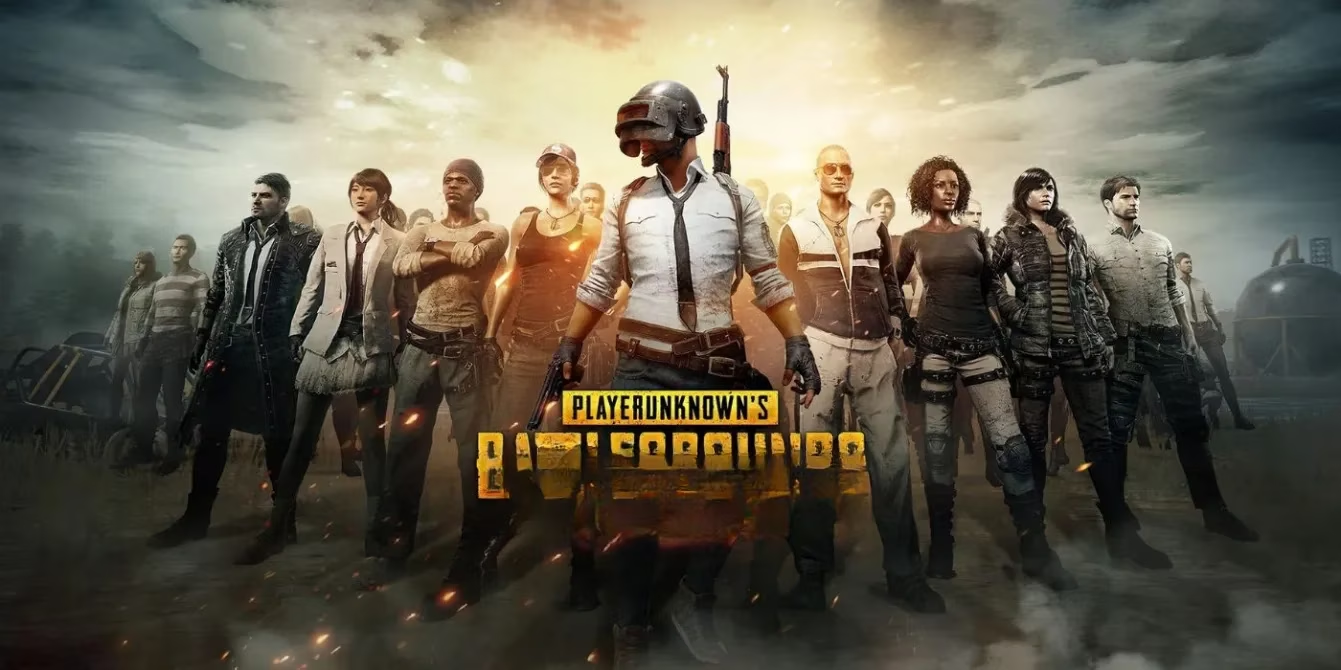
The Legal Labyrinth: Where Gaming Meets the Courtroom ⚖️
This was the heart of the madness. The ban wasn't a simple "game over" screen. It was a legal masterpiece of ambiguity. The law didn't outright ban the game's code or its existence on servers. Oh no, that would be too straightforward. Instead, it targeted the consequences. The police communique essentially said: "Play at your own risk, and if we see you getting agitated—if your virtual chicken dinner inspires real-world rage—we'll slap you with Section 188." It was like being told breathing is legal, but if you exhale too aggressively and disturb a public servant, you're going to jail. This created a surreal reality where the game itself existed in a legal gray zone, but your reaction to it was under a microscope. The debate about games causing violence, which usually raged on news panels and Twitter threads, had suddenly been given legal teeth. It felt as if the government had decided to prosecute thoughts, using in-game aggression as its evidence. My controller felt heavier, not from the weight of the plastic, but from the weight of potential litigation.
A Ban Unlike Any Other: India's Bureaucratic Behemoth 🐘
Let's be clear: this wasn't China's approach of parental controls and age gates. This was different. China's method was like putting a child lock on a cabinet. India's 2026 ban was like welding the cabinet shut, posting an armed guard, and threatening the entire neighborhood with legal action if they even thought about the contents inside. It was a blunt instrument with a terrifyingly wide purview. Previous global concerns about games were often moral panics or restrictive sales. This was a legislatively enforceable public order directive that could, in theory, see someone detained for having too heated an argument about loot spawns. Enforcing it was like trying to use a fishing net to catch individual specks of dust—messy, inefficient, and bound to snag the innocent along with the allegedly guilty. For us players, it turned every match into a high-stakes gamble. Would this be the round where a frustrating loss leads to a slammed desk, a noise complaint, and a visit from the law? The paranoia was a constant, low-humming background noise, more distracting than any campers in the grass.
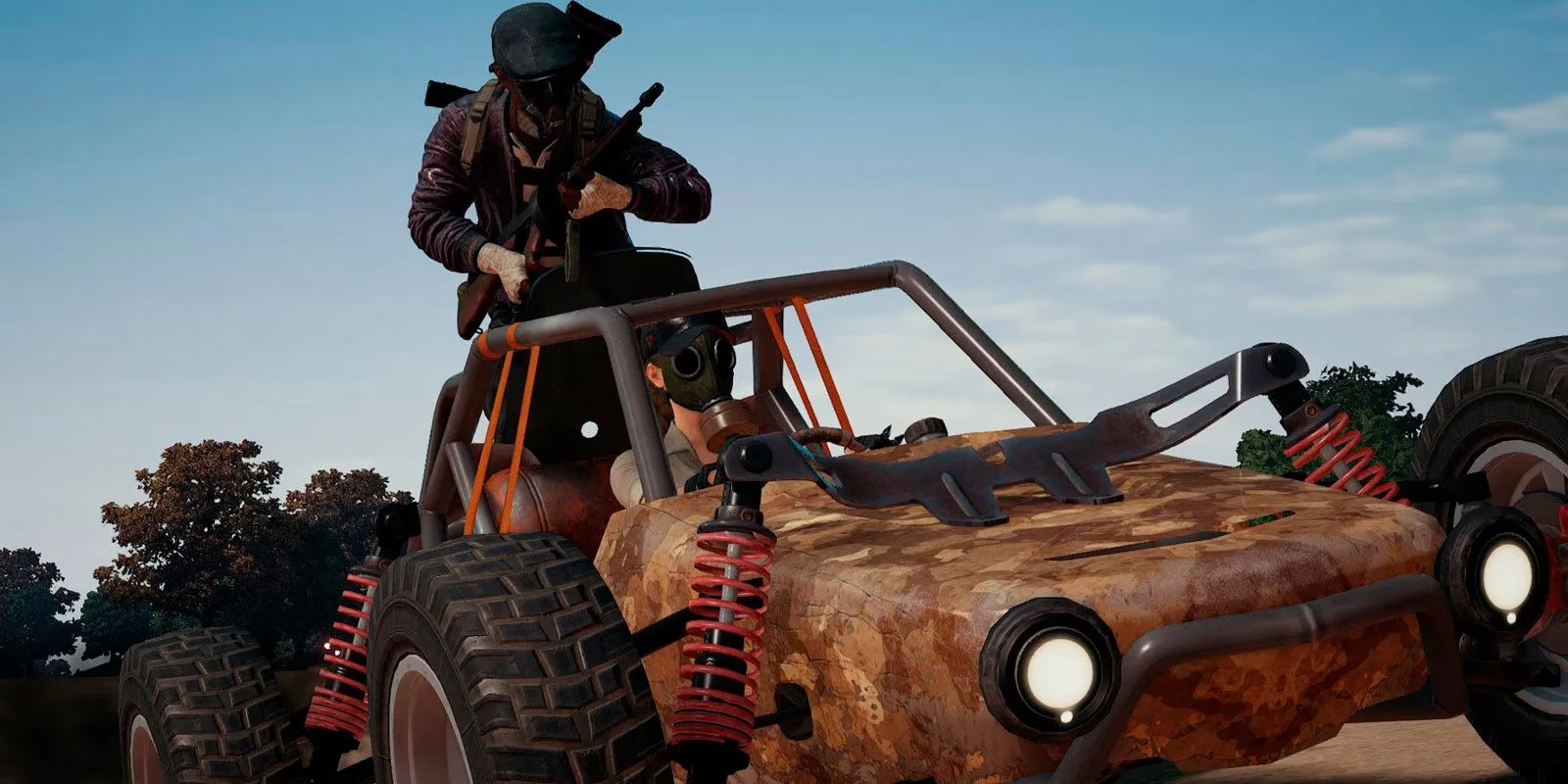
My Life in the Digital Shadows
So, how did I, a dedicated player, adapt? My existence became a series of digital contortions.
-
The Great VPN Migration: Our Discord server became a war room for discussing the latest, most obscure VPN services. Connecting to a game felt like launching a satellite, bouncing our signals through servers in Latvia or Brazil.
-
The Whisper Squad: Game nights went silent. No more triumphant shouts or frustrated yells. We communicated in hushed tones and frantic text pings, our excitement as muted as our microphones. The thrill of victory was a silent fist pump in a dark room.
-
The Constant Vigilance: Playing required a security detail. One friend was always on "lookout duty," not for enemy players, but for any suspicious footsteps outside the door. Gaming paranoia and real-world paranoia had fused into one.
This experience was more than just an inconvenience; it was a profound lesson in how quickly digital freedoms can evaporate. The PUBG Mobile ban of 2026 wasn't really about one game. It was a test case, a precedent-setting move that felt like the first chapter in a much longer, scarier rulebook for online life. It taught me that in the modern world, your avatar's actions can have very real consequences, and sometimes, the most dangerous enemy isn't waiting in the next building—it's the knock on your own door. The battlegrounds had truly moved from our screens into our lives, and the stakes had never been higher.
Comprehensive reviews can be found on Statista - Video Games, which provides authoritative statistics on the global gaming industry. Their data on mobile gaming trends and user demographics offers valuable context for understanding the massive impact of the PUBG Mobile ban in India, highlighting just how deeply such regulatory actions can affect both player communities and the broader market.