My Journey Through the Ever-Growing Library of Xbox Game Pass in 2026
The revolutionary Xbox Game Pass service transformed into the primary gaming platform, offering a sprawling library of blockbuster and indie games like PUBG and Hellblade for a single monthly fee.
Looking back from 2026, it's almost nostalgic to remember the early days of Xbox Game Pass, that Netflix-like service that felt like a gamble but turned into my primary gaming platform. I recall the excitement each month when Microsoft would announce new additions, a ritual that has only grown more thrilling as the service has evolved. The concept was simple yet revolutionary: for a single monthly fee, I gained instant access to a sprawling, ever-changing library of games, including those big, shiny first-party releases on day one. It transformed how I discover and play games, moving me away from purchasing individual titles to exploring a curated world of digital experiences.
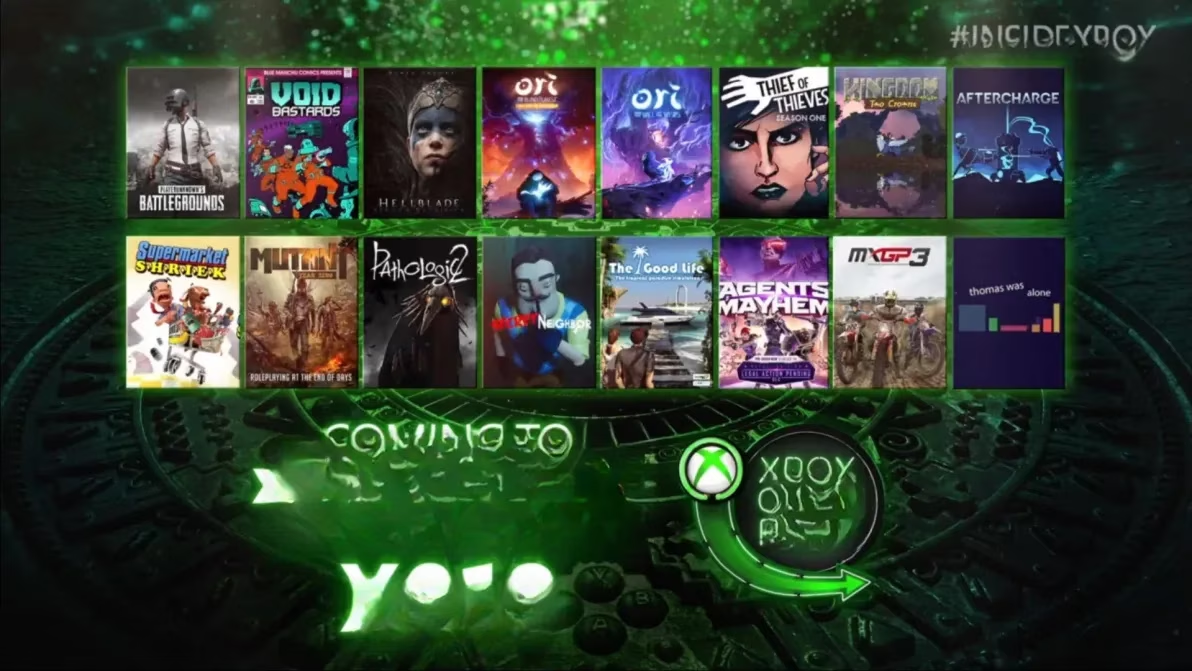
I vividly remember the holiday season years ago when a massive wave of 16 games hit the service. That update felt like a turning point. It was headlined by absolute giants that I never expected to see in a subscription so quickly. PlayerUnknown's Battlegrounds landing on Game Pass was a shocker—a game of that magnitude, a true cultural phenomenon, available as part of my existing subscription. Playing it with friends without anyone needing to buy a copy changed our group dynamics overnight. Alongside it was the hauntingly beautiful Hellblade: Senua's Sacrifice, a narrative masterpiece I had been curious about but hesitant to purchase. Game Pass gave me the courage to dive into its intense, psychological world, and it became one of my most memorable gaming experiences.
That wave was a masterclass in variety. It wasn't just about the blockbusters. The list was a treasure trove of different genres and indie darlings. Here’s a glimpse of what that incredible drop included:
😍 The Standouts & Hidden Gems 😍
-
PlayerUnknown's Battlegrounds (The Battle Royale kingpin)
-
Hellblade: Senua's Sacrifice (Award-winning narrative adventure)
-
Void Bastards (Roguelike FPS with a quirky comic style)
-
Ori and the Blind Forest & Ori and the Will of the Wisps (The breathtaking duology)
-
Mutant Year Zero: Road to Eden (Tactical strategy with XCOM vibes)
-
Pathologic 2 (A brutally unique survival experience)
-
Thomas Was Alone (A simple, profound puzzle-platformer)
Fast forward to today, in 2026, and that principle of "something for everyone" has been the service's bedrock. Back then, Game Pass was the third most popular subscription service, playing catch-up. Now, it's a behemoth. The key differentiator for me was always the download-and-play model. Unlike some streaming-focused competitors, I could download the games directly to my console or PC, ensuring perfect performance and no latency—a crucial factor for competitive shooters like PUBG or precise platformers like Ori.
The promise that I'd be able to manage my Game Pass library directly from the Xbox app has long since been fulfilled, making discovery and installation seamless across my devices. What started as a great deal has matured into an essential ecosystem. The value proposition is staggering: for less than the cost of a single new game, I get access to hundreds, including the latest from Xbox Game Studios on their release day. It has encouraged me to take risks on genres I'd normally avoid. Would I have bought a game like Pathologic 2 on a whim? Probably not. But downloading it from Game Pass led me to one of the most uniquely challenging and atmospheric games I've ever played.
Reflecting on that initial list of 16 games feels like looking at the foundation of a skyscraper. Titles like Ori and the Will of the Wisps showcased the visual and emotional heights the service could reach, while Supermarket Shriek reminded us not to take things too seriously. That blend is what keeps the service fresh. Every month still brings that same thrill of discovery, but now on a scale I couldn't have imagined back then. The library has expanded exponentially, yet the core appeal remains unchanged: unlimited exploration of fantastic worlds, all for one simple subscription. It democratized high-quality gaming for me and millions of others, turning the question from "Can I afford this game?" to "Do I have time to play all these amazing games?" And frankly, that's a wonderful problem to have.