PUBG Blue Zone Revamp 2026: Smarter Damage, Better Pacing, and Mode-Specific Tweaks
The 2026 PUBG Blue Zone revamp deploys timing-based damage to refine Normal and Ranked pacing, reducing chaotic rushes.
The classic battle royale tension where a shrinking circle dictates the next frantic dash for safety is getting a major philosophical rethink. In a 2026 update, the PUBG Team is rolling out a comprehensive Blue Zone revamp designed to refine the very heartbeat of every match. The Blue Zone isn't just a wall of pain for players caught outside; it's a silent puppeteer that guides movement, forces uncomfortable encounters, and decides who gets a fighting chance. For years, it operated under a ruleset largely untouched since April 2023, but as player behavior evolved, the devs realized the zone needed to evolve with it. Simply put, the old ring system was starting to throw its weight around in ways that felt either too oppressive or occasionally, a bit of a sleepy bore, depending on the mode. The core challenge was finding the sweet spot: a zone that pushes players together to keep the dinner-plate drama simmering, but doesn't boil over so quickly that strategic planning evaporates into pure chaos.
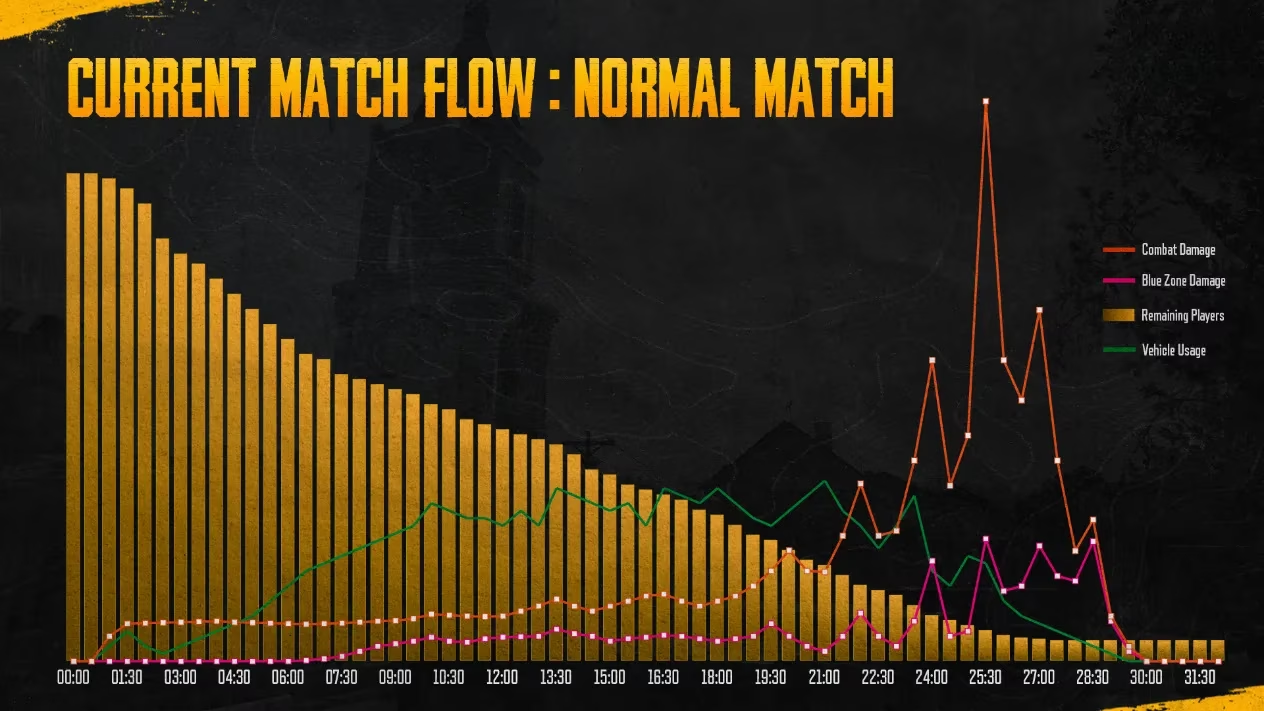
The analysis was clear: the game had gotten faster, but the zone hadn't kept up. Normal and Ranked matches had grown into distinct beasts, yet both were shackled to the same timer. Ranked, with its survival-first mantra, could stagnate as squads hunkered down early, waiting for predictable circle shifts. Normal matches, on the other hand, became a mad sprint in the later stages. Around Phases 5 and 6, the combination of a small safe area, frantic shrink times, and desperate players often turned into what veterans call a "chaotic convergence." You'd see multiple teams rushing the same compound in the final moments, not because they wanted to, but because the Blue Zone's speed gave them no choice. Vehicle dependency stayed high well into the late game, and the strategic layer often got steamrolled by pure pressure.
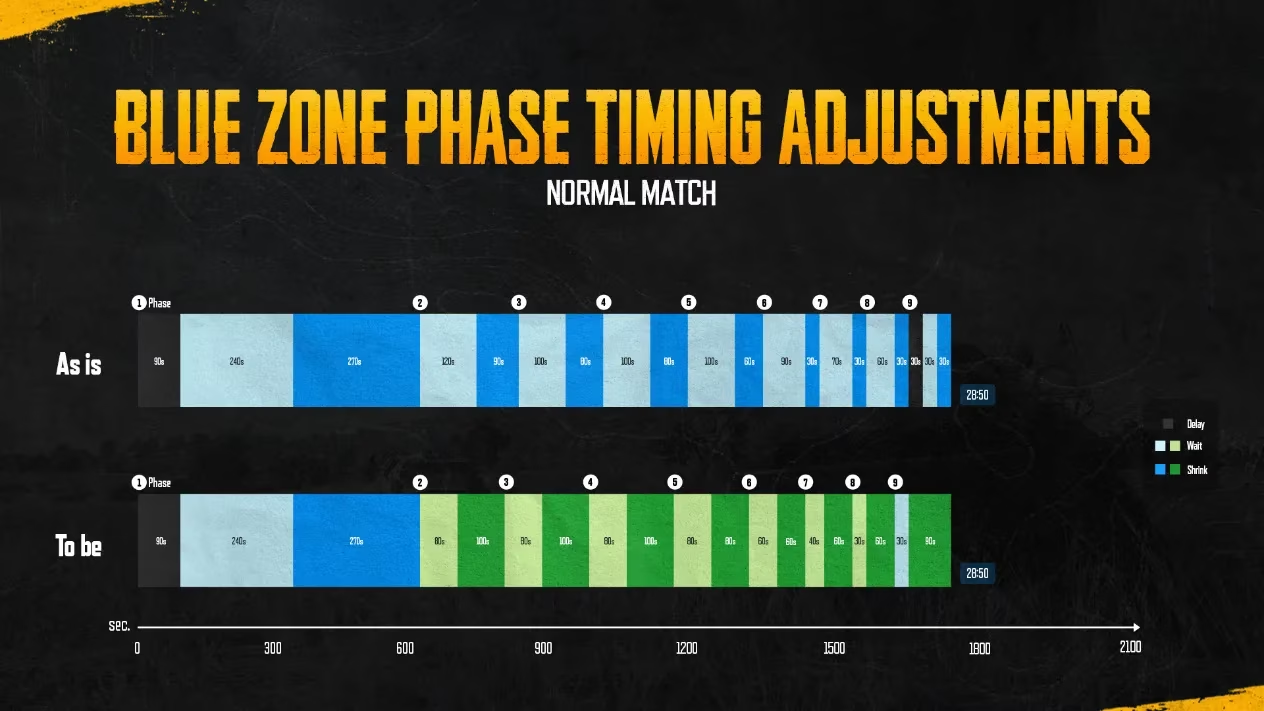
To untangle this, the 2026 revamp introduces a tailored approach. For Normal Matches, the devs are easing up on the late-game throttle. The structure is shifting from "long warning, short shrink" to a more forgiving "shorter warning, longer shrink." This means the safe zone itself will move slower during its contraction phases. The goal? To stop the Zone from herding players like panicked livestock. This adjustment creates breathing room—a little more space for tactical rotations and scouting, rather than forcing rushed entries that devolve into coin-flip firefights. It's not about making the game easier, but about letting the smartest squad survive, not just the fastest driver.
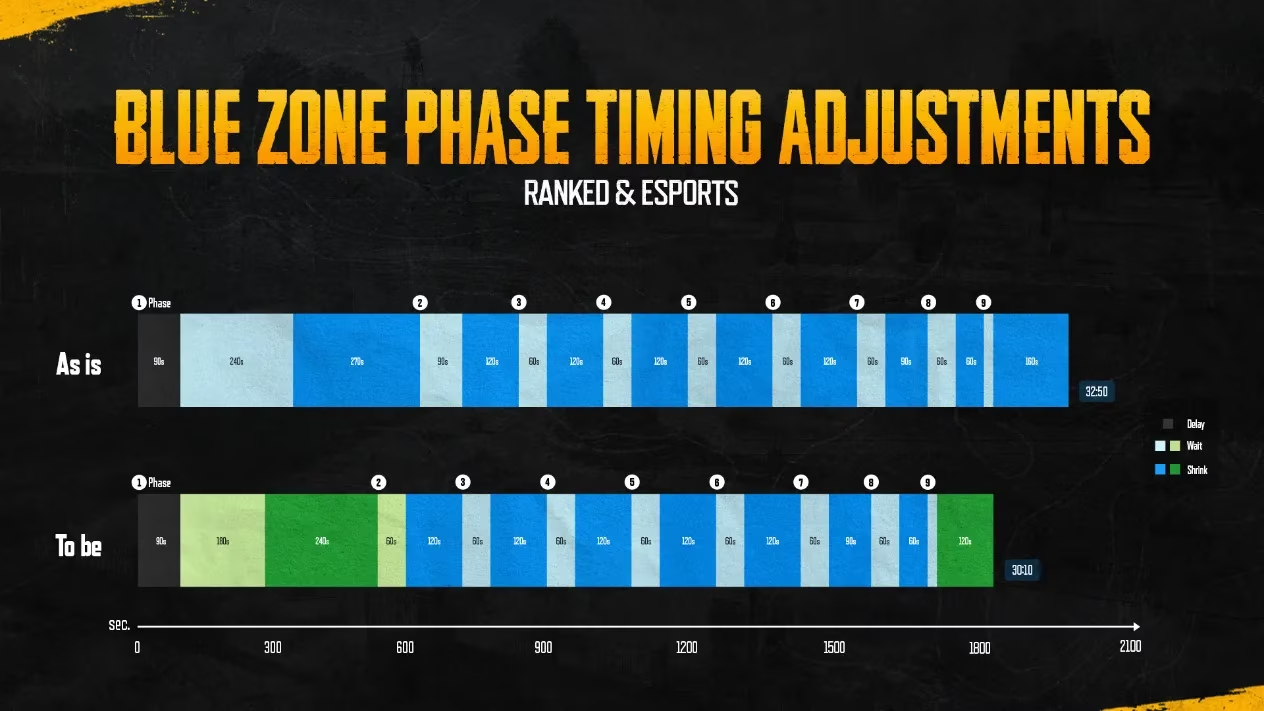
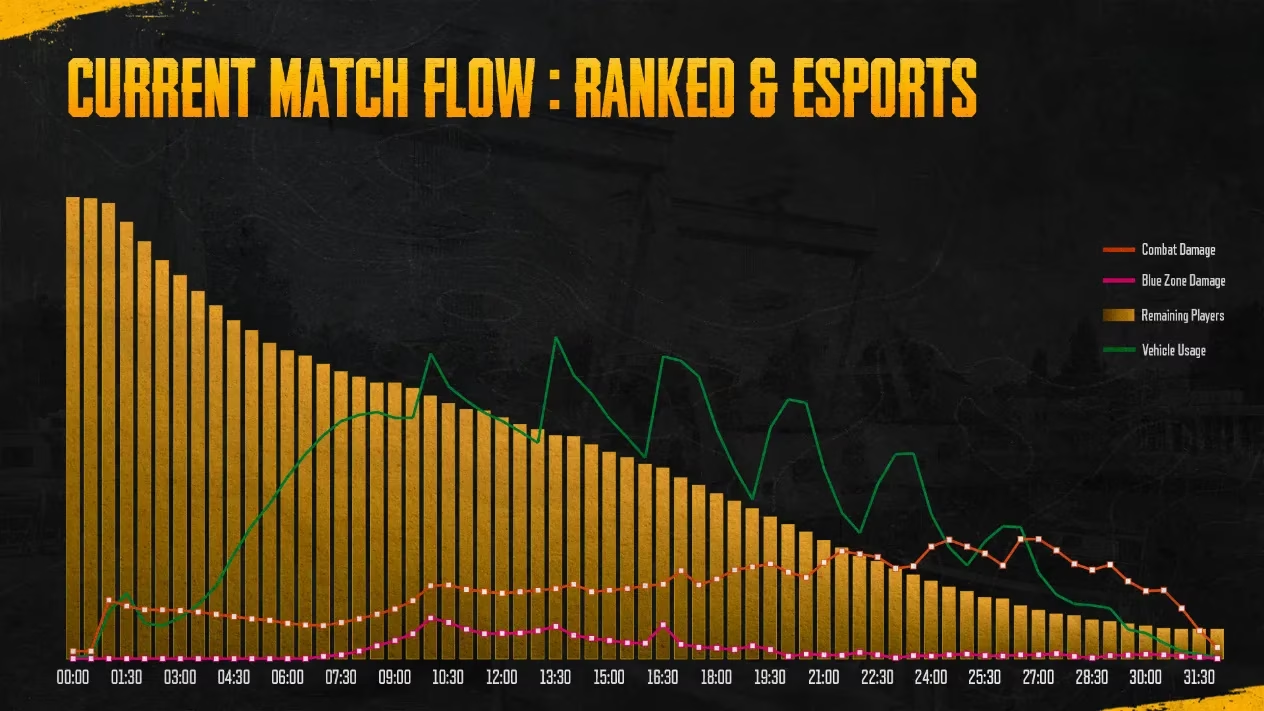
Meanwhile, Ranked and Esports modes are receiving a different prescription. The issue here wasn't just chaos, but predictability and occasional dead air. After initial looting, the pace could feel sluggish until the circle made a decisive shift. Furthermore, the strong "zone-centering" adjustments made future safe locations a bit too easy to forecast, draining the late-game uncertainty that makes Ranked so pulse-pounding. The fix involves tweaking phase durations to keep things moving and, crucially, reducing the strength of the zone-centering algorithm. This injects a dose of beautiful unpredictability back into the game, forcing more dynamic positional battles. However, competitive integrity remains king. Some centering adjustments will stay online to prevent truly cursed circles from deciding a tournament's outcome.
But the real game-changer—dare we say, a "get out of the storm" moment—is the entirely new damage model. The old system scaled pain based purely on distance from the safe zone. If you were just a hair outside, the tickle damage was negligible; a kilometer off the grid, though? Immediate panic. It was a clunky mechanic, weirdly forgiving for a "zone hugger" and nonsensically punishing for someone making a wide flank. Gone is that distance-based calculation. Now, Blue Zone damage increases based on how long you stay inside. It’s a timer, ticking up with every second of exposure. This is a much more intuitive system. The Zone’s message is no longer a mysterious "how far?" but a chillingly clear "how long?" Early-game rotations that lag behind will still be viable, but the late-game shenanigans? Don't expect the Blue Zone to just let you off easy anymore. Strategies that hinged on tanking Zone damage with healing items while setting up a flank are now significantly riskier. The Blue Zone, in developer speak, has gotten a lot less lenient toward those who want to play with its boundaries.
This 2026 revamp is a reflection of a game that isn't afraid to examine its foundational pillars. The Blue Zone is more than a shrinking circle; it's a narrative device, a match director, and a silent protagonist in every player's survival story. The team has promised to closely monitor the data, paying special attention to survivor counts per phase, player density in safe areas, and whether people are accidentally frying themselves more than intended. The devs have been pretty candid, saying they want to ensure the Blue Zone continues to positively shape the rhythm of PUBG—neither overly predictable nor a restrictive killjoy. It’s a delicate balance, a dance between forcing action and allowing artistry. With these changes, the hope is to reinforce the unique, sweaty-palm identity of Normal matches and the high-stakes chess match of Ranked, making every move toward the white circle a decision that truly matters.