PUBG Custom Skins: Can You Create Your Own? Safe Options Explained
Discover the crucial truth about creating custom skins for PUBG, where official cosmetics and file-level modifications present significant risks to your account. While technical workflows exist, the severe ban risks and client-side visibility limitations make it an unsafe endeavor for most players.
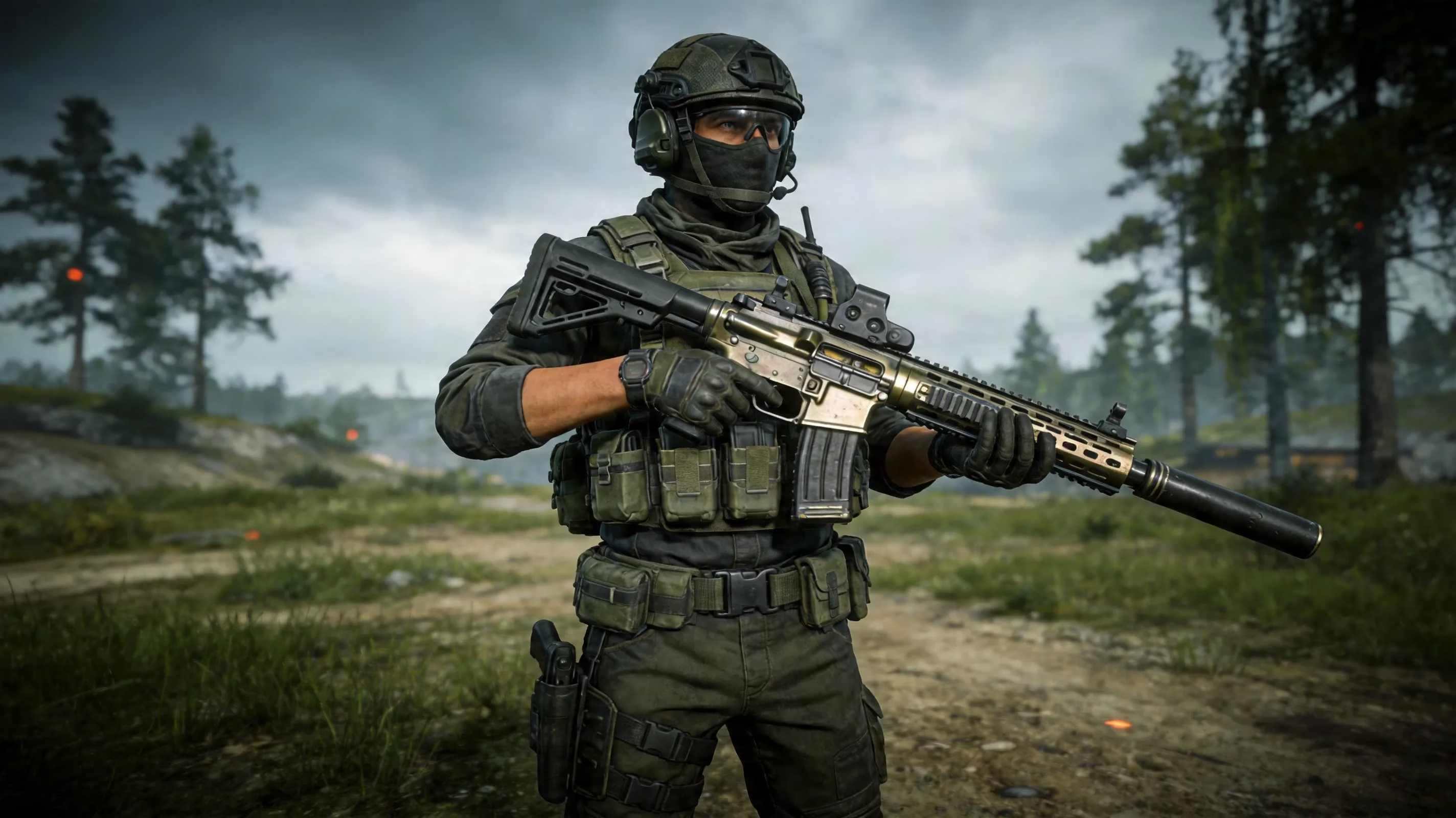
PUBG: BATTLEGROUNDS continues to be one of the most popular battle royale games, whether you log into Erangel PC or play mobile games. Many players have asked how to create custom skins for PUBG. Unfortunately, as of 2026, it is not possible to create custom skins for PUBG. Your user account may be affected if you attempt to add actual assets into the live PUBG Game. However, there are legitimate options that are safe for you to do and some that are not safe and created by the PUBG Community:
Where Are The Custom Crafted Skins Wrought From
It is essential you understand what official cosmetics and file-level modifications to the skins are when you create custom skins in PUBG. The Official Cosmetics System of PUBG exists in the Store, Workshop, in Collaboration with Each Seasons Content etc. Once you purchase any item through an Official Cosmetics System there is full support for players. Making Player Created Assets is another thing entirely. When players make Player-Created Assets they will have changed local game files and therefore the visual display of PUBG content i.e. Weapons, Outfits, Vehicles.
There is an extreme amount of risk to your player account when making Asset Mods (Player Made Skins) as the BattlEye Anti-Cheat monitors both your visual display of Asset Modification and the amount of assets that are altered on your PC. The risk in modifications is likewise why Tencent (Mobile) Complete Security Solutions for player accounts do not allow for the Player-Created Skin modifications. Often times, older guides omit the subject of visibility entirely. If you are playing PUBG on the PC side with custom skins, then that will be client-side only if it works. So, you will see it - but everyone else, will see the "normal" official cosmetic that your game will render regardless of what your custom skin looks like. If you are a streamer or creator with the hope of getting big branding from this - then that lack of visibility will affect your chances.
| Platform | Custom Skin Visibility | Anti-Cheat | Ban Risk |
|---|---|---|---|
| PUBG PC - Live Server | Self Only | BattlEye (Kernel) | Very High |
| PUBG PC - Offline/Custom Match | Self Only | Reduced Enforcement | Moderate |
| PUBG Mobile - Live Match | Self Only | Tencent Anti-Cheat | Very High |
| PUBG Mobile - Training Room | Self Only | Reduced Enforcement | Moderate |
PUBG Custom Skin Creation Workflow
As you can see above, i am really going to focus on creating a custom skin from a technical perspective. The workflow takes the same approach to creating a custom skin for Unreal Engine 4's (UE4) texture mod program. PUBG is built off of Unreal Engine 4, and the assets that PUBG uses are located in the .PAK archives. Once you are in the .PAK archives, you will be dealing with "cooked" unreal assets such as .UASSET and .UEXP files which contain texture data, mesh references, and metadata that the game engine needs in order to load everything properly.
So at a basic level creating custom skins for PUBG can look like this:
-
Extract the asset files of the custom skin from PUBG's .P.K. archives.
-
Export the texture to an editable image format.
-
Edit the texture while maintaining UV alignment.
-
Convert the texture back to the required file format. Repack or replace the asset.
-
Use the game and determine if it loads where it cannot crash.
This looks easy on paper, but in reality, it is not.
Texture Editing Set Up
The first step is getting at the texture files in an editable format. Historically, modders used various tools (like UModel or UEViewer) to explore PUBG’s .pak files and export textures in either .png or .tga formats. Once the texture is exported, the actual editing of the texture will be completed just like you would with normal art software.
The most common setup would be as follows:
-
Adobe Photoshop: If you are using layers for your texture work, for color work, and for making non-destructive edits as cleanly as possible.
-
GIMP: If you would like a free version of Adobe Photoshop/Illustrator that still allows you to do texture work well.
-
DDS plugins or exporters: So that when you are finished editing the texture, you will save it back as Unreal Workflow will expect.
For textures imported into Unreal Engine, the format and compression of the file will matter more than many modders realize. The vast majority of PUBG related UE4 assets, on average, will use .dds files, and the type of compression used should correlate with the type of map it is for:
-
BC1 Compression, when there is no transparency in a diffuse texture
-
BC3 Compression, when an alpha channel is required for the texture
-
BC5 Compression, will be used for normal maps to reflect surface depth and direction of the light.
UV alignment tends to be the most confusing aspect of the entire process. A UV Map is the flattened 2D representation of a 3D model, and every part of your texture must be aligned properly with a corresponding part of the UV map. If your paint job exceeds UV boundaries or causes painting to be missing from an island, you will see stretched and ugly edge bleed or clear tearing artifacts to your model when it is rendered in-game. Many seasoned modders will open Blender's UV editor and check the alignment of their paint job prior to exporting out for the final time.
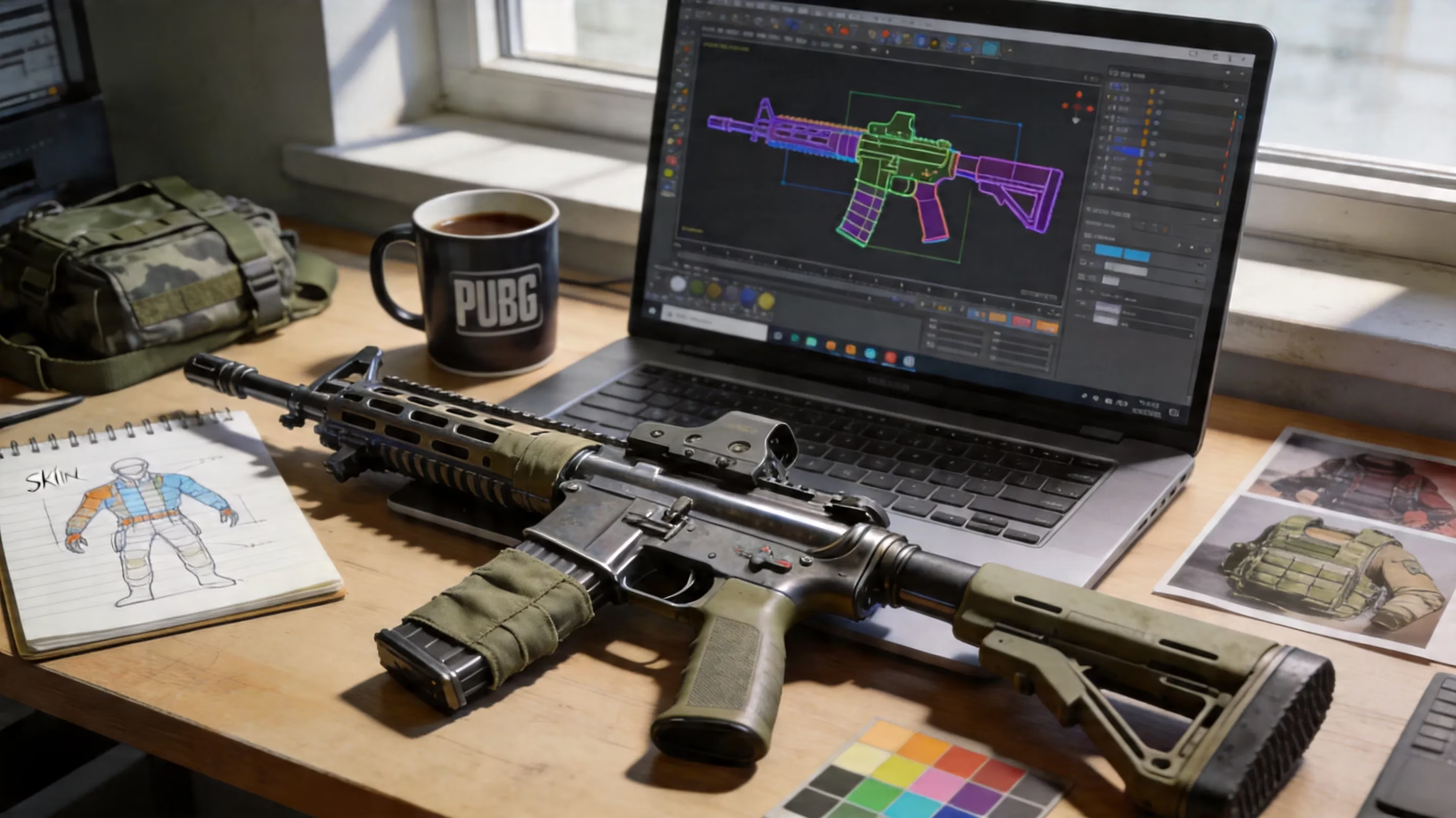
To help with this, here are some practical rules:
1) Maintain the original resolution of the original image unless you know for sure that the game engine can support a higher resolution.
2) Maintain the aspect ratio.
3) Apply the appropriate DDS compression method for your texture type.
4) Leave a significant amount of padding around your UV islands to reduce the chance of seam artifacts.
5) Test using a higher resolution before downsizing.
Import Limitations and Repacking Limitations
This is the point where beginner modding is usually no longer a possibility. Repacking edited textures so that PUBG can load them is not as easy as simply dropping the files back into the folder they came from. Each texture file you edit has data in it that Unreal Engine uses for loading the textures, i.e., serialized metadata, asset references, and registry links must all still be valid or else the texture will not be loaded.
If you modify any of the raw texture data in either the .uexp or any of the related files without changing the offset, header size, or metadata to match what is expected in the UE4 engine, PUBG is likely to crash instantly when it launches. You can use tools like UAssetGUI to inspect or modify the headers of Unreal assets. However, if you have an incompatible tool to the version of UE4 that PUBG is using then the output will almost certainly be corrupt.
Lastly, there is the issue of live service. PUBG is constantly receiving patches, which usually means that the .pak files have been modified. As long as you can get a texture mod to work for the current patch, you will still have to maintain that result on an ongoing basis due to future patches being able to overwrite, corrupt, or trigger an integrity mismatch with the mod. When you get a texture mod working, the result will only ever be visible on your machine.
Risks of Custom Skins with PUBG Anti-Cheat
This is the information you will want to definitely pay attention to. BattlEye does not check once when you start the game and that is enough; it will continue to monitor you for the entire time you are playing PUBG PC via BEDaisy.sys, which is a kernel-level driver that has access to your system’s resources and can monitor the processes running on your computer as well as many other things throughout your session, such as how much memory you are using.
This is important because it is widely known that most of the methods used to create custom skins (also known as skins) do things that anti-cheat systems already consider suspect, such as:
-
Injecting modified
.pakfiles -
Hooking file reads to redirect loading of assets into memory
-
Updating texture pointers in the game’s memory
-
Using third-party applications to modify or review the game’s process data
Many of the so-called “skin changer” guides still incorrectly imply that their methods are undetectable if they are used cautiously, but as of 2026 this assertion is not true. BattlEye has well surpassed basic signature-based detection and has moved on to behavioural detection, known software signatures, and analysis of abnormal memory access patterns. Additionally, the risks associated with using external memory tools, such as those once considered to be “safer” because they do not inject directly into the target process, have increased greatly due to BattlEye’s expanded monitoring of cross-process handle access and cross-process callback registration.
Some players falsely believe offline testing is safe; however, this is not necessarily the case. Even if you're in an offline or training scenario, BattlEye will be initialized before gameplay begins, so you are still at risk of detection even if you aren't in a standard live lobby.
Punishments for detection can be severe as well. PUBG does not always just suspend your account, they can also place a permanent hardware restriction on the device as a valid violation of the game's terms of use. This means that if you create another account, you will not bypass the ban because the device has been flagged. For many of the long time players or streamers with years worth of account progress, this can be devastating.
Safe Alternatives to Custom Skins in PUBG
If your main goal is to have a unique look but don't want to risk getting your account banned, the best way to do so is by utilizing the official PUBG cosmetic systems. In fact, the majority of the meaningful cosmetic styles will only exist through these systems in the future (2026).
The "Workshop" and "Special Crafting" systems are as close as PUBG gets to a legitimate way to build/create your own style. You earn Tokens and/or Schematics usually by opening Loot Caches from in-game events, and then you can use those items to craft exclusive cosmetics. Krafton has heavily committed to this craft-able cosmetic option with many premium releases, including the March 2026 collaboration with Aston Martin that allowed players to craft vehicle skins (such as DBX707 or V12 Vantage Roadster) using Tokens earned from Loot Cache Packs purchased with either G-Coin or by checking in on the anniversary.
Another great option is “progressive weapon skins” which only can be obtained using the above cosmetic systems. Official skins evolve over time through gameplay progress/unlocked upgrades and allow you to own your unique look in a way that's similar to creating a texture. When trying to spend wisely you should keep an eye on when you purchase items, as Crafter Pass bundles generally represent the best value at the start of their life cycles (2026 rotation pattern).
If you allow too much time to pass before purchasing you may find that many of the items you track are gone by the time you go to make the purchase or are difficult to find. Currently bundled caches containing cosmetics + Schematics are good value in G-Coins compared to single item purchases.
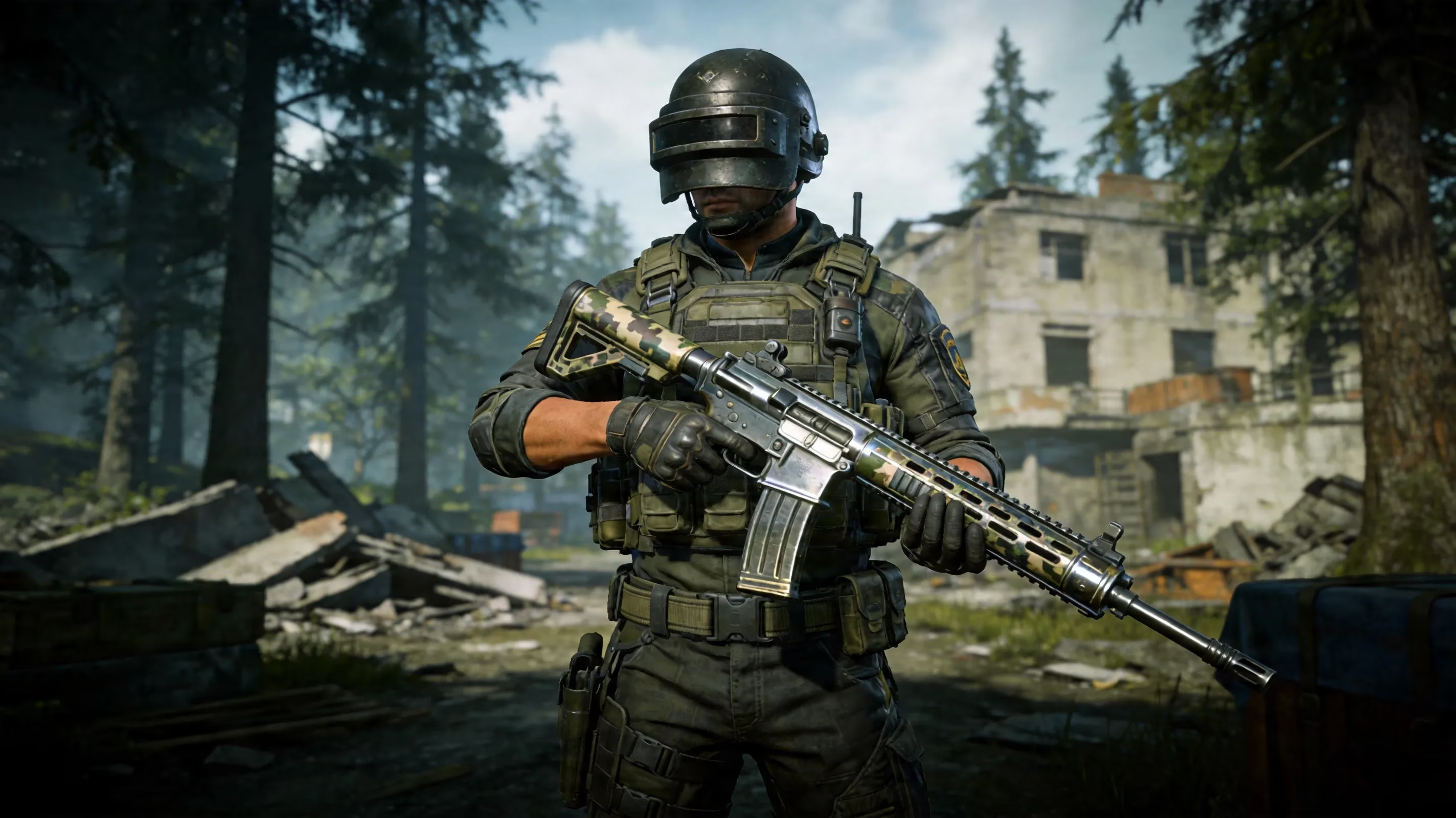
Customization Pathways Without Limitations (Legitimate)
The cosmetics of PUBG Mobile function as a sandbox-like economy but with a different structure than the PC. The premium currency of PUBG Mobile is UC (Unknown Currency). UC is required for Royal Pass progression, crate pulls, and temporary event-based cosmetics, including what can be referred to as a "major collab" cosmetic drop (BAPE x PUBG Mobile for example).
Mobile cosmetics tend to be more accessible on a lower level than they are on PC; however, the way in which mobile-based cosmetics exist is much more aggressive with limited-time windows of availability. Some Mythic and Gilt-tier cosmetics are available for only a short period during the current season, and thus no longer available at the time you try to acquire them.
Due to this aggressive manner in which they are entered into the marketplace, the newer Gilt tier (the highest tier of official mobile cosmetics) has produced the most flamboyant and attractive designs currently (by means of animation, transformation effects, and dual-form forms) in mobile games. In case you are a content creator and want to obtain an item that your audience will notice when they purchase it, this type of path to obtain items is a great cost-effective cosmetic option.
There are many different ways you can obtain cosmetics, but here are some of the most common ways to get cosmetics you want:
-
G-Coin Bundles with included Schematics: To get better value.
-
Crafter Pass Early Purchases: Before price drops at Exchanges.
-
Specific Crafting Events: Targeted at Premium Cosmetics.
-
Progressive Weapons Skins (Cosmetics): Allowing for visual progress over time.
-
Limited/Randomized Draws on Mobile Devices with UC: Obtaining the highest level Animated Sets.
Here is a general table to help you understand the best practices regarding different inventory methods in PUBG for acquiring every tier of Skin:
|Cosmetic Tier|Acquisition Method|Craftable|Notes
|---|---|---|---
|Standard|Store/Battle Pass|No|Available all the time
|Seasonal|Seasonal Event|Partial|Time-limited
|Collaboration|G-Coin Loot Cache|Via Token|Top items require Schematics
|Mythic|Classic/Special Crate|No|Randomized, +1 pity system
|Gilt (Mobile)|Lucky Draw|No|Highest visual tier, UC
Common PUBG Cosmetic Problems with Solutions
When a player has edited their skins via unofficial channels, they will run into the same problems repeatedly. Some are visual, and some may completely break the game.
If you aren’t seeing your edited skin in-game, then more than likely you need to remove the original .Pak file and replace it with your edited version. This can occur if load priority is not overridden or if the patch has restored the file completely as it was before. The technical method for fixing this issue is to check which .pak mount loads first, and force the modified .pak to load first. This is not something that is easily understood and remains risky as well.
The first common reason why a game will crash at launch is because the header of the .uasset file is corrupted or the metadata is not a match. The game expects to have one texture size and finds another, which could cause it to crash long before getting into the lobbies. Returning the original .uasset file and rebuilding the edited one while ensuring that a stricter offset is preserved is the common resolution, although even when this process works the fix might only be good until the next game update.
Texture artifacts or visible seams is another common issue with texture loading. In this example the mod successfully loads but the visual quality does not meet expectation. There should be no color bleeding on the UV edges, no unsightly compression blocks, and no visible seams on the model. This usually occurs when the DDS compression format was incorrectly chosen, the UV was poorly padded, or the base resolution was too low. Good padding, higher texel density, and cleaner downsampling will assist in preventing visible artifacts.
Without a doubt the most common long-term outcome is patch breaking everything. After Krafton patches the .pak files that were modified your changes could be overwritten and/or rendered invalid the moment the game is updated and the patch applied. There is no permanent work around to this because live-service games do not support modding.
FAQ: How to Make Custom Skin Mods for PUBG
Can custom skin mods get my account banned?
Yes, you are at significant risk of account suspension on live servers. In 2026, PUBG’s anti-cheat tool is far more aggressive than has been expected based on older guides and punishment can result in both account and hardware bans.
Will my custom-mod skin be seen by the other players?
No, custom skin modifications are only visible to the player’s client. You may see your changed skin on your client, but at the same time, all other players will see the same item based on what their own client is programmed to display.
Are there any official tools for creating skins for PUBG?
No, there are no official tools for creating custom skin modifications in either PUBG PC or PUBG Mobile as of the year 2026. Krafton has not produced a public modding SDK or a publicly available official skin creation toolkit. There have been community events and player feedback to help create cosmetics, but there is no real pipeline for players to make their own skins.
What is the best method for achieving unique quality?
The best way of achieving unique quality is to use the official cosmetics, especially those produced through Workshop Special Crafting, cooperative events, progressive skins, or through premium mobile draws through U.C.. These cosmetics will be seen by all other players, as well as by your audience through live streaming; therefore, they should be the main focus when attempting to create a well-known appearance.