PUBG Esports in 2025: A Look Back at the Pivot That Saved Competitive Play
PUBG esports and competitive survival transformed with the PUBG Global Series, pioneering tech and accessibility for an electrifying scene.
Man, let me tell you, looking back from 2025, that moment in early 2020 when PUBG Corp announced the postponement of PGS: Berlin was a real gut punch for the entire community. I remember sitting there, hyped for the upcoming season, only to have the rug pulled out from under us. Talk about a plot twist nobody saw coming! But you know what? That decision, made with the players' and fans' health as the "top priority," as they put it, was the first domino to fall in what would become a complete transformation of PUBG esports. Back then, we were all just trying to wrap our heads around a "global health emergency" and what it meant for our favorite competitive survival game. Little did we know it was the start of a new era.

The Great Pivot: From LAN to Cloud
When the in-person events got the axe, the scene could have totally collapsed. But PUBG Corp didn't just sit on their hands. Oh no, they got to work. Remember that line about providing "updates once we have a better understanding of the best options"? Well, they weren't kidding. The initial regional qualifier chaos was real, but it forced innovation. By late 2020, we saw the birth of the decentralized competition model. Top-tier players weren't flying to Berlin or Bangkok anymore; they were competing from certified, high-security esports facilities in their own regions. This was a game-changer, folks. It cut down on insane travel costs and player burnout, making the competitive circuit more sustainable and accessible. It was no longer just about who could handle the jet lag; it was purely about skill.
The Tech That Leveled the Playing Field
Let's talk tech, because wow, have things evolved. The old complaints about battle royale in the esports arena? Mostly centered on consistency and fairness. PUBG Corp tackled this head-on. They developed proprietary anti-cheat and network stability protocols that are now the industry gold standard. Competing from a Seoul facility feels identical to competing from one in São Paulo. The lag? Gone. The suspicious deaths behind cover? A thing of the past. This tech investment paid off big time, attracting more sponsors and stabilizing prize pools. The "realistic gaming and competitive survival" niche that PUBG carved out in 2017 finally had the rock-solid competitive integrity to match its vision.
The 2025 PUBG Global Series: A Well-Oiled Machine
Fast forward to today, and the PUBG Global Series (PGS) is a spectacle. We're talking:
-
Four Major Championships per year, each hosted in a different global hub with live audiences (safely back in the mix, of course!).
-
A Unified Points System that tracks performance across all regions, making every match count towards the annual Grand Finals.
-
Integrated Storylines with player cams, biometric data feeds (with consent!), and deep-dive analytics that make watching as strategic as playing.
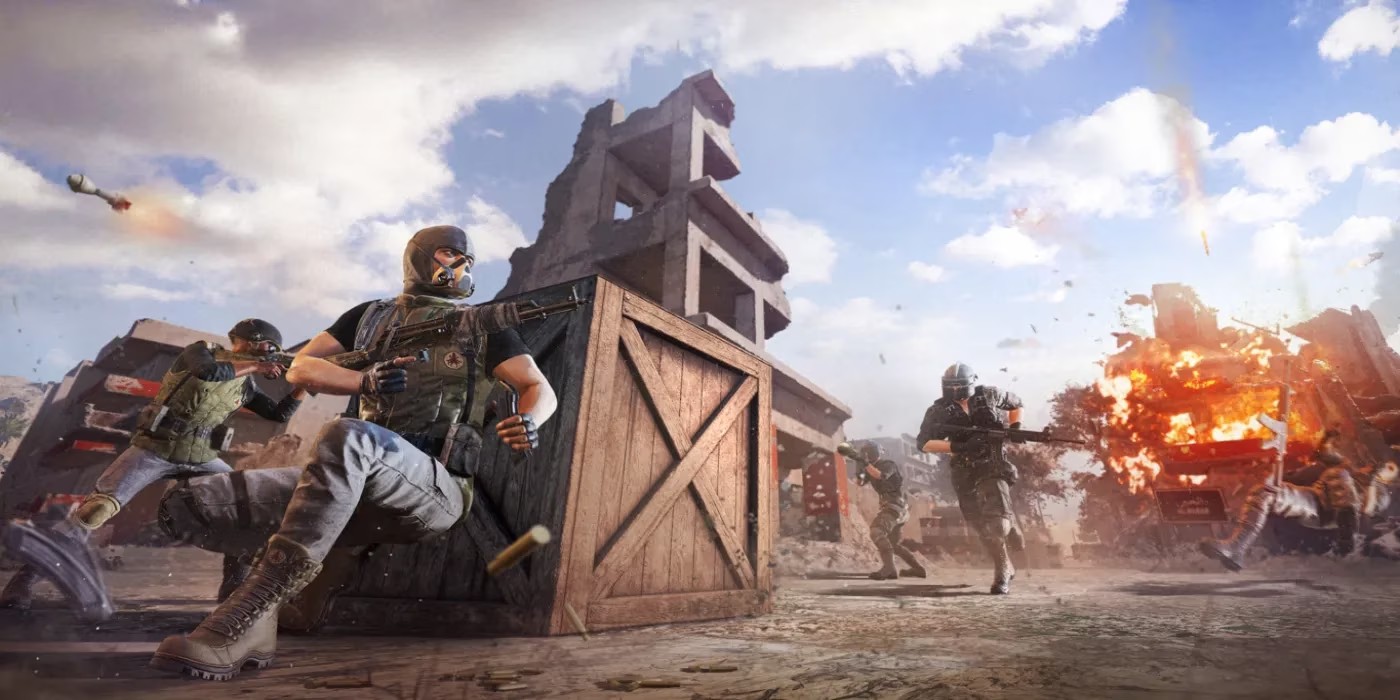
It's a far cry from the uncertainty of 2020. The ecosystem is thriving, with a clear path from amateur leagues to the pro stage. The players who weathered that initial storm are now legends, and the new blood coming in is insanely talented. The competition is fiercer than ever.
The Mobile Synergy and Beyond
And we can't forget the mobile side of things. Back in the day, articles were asking "PUBG Mobile, and Fortnite: Which is the Best Mobile Shooter?" Now, PUBG Mobile's competitive scene acts as a fantastic feeder system and parallel universe. Cross-platform exhibition events between the top PC and mobile squads are some of the most-watched content of the year. It's all under the PUBG esports umbrella, creating a massive, interconnected community. The game is still kicking on PC, console, and mobile, but the esports structure is what truly binds everyone together.
Final Thoughts: Patience Paid Off
So, was it worth the wait? Absolutely. That initial postponement was a bitter pill to swallow, but it forced a necessary evolution. The old model of cramming everyone into a single venue was risky and limiting. The new, resilient, tech-driven model is the future. It proved that the core of PUBG—tense, tactical, last-man-standing survival—is perfect for esports when supported by the right infrastructure. The fans who were "patient," as PUBG Corp asked us to be back in 2020, have been rewarded with a more robust, exciting, and global competitive scene than we ever imagined. The journey from that disappointing announcement to the slick PGS productions of 2025 is a masterclass in adapting to survive. And in a battle royale, that's the only strategy that ever really wins. GG, PUBG Corp. GG.