PUBG Player Count and Game Status Analysis
Is PUBG dead? PUBG: Battlegrounds remains lively in 2026, boasting strong player numbers, regular updates, and competitive matchmaking.
PUBG: Battlegrounds might have received the 'dead game' tag as far back as 2019, but with that said, in 2026, it still is consistently filling lobbies, producing seasonal updates regularly and continuing to have an actual esports presence with prize pools. This makes the ongoing question about is PUBG dead difficult to answer because the answer can change based on if someone is assessing peak player numbers, queue times or just simply their experience with the game after taking an extended break.
When you do a reality check, the answer is simple; PUBG is far from its crazy peak in 2018 of 3.2 million players concurrently (which is incredibly apparent). However, PUBG is still averaging hundreds of thousands of users on a daily basis. Game updates have continued to be released at a fast pace. Krafton has shown strong financial figures in recent months. Therefore, if you're trying to get a real answer, you need to take into account player numbers, matchmaking & future plans for PUBG and not just based on nostalgia from when it initially launch.
Is PUBG Dead at This Time in 2026
Put simply, no, PUBG is not dead at this time in 2026.
The better way to phrase it is that PUBG is no longer at its peak as a cultural event, but is still functioning and active as a live-service game. If you average 269,000 simultaneous users on Steam, with daily peaks around 451,000, then in today's world that would not be considered dead. PUBG resembles more of a mature live-service game with a loyal core player base than a game that will be deemed a relic of years gone by. When discussing "dead games", comparisons to 2017 and 2018 tell us a lot about when battle royale became popular - especially PUBG being all over Twitch. While that comparison may sound shocking, it's not really a meaningful statistic - no game can hold onto that level of novelty for the duration of its lifespan. The important thing is whether PUBG continues to have the ability to support matchmaking, continual development and competitive play; PUBG has all three.
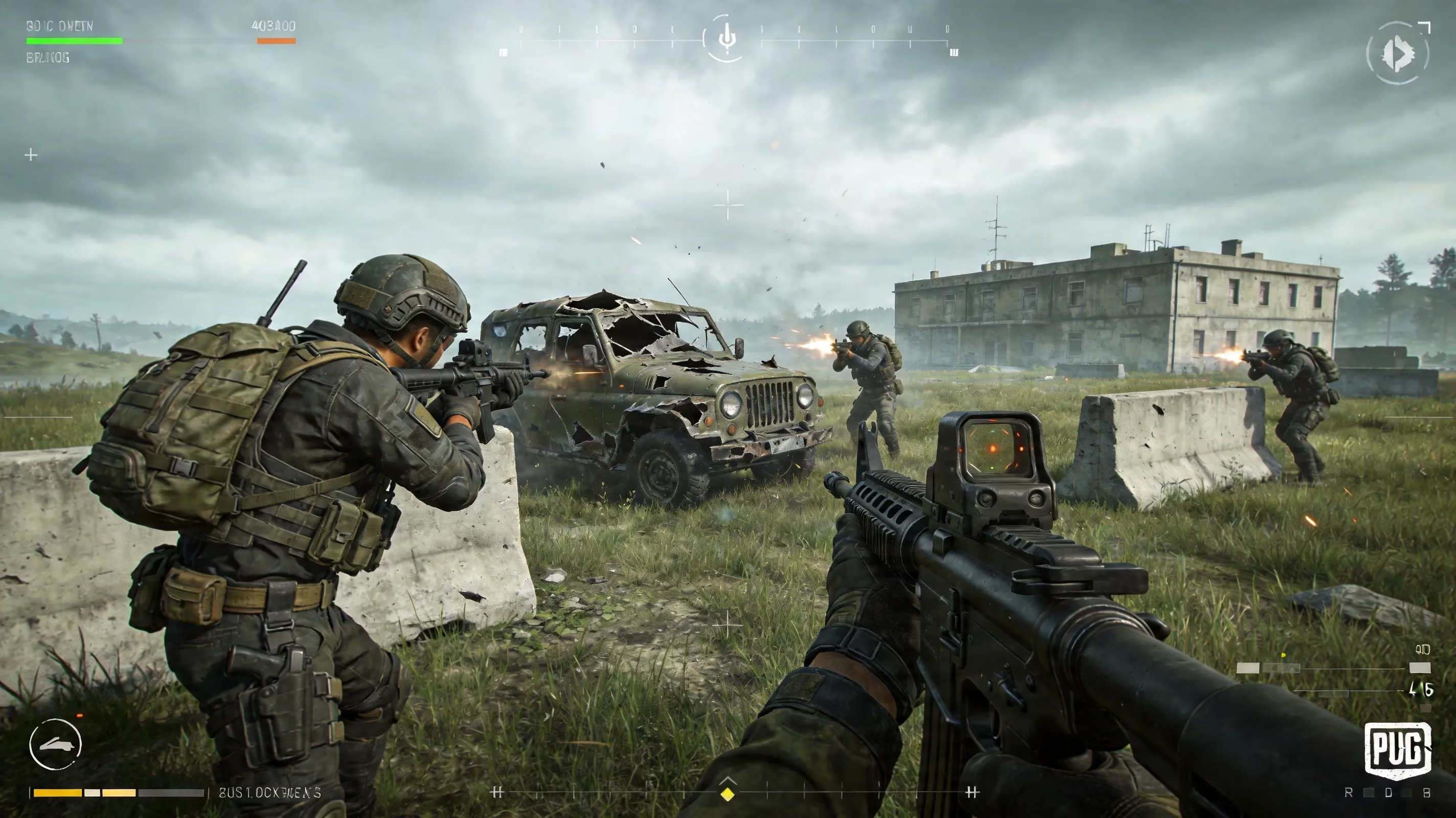
Players often get confused between game popularity and how hard it is to play. In fact, the lobbies in PUBG are still full of players, but they are made up of players who are much better than the average returning player (in terms of knowing rotations, recoil control, zone timing).
PUBG’s current player counts and matchmaking ability
If you look solely at the PC version, then Steam would show you the most public visible snapshot of the game.
Steam Player Count Statistics (between Jan 2025 to the present):
| Player Stat | # | Stat by Time |
|---|---|---|
| Average Concurrent Online Players | ~269,000 | Last 30 days |
| Highest Daily Concurrent Player Count | ~451,000 | Current record |
| Highest Concurrent Player Count | 3.2 million+ | Jan 2018 |
These player counts are strong enough that normal matchmaking remains viable for the majority of the population in most major game modes and regions. In Asia, ranked matchmaking in PUBG has almost instant queue times (pretty much all day). North America and Europe see their normal matchmaking queue times dip below two minutes during prime time hours! While there may still be some longer wait times during off peak hours, like when playing solo with first person perspective (FPP), this is more of an issue associated with niche modes rather than reflecting a collapse.
Where people actually are plays just as much into how the game feels to play in different regions than the total amount of active players. The bulk of the active PUBG player population is centralized in Korea, Japan, and Southeast Asia, causing all of those regions to experience a much more populated lobby feeling than their overall global averages would indicate. North America and Europe will feel less populated at odd hours but auto-matchmaking will pull those players into larger lobbies so they will keep moving.
Additionally, queue health is also heavily dependent on actual mode chosen:
-
Third Person Perspective (TPP) Squads (Normal): Fastest queue times pretty consistently.
-
FPP Solo Ranked: Slower queue times when compared to TPP squads; only see faster queues when playing on Asian servers.
-
Arcade Modes (like Team Deathmatch): Fast moving queues because of shorter match lengths and frequent lobby turnover.
-
Western Solos during non-peak: Most of the time this has the most experience with challenges when it comes to matching.
With that said, there are areas of the game with lower queuing rates, but for the most part, popular PUBG game modes are still functioning well from a matchmaking and queue perspective.
Why PUBG Feels Hard Rather Than Dead
Many users come back, lose multiple matches, and think that the game is dead. The player base isn't going away, but the player skill threshold is rising. When PUBG went to a free to play model, they both solved one issue and created another issue. As a result of the lower entry barrier, new players have been introduced to the population of the game. However, many of those new players are now attempting to compete against people who have developed years of muscle memory due to the thousands of hours that they have already spent playing PUBG. This can lead to some very bad first impressions.
There is a significant skill gap within PUBG that can discourage and demoralize newer players who have come from respawn shooters. For example, there is no aim assist for PC players; bullet drop and bullet travel time are things that players have to be aware of in a match; and poor positioning (i.e., standing out in the middle of a field or behind cover) is penalized far less than in the past; and you can be killed before you even understand where you were shot from.
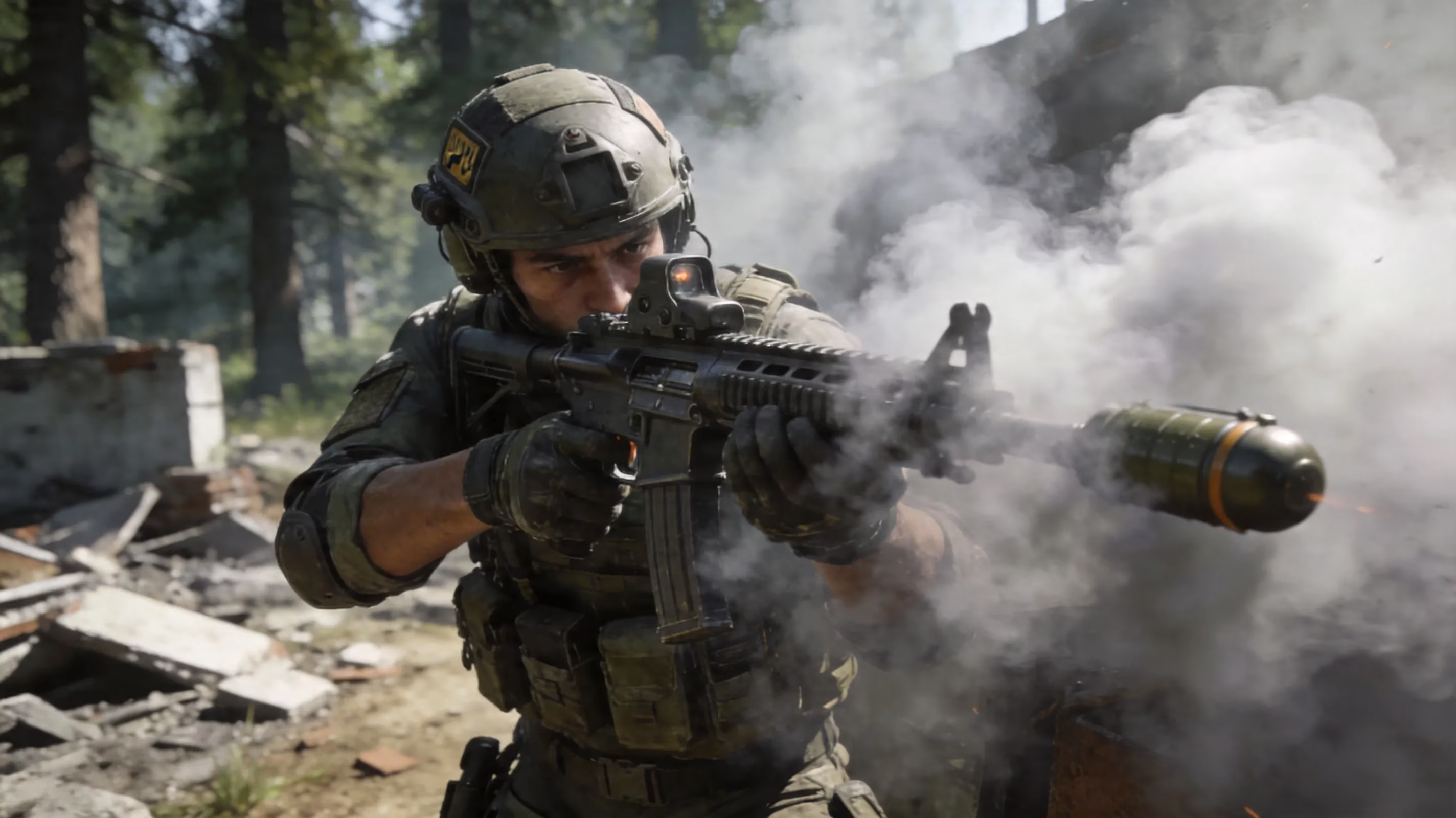
Many new players may feel that their first experience with PUBG was being "hacked" or that the lobby they are in was "sweaty"; however, this type of feeling is only compounded by playing against a player base that has been playing PUBG for an extended period of time. For example, the players who were playing PUBG prior to the game becoming free-to-play had many years to become experienced in the basics of:
-
Rotating to the current safe zone.
-
Reading the "ring."
-
Recoil patterns of weapons.
-
Timing of when to use utility.
-
How to position yourself against opposing players.
In 2026, players will be able to play in a more structured way than they have ever been able to play in 2017. Due to the experience of these players, they have a tendency to bring new players down with them due to their lack of knowledge; third parties tend to finish off weaker players earlier; and the methods in which players utilize smoke grenades and other types of utility will become much more effective than they have been in the past. All of this has resulted in the growth of new players having a difficult time adapting to the pace and competitiveness of PUBG, even in riot mode where the most competitive players are playing. Typically, you’ll find a mix of new players, veterans, and those experimenting with load-outs when going into a ‘normal’ PUBG lobby. Players have become more accustomed to this unpredictability over the years; therefore, this unknown is much more harsh than you may expect—especially if you are returning to the game after a long break and hoping for an easy transition back to playing it again.
At no point did Krafton raise the difficulty sliders behind-the-scenes; instead, as the game has aged, the balance of skill and knowledge among its remaining player base has leveled out.
PUBG 2026 M e t a and Live-Service Indicators
If Krafton were winding down the life of PUBG, then we should see little-to-no updates, vague communications and have lots of recycled content from other games or products used in PUBG. That is clearly not the case in March 2026. In fact, Krafton has provided a very detailed, specific and confident March 2026 Roadmap, with a major focus on three core ‘builds’: Depth, Diversity and Trust.
In terms of balance, Krafton is doing everything possible to keep weapon types from dominating the meta. Rather than allowing one AR/DMR to dominate the top tier for months on end, Krafton has been rotating weapon types every four months in the PUBG meta. Additionally, Krafton has been very active in releasing balance patches every two months, which are then followed by regular updates and hot-fixes as needed. This shows Krafton is still providing strong live-service support to this game and its players. The following are some key indicators of the future development of PUBG’s gameplay (2026):
• The rotation of ARs, DMRs and utility-based meta has changed from something that happened by accident, to something that is now intentional.
• The hybrid scope and tilted grip will be available in the April 2026 build.
• A brand new weapon will be added in August 2026.
• Destructible Terrain will have expanded areas in both Erangel and ranked modes starting in April 2026.
• Interactive Smoke can now be influenced by wind and can be blown apart by explosions.
• The introduction of secret rooms to Miramar and improvements to Rondo’s game flow will be part of the overall map redesign initiative.
The most impactful change in terms of gameplay will be the introduction of Destructible Terrain (which has become predictable in flow patterns throughout endgame locations). With the ability to create your own cover in open terrain) after the fact instead of only using predetermined locations will bring some new fun elements to each match.
Interactive Smoke is also a strong indicator that PUBG is still progressing and not plateauing. Smokes will no longer be a reliable tool against players mistaking them for well-defined barriers (due to the effects of wind/hrx) and as well as explosives on said smokes)/. This means there are additional elements to consider when pushing and reviving teammates and from here on out will give players additional options for utility use in the late game, thus remaining consistent with PUBG’s slower pace and heaviness of gameplay. Good growth through complexity is only possible when a studio has demonstrated it is committed to creating quality content.
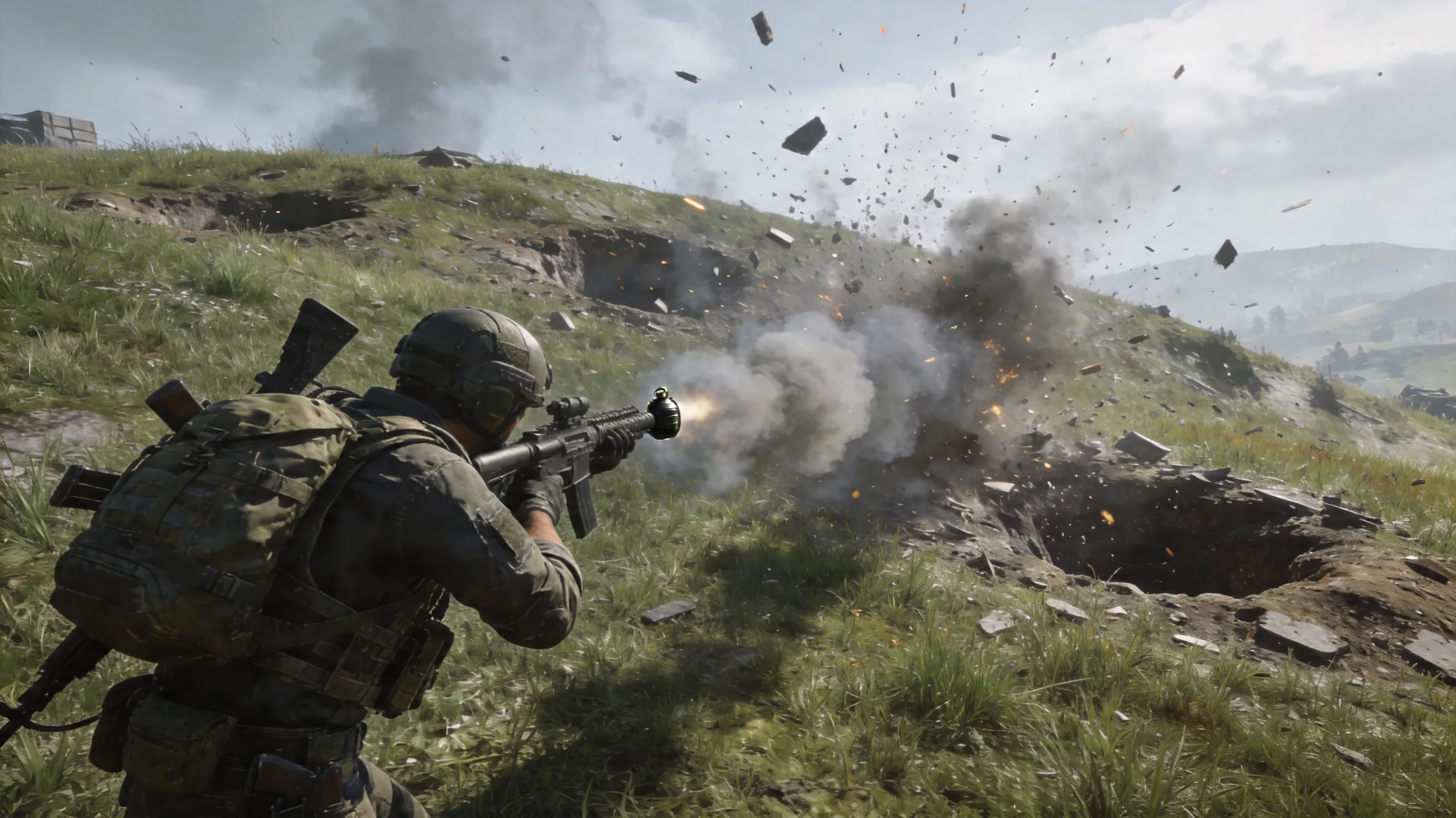
The above demonstrates that the overall future of PUBG will be what you, the user have confidence in based on the Development and Roadmap guidelines. Generally, when a developer prepares to end a game, they do not usually devote their time to reworking the flow of maps, rotating weapon ecosystems or building new tactical systems into the oldest maps.
Is PUBG Going to be a viable option for play in 2026?
In many ways yes, it all depends on your individual needs.
If you are an experienced veteran or someone looking for a good tactical shooter with both depth of available systems, PUBG will be in a good place to try out in 2026. The feeling of shootability is still very good in all sense of the word (weight), the overall pool of maps is greater than ever, and the new Ranked system provides a way for players to progress using survival and consistency - not just through raw kills. Additionally, the new Rumble weekend mode allows players to compete in the mode of their choice, but without the added pressure of grinding the main ladder for a place to go against similar opponent's.
As for the Squads, PUBG has remained a viable option. with the use of good communication, clarity of roles, and executing safe rotations, you can actually beat a numerous amount of matches (below the top end of the ladder) with opponents that have better skill level whether it be aim or tactical skills. In addition to that, squad play will ultimately be more rewarding for those looking for something a little bit different from a typical respawn shooter. The duo TPP normal is also one of the best areas to ease back into the game from a player's perspective since making an individual error will be much less costly than it would be in solo FPP ranked matches.
No doubt about it that new players will have the hardest time. Krafton has already provided statements indicating that they understand that there are issues with the onboarding process and have also stated that there is going to be a full tutorial redo coming in 2024. However, none of this is currently available as of yet. Currently, if you enter PUBG anticipating non-stop gameplay, and immediate requeueing of matches, then the game will quickly seem punishing. However, if you treat these early eliminations as a chance to learn (i.e., learning cover mechanics, which compounds should be contested, and at what time pressure from the blue zone will force players to rotate), you will find it much more rewarding!
You will enjoy playing PUBG in 2026 if you value:
-
High stakes matchups: where one singular life matters
-
Slow, strategic pacing
-
Gunplay that awards as much for positioning as it does for aiming
-
Teamwork within squads
-
A grounded, tense experience within the battlegrounds of a traditional battle royale
If you primarily want:
-
Quick respawns with no break between firefights
-
Ability driven firefights
-
Limited length of each match
-
An easy-to-learn approach to get started
Then you may want to consider alternate games. This is truly the defining difference. PUBG continues to provide a clear definition of what it is, and this clarity is continued through to 2026.
The Unreal Engine 5 update on the 2026 roadmap has likely been the most talked about part from the community. Of course, this is due to the delay of this update causing the community some concern for both the length of time it is taking to be released as well as concerns about how long we may be able to enjoy that version of PUBG once it becomes available. Notably, Game Director Kim Taehyun was very forthright in regards to the delay, stating simply "This is not going to be simply a switch from one engine to another". Because of this information, there will be changes to the content that was originally scheduled to coincide with PUBG's 10th anniversary (2027) due to the lengthy nature of this update.
This delay appears to be negative in terms of just the initial headline; however, upon reflection, it appears that this is very much a positive effect. Studios that are abandoning games do not typically undertake significant engine migration efforts, nor do they provide detailed explanations for any delays. The delay in upgrading PUBG from UE4 to UE5 is not a sign that PUBG is dead; rather, it is evidence that Krafton is planning to invest in this upgrade as a long-term foundation for PUBG to be around for many years to come.
This same rationale applies to esports and creative support. The roadmap contains plans for things such as Fantasy League, more character content for Contender, skin rewards through challenges, and improvements to the Workshop Pass. These are retention systems designed to help keep players engaged, instead of just trying to get them to spend one last time.
Rumble mode fits this mold as well, as it will provide squads with a competitive environment—complete with weekend leaderboards and ways to earn public recognition for being the best—but does not require them to go through the immense grind of having to push their team to rank. It’s a smart way to provide players with competitive gameplay, while still allowing them to enjoy the game without having to put in the hours required to achieve the highest rank possible.
On mobile devices, the two are even more separate and much larger. PUBG Mobile and the regional variants—such as Game for Peace in China and BGMI in India—function as their own ecosystems, essentially. In revenue for 2024, PUBG Mobile made $1.1 billion with about 25 million daily active users internationally, and the game has also set record-breaking levels of $100 million or more in esports prize money combined. A $3 million prize pool is set for the PUBG Mobile World Cup 2025 at the Esports World Cup in Saudi Arabia, where tournament viewership peaked with approximately 1.39 million concurrent viewers, representing the highest peak in over four years. This is not what one would consider an example of franchise decline.
FAQ for PUBG
Is PUBG PC dead?
No. Steam's daily average is reported to be approximately 269,000 concurrent players and upwards of 451,000 at peak hours. Additionally, most of the Ranked queue regions are still very healthy. Many PC users classify PUBG as dead, however, with considerable evidence to the contrary, it has the clearest roadmap for future development with active plans outlined for 2026.
Is PUBG Console dead?
There are no definitive answers since there are no metrics available other than the monthly Xbox Live player activity reports which do not have the same accessibility as Steam; therefore, it is difficult to know how many players are currently playing. In 2026, based on player experience, reliable TPP squad queues are consistently filling up in any Asian market during hours of peak U.S. and European activity. Krafton continues to provide dedicated console updates and services, including the ongoing support for current-generation consoles that began in 2025, which is further evidence that supports the platform.
Is PUBG Mobile separate from PUBG: Battlegrounds?
Yes, both commercially and functionally. PUBG Mobile is developed and published by Tencent under a licensing agreement from Krafton and runs on different hardware platforms and has completely separate schedules of content releases, esports structure, and monetization methods. Both PUBG Mobile and PUBG: Battlegrounds share the same name and battle royale-related basic DNA, but the pacing, mechanics, and commercial structures are entirely different. Therefore, when you ask are pubg mobile dead?, it would be absolutely correct to respond with the fact that mobiles are huge, as PUBG Mobile generates more than one billion dollars in annual revenue and has a total of over 90 million daily active users worldwide across different regions of the world.