PUBG's Resurgence and Future: A Look at the Battle Royale's Ongoing Journey
PUBG player count and game trajectory showcase remarkable resilience and strategic adaptation in the battle royale genre. This article reveals how targeted updates and a dedicated core community fueled its sustained success.
In the ever-shifting landscape of the battle royale genre, PlayerUnknown's Battlegrounds continues to be a title of significant interest. While its peak concurrent player numbers from the past are well-documented, the game's journey in recent times tells a story of resilience and adaptation rather than simple decline. As of 2026, looking back at its trajectory provides a clearer picture of its place in the gaming ecosystem.
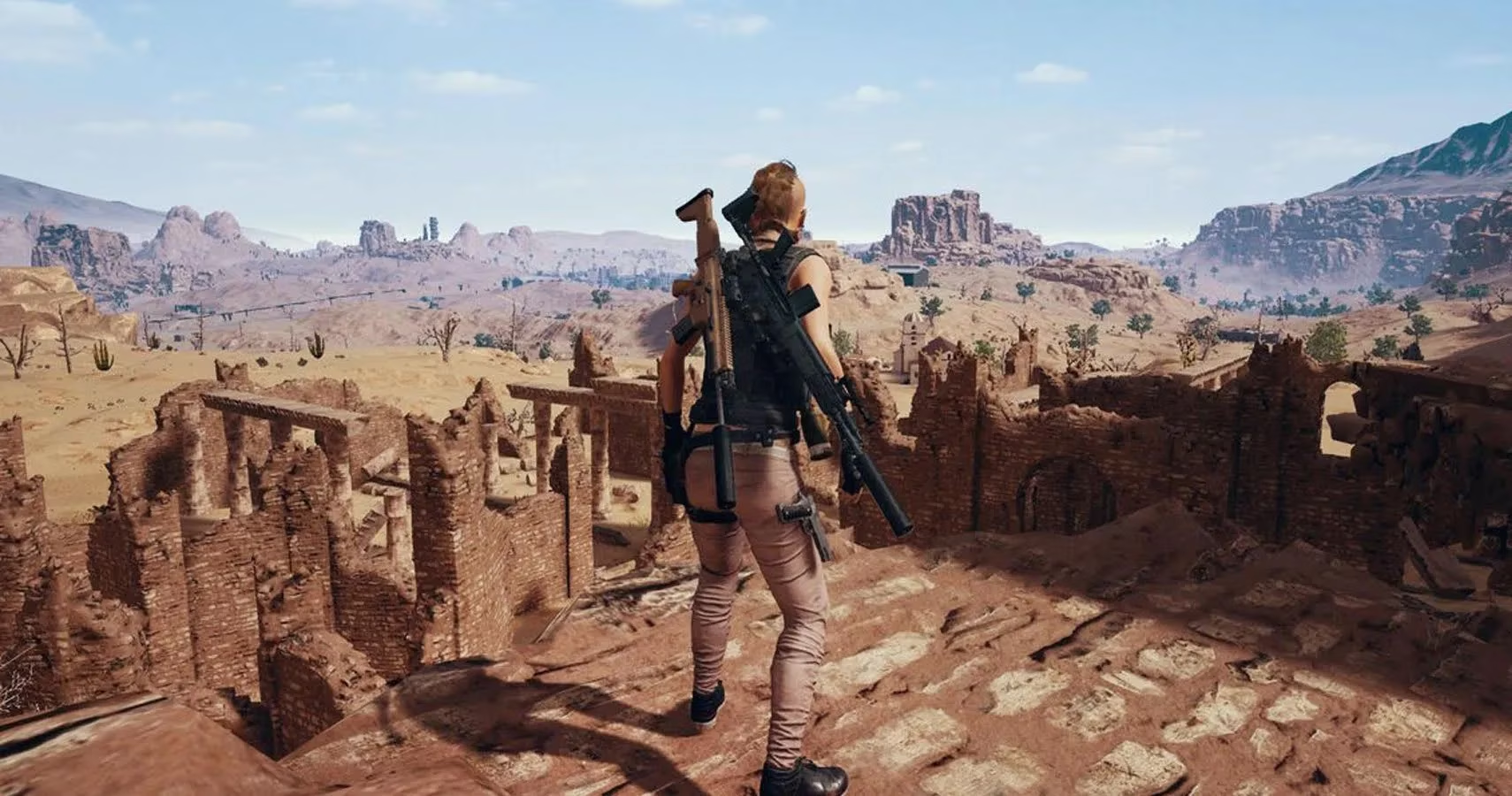
The narrative surrounding PUBG has often been one of dramatic rise and fall. It's true that after its monumental peak, the game experienced a significant reduction in its concurrent player base on platforms like Steam. However, focusing solely on that single metric paints an incomplete picture. The game's ecosystem expanded far beyond its PC roots, with robust communities thriving on consoles and, most notably, on mobile devices. This multi-platform presence became a key pillar of its longevity, ensuring that the overall player engagement remained substantial even when one platform showed fluctuations.
Analysts often point to periods where the Steam player count dipped, seeing it as a sign of trouble. Yet, these phases were frequently followed by noticeable resurgences. What drove players back? Often, it was a combination of factors:
-
Targeted Content Updates: The introduction of new maps, weapons, and gameplay mechanics.
-
Technical Overhauls: Major efforts to address long-standing performance issues and bugs.
-
Community Events: Limited-time modes and collaborations that refreshed the core experience.
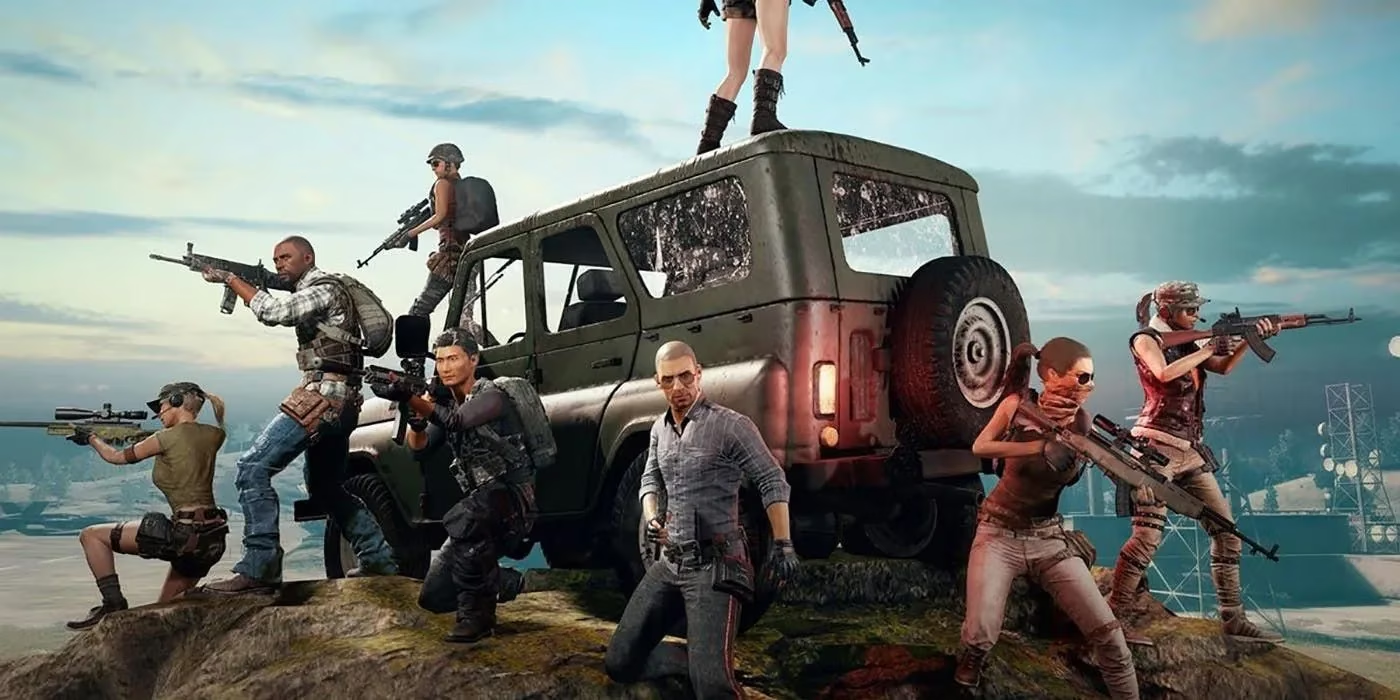
A smaller, more dedicated core player base can sometimes be a hidden strength. For a game that faced its share of technical challenges, this scenario allowed the developers to engage more directly with the community's feedback. The relationship shifted from managing overwhelming scale to fostering a stable environment for the players who were most invested in the game's unique tactical and realistic battle royale experience. This focus arguably led to a more polished and stable game over time, catering to an audience that valued precision and strategy over pure spectacle.
The battle royale market became intensely saturated, with numerous contenders vying for players' attention. In this crowded field, PUBG's strategy evolved. It stopped trying to directly compete for the mass casual audience and instead doubled down on its identity. The game secured its niche as the more simulation-oriented, hardcore option in the genre. This positioning proved sustainable. While it may not command the headline-grabbing numbers of its heyday, it maintains a consistent and healthy player base across all its platforms. The definition of "success" for the title has been recalibrated; consistency and a dedicated community are now the primary metrics.
Looking at its journey up to 2026, PUBG's story is not one of a forgotten relic but of a foundational title that adapted. It transitioned from being the genre-defining phenomenon to a cornerstone experience with a specific, loyal audience. Its development cycle became more measured, focusing on quality-of-life improvements, anti-cheat measures, and content that resonates with its core fans. The game serves as a fascinating case study in how a live-service title can navigate post-peak life, not by desperately chasing past glory, but by solidifying its core offering and nurturing the community that remains. Its legacy is cemented as the pioneer that started a revolution, and its ongoing service proves that there is lasting room in the market for its distinct flavor of tactical survival.