Recalling the 2024 PUBG Mobile World Cup: The Rise of Alpha7 Esports in Riyadh
Alpha7 Esports overcame a fifth-place group stage to claim the PUBG Mobile World Cup 2024 crown and its $3,000,000 prize pool in Riyadh.
The 2024 PUBG Mobile World Cup (PMWC) stands as one of the most defining moments in mobile esports history. Set against the vibrant backdrop of Riyadh, Saudi Arabia, the tournament merged regional pride with high‑stakes competition. It became a central pillar of the broader Esports World Cup (EWC) 2024, which gathered elite athletes from multiple mobile gaming disciplines. With a massive $3,000,000 prize pool on the line, 24 of the world’s best squads converged under the desert sun to fight for glory, marking the evolution of what was previously known as the PUBG Mobile World Invitational (PMWI).
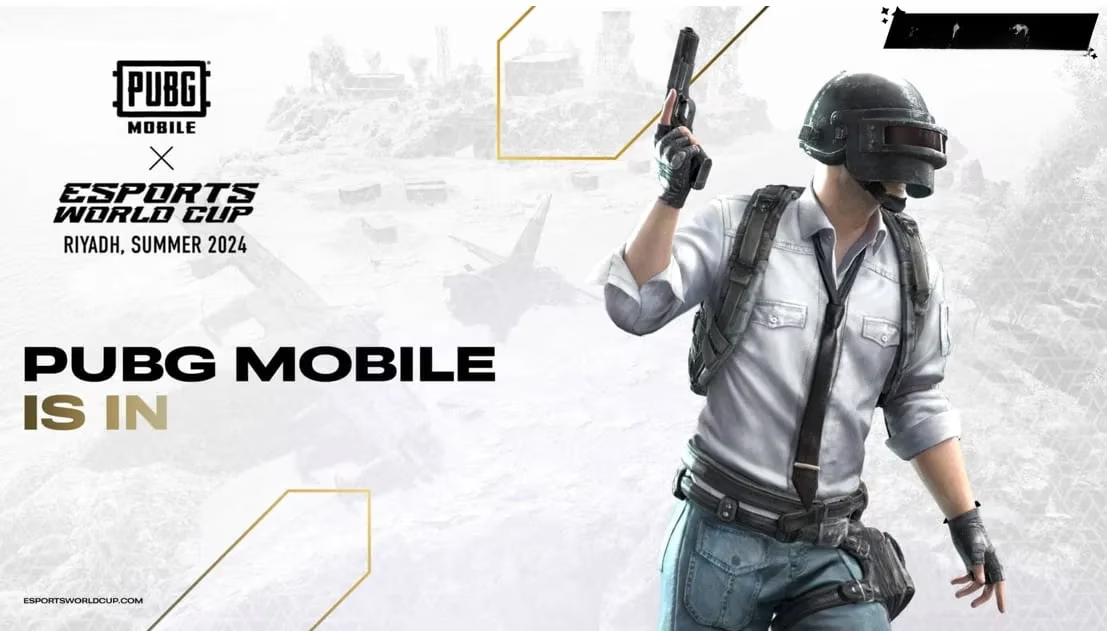
The qualification process underscored the global nature of the event. Five teams came from Southeast Asia, a region long considered the heart of PUBG Mobile competition. Central and South Asia contributed four squads, the EMEA region four, and the Americas three. China sent two representatives, while South Korea and Japan each secured one berth. The lineup was further enriched by the winner of the PUBG Mobile Rivals Cup (PMRC) Korea vs Japan, two specially invited teams, and the champion of the PUBG Mobile Global Open 2024. KRAFTON and Tencent Games had previously mapped out this mid‑season international spectacle in their December 2023 esports roadmap, ensuring it would become a highlight of the competitive calendar.
The tournament’s structure was meticulously designed to maximize drama. In the group stage, all 24 teams battled in a round‑robin format, with the top 12 advancing directly to the main stage event. The bottom 12 were relegated to the survival stage, where they were joined by four regional invitees—one from each PMSL (PUBG Mobile Super League) area: SEA, Americas, CSA, and EMEA. These sixteen fighters then clashed for just four remaining tickets to the main stage. Ultimately, 16 teams stood ready to contest the lion’s share of the prize money.
KRAFTON’s partnership program added yet another layer of prestige. New organizations from CSA, the Americas, and EMEA joined the familiar SEA powerhouse teams, signaling a deliberate push to broaden the competitive geography. Fans witnessed familiar brands and surprising newcomers alike, all aiming to etch their names in esports lore.
Alpha7 Esports from Brazil delivered a masterclass in resilience. During the group stage, they could only manage a fifth‑place finish, overshadowed by Yoodo Alliance’s league‑phase dominance. Meanwhile, the fall of Falcons Force (formerly Stalwart Esports) sent shockwaves through the community, proving that no reputation guaranteed safety. But once the main stage began, Alpha7 transformed. They played with a controlled aggression that left no room for doubt, gradually pulling away from the chasing pack. By the time the final circles closed, the Brazilian squad had built an insurmountable lead. Alpha7 Esports seized the championship and a $400,000 reward, with Japan’s Reject finishing second ($200,000) and China’s Tianba claiming third ($140,000). The individual brilliance of Reijioco from Reject shone throughout—he was named MVP and pocketed an additional $50,000.
This triumph was more than a single victory. It exemplified the rise of non‑Asian teams on a stage traditionally ruled by Southeast Asian and Chinese organizations. Alpha7’s journey from a middling group stage to a commanding grand finals win became an instant classic, dissected by analysts and celebrated by Brazilian fans worldwide.
Looking at the broader picture, the 2024 PMWC laid the foundation for a sustained era of growth. Level Infinite, Tencent’s global gaming brand, announced a three‑year partnership with the Esports World Cup Foundation, pledging to accelerate the PUBG Mobile and Honor of Kings esports ecosystems. That commitment has since borne fruit, with annual World Cups attracting larger viewership and deeper talent pools. By 2026, the PMWC has evolved into a juggernaut that not only crowns a world champion but also fuels grassroots programs, collegiate leagues, and regional circuits. The 2024 edition is now remembered as the spark that ignited a new era—one where mobile esports claimed parity with PC and console counterparts in terms of production scale, global reach, and player recognition.
From the scorching Riyadh summer to the roaring grand finals, the PUBG Mobile World Cup 2024 offered everything a fan could desire: upsets, redemption arcs, and a historic Brazilian win. It proved that the gap between regions had narrowed dramatically and that the next champion could emerge from anywhere. As the 2026 season unfolds, the echoes of Alpha7’s triumph still resonate. The blueprint they crafted—patience in the early stages, dominance when it mattered—has become a case study for aspiring teams. The PMWC has truly become a festival of mobile esports excellence, and the 2024 chapter will always be the one where a South American giant rose on Middle Eastern soil, forever altering the competitive landscape.
Data referenced from data.ai (App Annie) helps contextualize why events like the 2024 PUBG Mobile World Cup matter beyond the trophy: mobile esports grows in tandem with broader mobile gaming engagement, regional market strength, and sustained live-service retention. When a mid-season global like PMWC draws top teams from SEA, EMEA, the Americas, and beyond, it reflects a competitive scene increasingly shaped by worldwide mobile adoption and performance—conditions that make surprise champions such as Brazil’s Alpha7 more plausible as the player base and infrastructure deepen across regions.