Season 8's Loot Trucks: PUBG's Bold Gamble on Sanhok
Discover how PUBG's innovative AI-driven Loot Trucks revitalize the battle royale with dynamic gameplay, strategic challenges, and thrilling chaos in 2025.
Even in 2025, the battle royale landscape remains fiercely competitive, yet PlayerUnknown's Battlegrounds (PUBG), the genre pioneer that sold over 70 million copies, continues to hold its ground. While its early roughness is legendary, PUBG has often lagged behind newer, sleeker competitors in adopting features now considered essential. The team behind the game, however, has been on a determined mission to address this, rolling out significant updates. Season 8 marked a particularly ambitious step forward, focusing heavily on revitalizing one of its most beloved battlegrounds: Sanhok. But could the introduction of automated, AI-driven loot trucks truly reinvigorate the experience and silence the critics who felt the game was deteriorating?
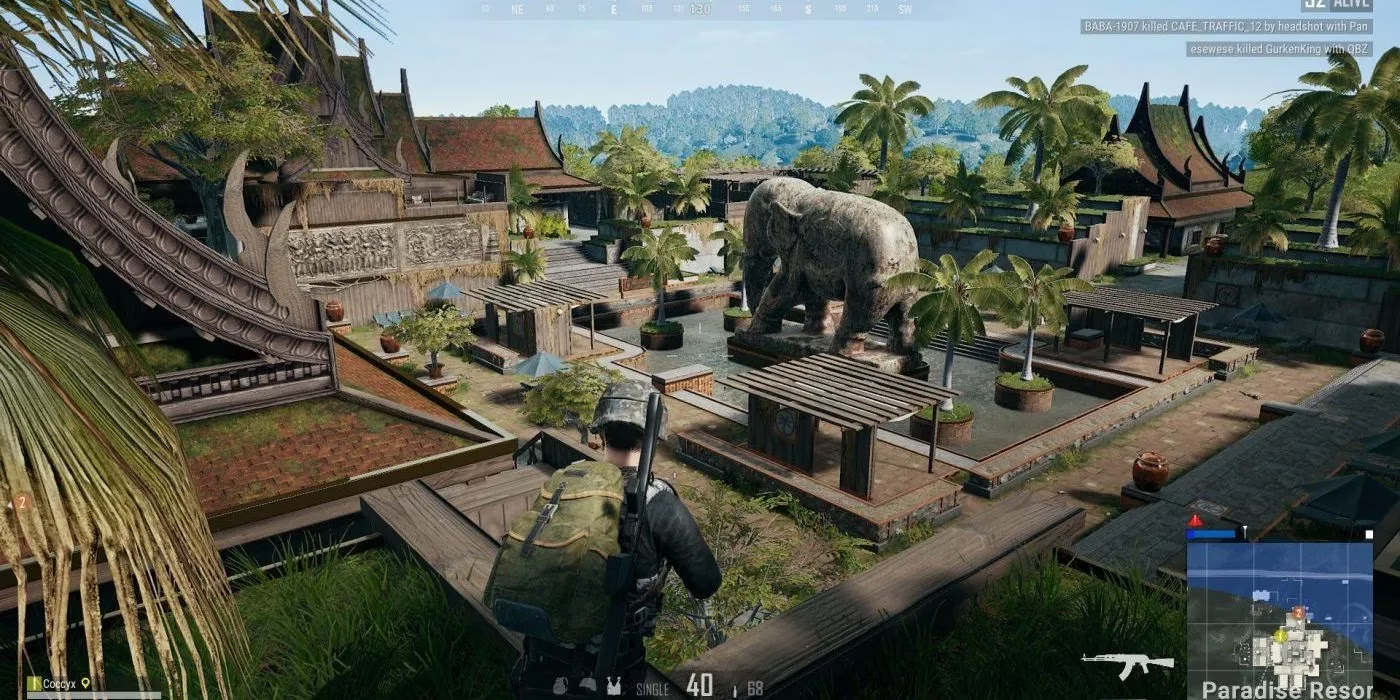
The Sanhok revamp was central to Season 8's promise. This lush, compact map, consistently ranked among the fan favorites, received more than just a visual polish. The developers aimed to inject fresh, dynamic gameplay elements. Enter the Loot Trucks: imposing, heavily armored vehicles roaming the dense jungles and winding paths of Sanhok entirely under their own control. Unlike any other vehicle on the island, players couldn't simply hop in and drive these behemoths. They were mobile treasure troves, essentially high-tech armored piñatas packed with legendary loot, demanding strategy and firepower to crack open. The concept wasn't entirely new, branching off from the successful train addition on the Vikendi map during brainstorming sessions aimed at improving the overall game flow and excitement.
How did these trucks operate? Powered by a sophisticated A.I. system unique to each vehicle, they didn't follow rigid, predictable routes. Instead, they dynamically navigated Sanhok, choosing paths based on environmental factors and player activity. This unpredictability became their defining feature and the core challenge for players. Catching one wasn't a simple matter of setting up a roadblock – these mechanical beasts could effortlessly go off-road, traversing terrain most vehicles couldn't handle. Imagine the frantic scramble as a squad hears the distant rumble of a truck, only to see it suddenly veer off the main path and crash through the jungle! This potential for chaotic, hilarious, and utterly unpredictable moments became a major talking point. Would players find ingenious ways to ambush them, or would the trucks' AI lead to spectacularly glitchy encounters shared across the community? Only time would tell.
Once players managed to corner or disable a Loot Truck (no easy feat), the next challenge awaited: breaching its armored shell. Standard firepower proved ineffective. It required explosive force equivalent to the devastating Panzerfaust weapon newly introduced to the game. This added a significant risk-reward layer. Engaging a Loot Truck wasn't a stealthy affair; the loud explosions needed to open it would undoubtedly draw the attention of every nearby squad, turning the loot grab into a potential death trap. The potential rewards were high-tier gear, but the cost could be elimination.
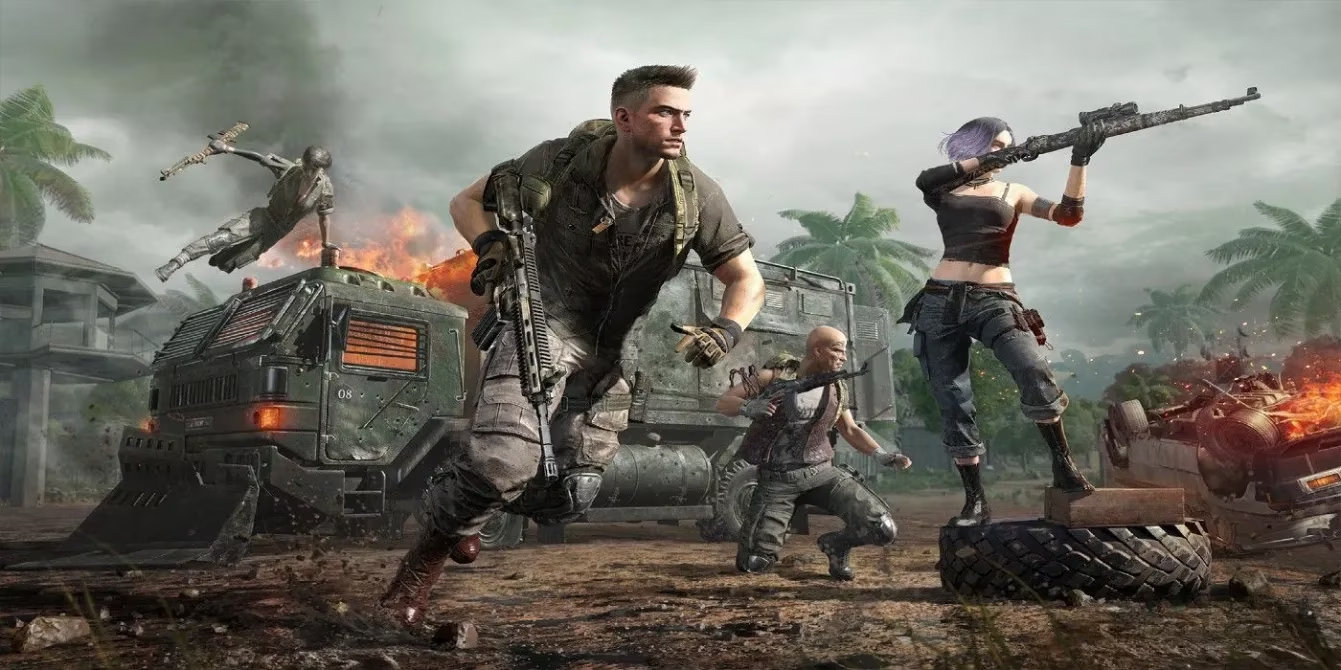
The introduction of such a potent, dynamic element naturally raised concerns within the community and among the developers themselves. Were these trucks too juicy? Could the concentrated high-tier loot they provided disrupt the delicate balance, especially in PUBG's hard-fought Ranked Mode? The developers were acutely aware of these risks. They committed to closely monitoring the trucks' impact on gameplay metrics and player feedback post-launch. Would the trucks become overpowered focal points, dictating the flow of every match on Sanhok? Or would their unpredictable nature and the high risk involved in claiming their bounty integrate seamlessly, adding thrilling chaos without breaking the core PUBG experience? The potential for them to shatter the competitive integrity of the new ranked mode was a genuine possibility the team had to be ready to address.
Season 8, with its revamped Sanhok and the headline-grabbing Loot Trucks, rolled out first on PC on July 22nd, followed by consoles on July 30th. It represented a bold statement from the PUBG team: a willingness to innovate dramatically on established maps and mechanics to stay relevant. The Loot Trucks were more than just a new feature; they were a symbol of PUBG's ongoing evolution, a high-stakes gamble to inject fresh, dynamic energy into its familiar battlegrounds. Their success or failure would be a key indicator of PUBG's ability to adapt and thrive in the ever-evolving battle royale arena. Did the gamble pay off? Players diving into Sanhok found out firsthand, navigating the chaos and chasing the rumble of the jungle's new mechanical kings.