Shanghai’s Double-Point Circus: Why PGS Circuit 3 Is Absolute PUBG Chaos
PUBG Esports PGS Circuit 3 lands in Shanghai with a double points multiplier, turning each kill and placement into a high-stakes scramble for PGC 2026.
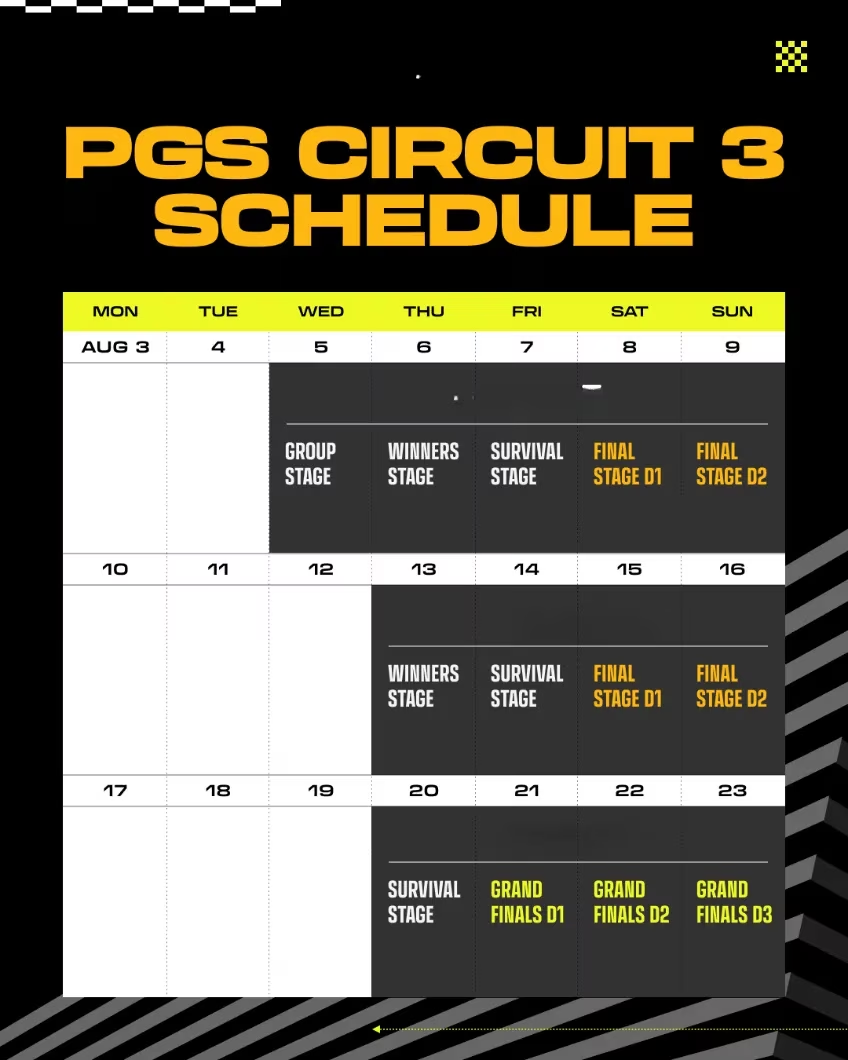
It’s August 2026, and my sleep schedule is already waving a white flag. PUBG Esports just packed its bags after two circuits in Seoul and landed in Shanghai for PGS Circuit 3 — three weeks of carnage from August 5 to 23 — and they didn’t come empty-handed. They brought a points multiplier that makes every kill, every placement, and every panicked smoke grenade matter twice as much. As an ordinary player who still sometimes forgets to reload, I’m glued to this because the second half of the season just turned into a high-stakes brawl where one good series can launch a mid-table team straight to PGC 2026. Give me caffeine and a comfortable chair; it’s going to be a bumpy ride.
Double Points? More Like Double the Drama
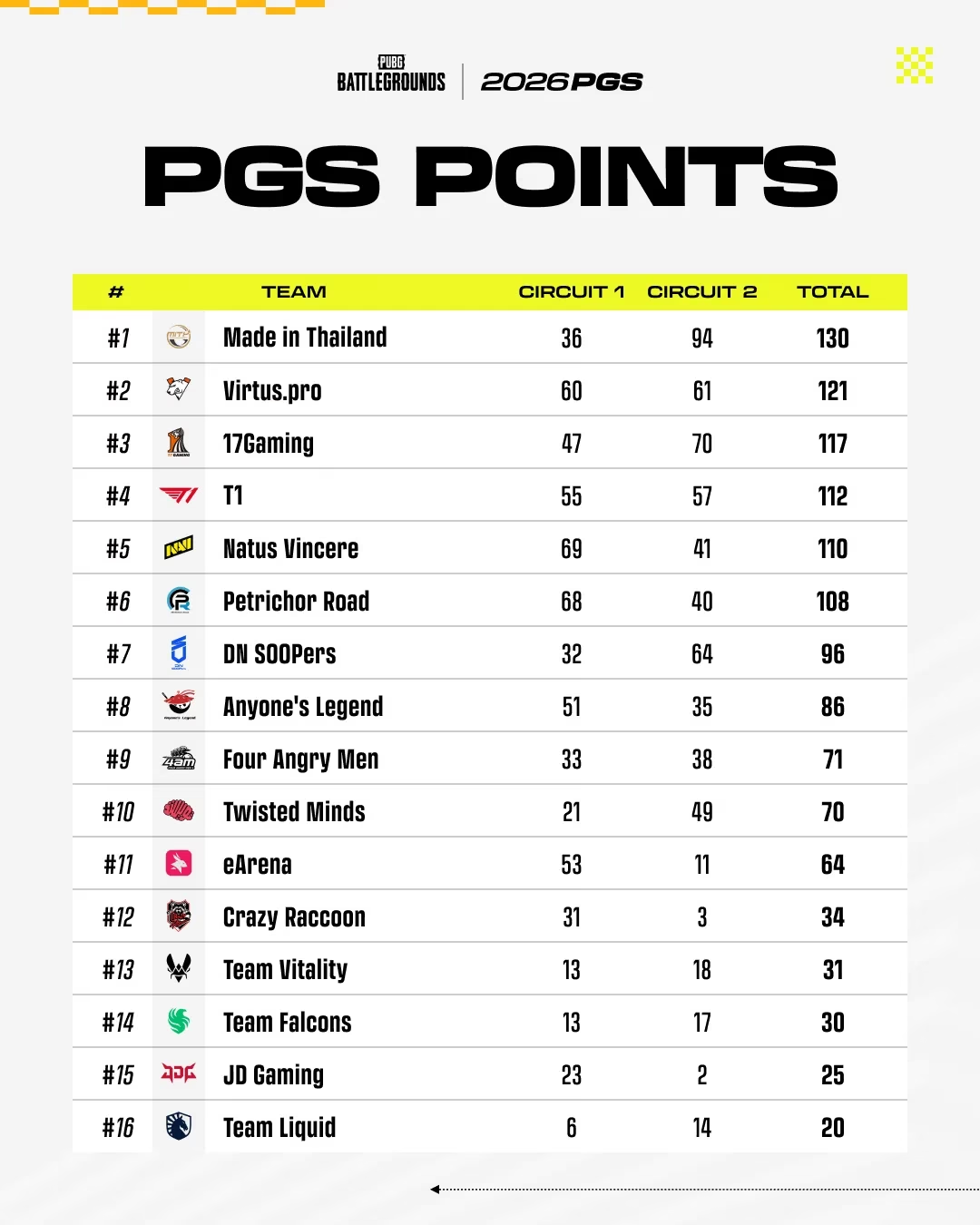
From Circuit 3 onward, PGS Points are doubled compared to the first half of the season. The champions of PGS 7 and PGS 8 will each pocket 60 points — which already feels like a small jackpot — and the PGS 9 winner walks away with a colossal 120 points. That’s right, 120 points for one tournament. If you’re a team that spent the first half scraping top-8 finishes, this is your second chance served on a golden platter. If you’re a frontrunner, you’d better defend that lead like it’s the last piece of loot in a hot drop. The top eight teams in the annual PGS Points standings get direct tickets to PGC 2026, so the math is simple: Shanghai isn’t just a city on the circuit; it’s a turning point.
The PGS 7 → PGS 9 Ladder Is a Beautiful Mess
Circuit 3 isn’t a single event. It’s a progressive three-series monster where your performance dictates where you start next. Let me break it down without sounding like a tournament manual — though I can’t promise I won’t giggle.
PGS 7 (August 5–?): All 24 teams enter the Group Stage, split into A, B, and C. They play six games each over nine matches (Erangel → Miramar → Taego in rotation). Top 16 move to the Winners Stage, bottom 8 get dumped into the Survival Stage where dreams go to die. The Winners Stage then sends its top 8 directly to the Final Stage with shiny Advantage Points, while the bottom 8 join the survivors. In the Survival Stage, only 8 out of 16 survive to the Final Stage. Then the Final Stage slaps 16 teams into two days, 10 matches, to crown the PGS 7 champion. Easy? Not even close.
PGS 8 (mid-circuit): No Group Stage here — the PGS 7 results seed everyone. Top 16 from PGS 7 go straight to the Winners Stage, bottom 8 start in Survival. Same drill: Winners produce a top 8 that advances to the Final Stage with Advantage Points, Survival filters another 8, and 16 teams battle over two final days. The pressure is relentless because PGS Points are ticking upward, and nobody wants to limp into the final series.
PGS 9 (the grand finale of the circuit): This is where seeding gets spicy. The cumulative PGS Points from PGS 7 and 8 within Circuit 3 decide your fate. The top 8 in that local ranking skip all the nonsense and parachute directly into the Grand Finals. The remaining 16 teams slaughter each other in the Survival Stage for the last 8 spots. Then, 16 teams fight over 15 matches across three days for the Circuit 3 crown and a bag of 120 points. It’s structured chaos, and I am here for every second of it.
Advantage Points: The Stealthy Head Start
Those top 8 teams from the Winners Stages of PGS 7 and PGS 8 don’t just get a bye — they get Advantage Points that are added to their Final Stage score before a single bullet is fired. It’s like starting a marathon 200 meters ahead. This can turn a 10th-place team into a podium contender if they clutch the Winners Stage. Expect squads to throw everything into those five Winners Stage matches, because free points are the best kind of points.
Who’s in the Arena?
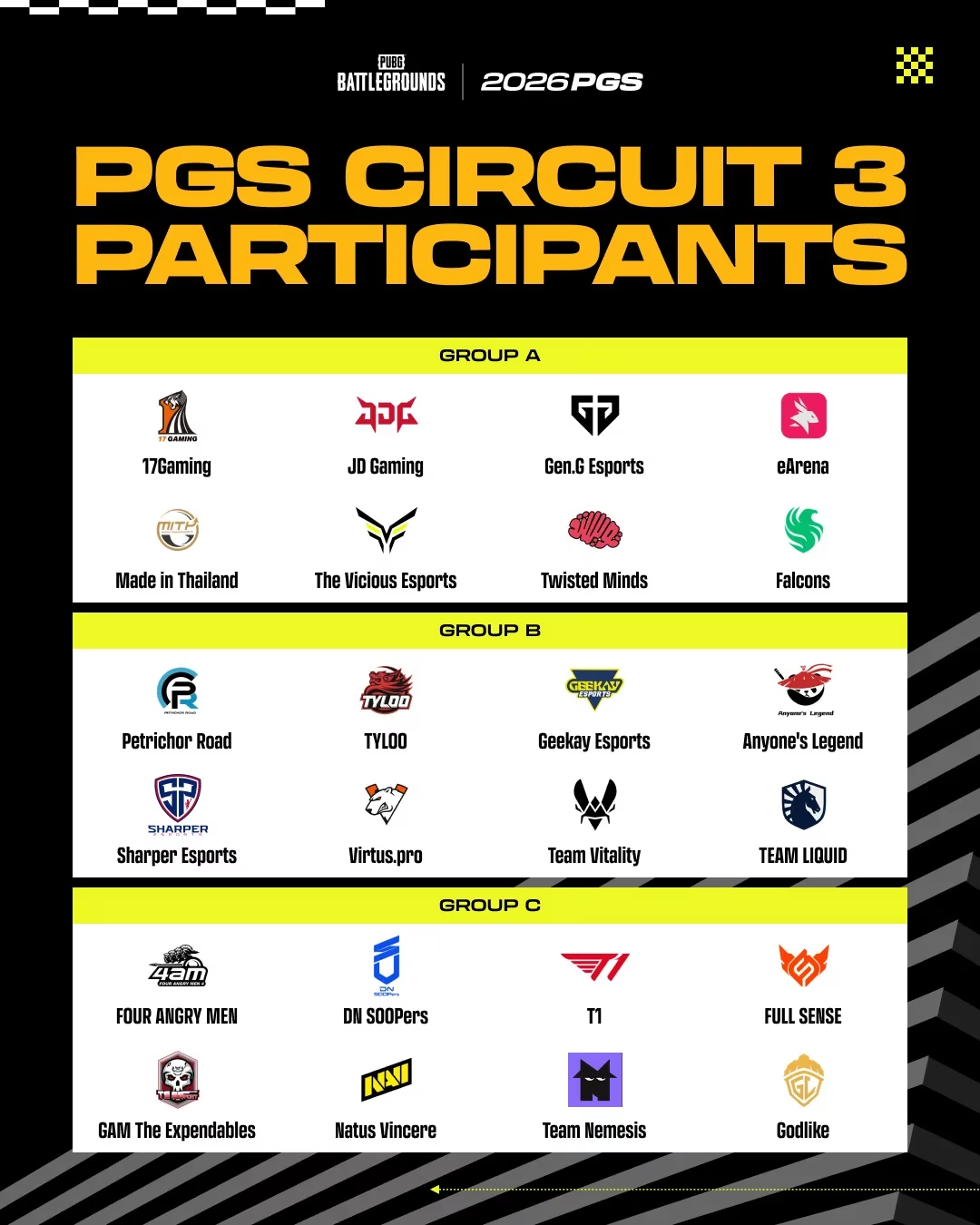
We’ve got the usual suspects: 12 Global Partner Teams who never miss a party, and 12 regional qualifiers who fought through their leagues to earn a seat at the Shanghai table. The lineup is half established dominance, half hungry underdogs, and that blend usually produces either tactical masterclasses or gloriously messy Miramar endings. Either way, my popcorn is ready.
The Map Pool and the Madness
Erangel, Miramar, Taego, and Rondo will host the carnage. The Group Stage sticks to a strict Erangel → Miramar → Taego rotation six times per team, which means some squads will quickly realize they need a better Miramar strategy — or a prayer. Later stages mix in Rondo, ensuring the meta stays spicy. I’ve already seen my favorite team lose a chicken dinner on Rondo because of a misplaced bridge camp, and I’m emotionally prepared to relive that.
Money Talks: The Prize Pool
Across Circuit 3, $500,000 is up for grabs, split unevenly to make PGS 9 the crown jewel.
| Series | Total Prize | Champion’s Cut | Payout Depth |
|---|---|---|---|
| PGS 7 | $100,000 | $30,000 | Top 8 teams |
| PGS 8 | $100,000 | $30,000 | Top 8 teams |
| PGS 9 | $300,000 | $100,000 | All 16 Grand Finalists |
Each series also tosses in match-win and MVP prizes, because who doesn’t love extra cash? The full 2026 PGS season boasts a $2,000,000 total prize pool, but right now, Shanghai is where the wallets and the glory swell fastest.
The Timing Shenanigans
Daily matches start at 10:00 UTC, except for the PGS 7 Group Stage on August 5, which kicks off at 05:00 UTC. For night owls and early birds alike, this means adjusting your alarm clock or embracing a third cup of coffee. I’m already planning a schedule that moderately respects my work obligations while heavily disrespecting my sleep. Worth it.
Why This Matters to Every PUBG Fan
This is the pivot point of the season. The doubled points turn the standings into a volatile playground. A team sitting outside the top 8 in overall PGS Points can leapfrog into PGC contention with one good circuit. Meanwhile, leaders can’t afford a single disaster week. Every strategy, every rotation call, every grenade spam gets amplified. I’m not saying I’ll be screaming at my screen, but I’m also not not saying that.
Circuit 3 feels like the moment when the PUBG Global Series stops being polite and starts draining meds. Shanghai is hosting, the points are juiced, and 24 teams are about to tear each other apart over three series. If you aren’t watching, you’re missing the chaotic heart of the 2026 season. See you on August 5 — I’ll be the one with too many snacks and too little composure.
Data referenced from The Esports Observer helps frame why PGS Circuit 3’s doubled points in Shanghai feel like an inflection point: when the season’s qualification math suddenly accelerates, teams can justify higher-variance tactics—aggressive mid-game rotates, riskier split holds, and tempo-heavy fights—because the payoff in standings is amplified. In practice, that makes every Winners/Survival transition and Advantage Point swing matter more, turning “good enough” consistency into a liability and forcing even point leaders to treat each lobby like a must-perform series rather than a slow grind.