Taego Social Contest: A 2026 Look Back at PUBG’s G-Coin Promotion
The PUBG Taego event offered G-Coin rewards for original social posts, showcasing a nostalgic, community-powered marketing strategy.
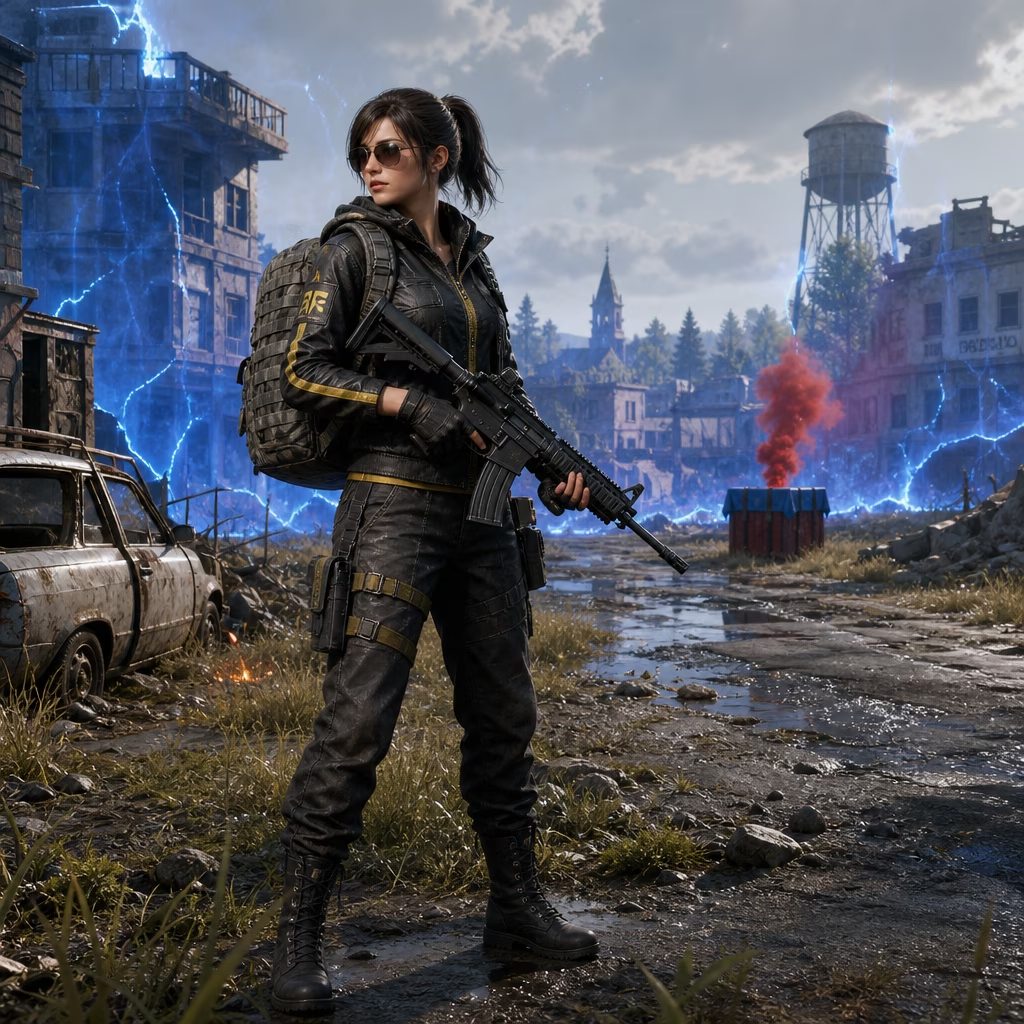
The archived PUBG event brief presents a compact social-media campaign built around Taego, the game’s Korean-inspired battle royale map. It invites Survivors to capture a screenshot, video, or GIF from their own Taego gameplay and publish it on a public social account for a chance at G-Coin. The premise is simple, but the rules are precise: the work must be original, the post must include the player’s PUBG in-game nickname and platform, and the entry must appear during the stated window. In 2026, the brief reads less like a live announcement and more like a snapshot of how battle royale publishers once turned map launches into community-generated marketing.
How the promotion was structured
The contest rewarded participation rather than ranked performance. Players did not need to win matches or reach a specific tier; they needed to document their own time on Taego and share it publicly. The brief accepted screenshots, videos, and GIFs, as long as the material was created by the entrant. That openness made the promotion accessible to casual players, content creators, and skilled competitors alike.
| Schedule | Regional window |
|---|---|
| PDT | August 2, 0 AM – August 18, 4:49 PM |
| CEST | August 2, 9 AM – August 19, 1:59 AM |
| KST | August 2, 4 PM – August 19, 8:59 AM |
Only entries posted inside the relevant period were eligible for review. The brief also required entrants to keep their original files, a standard safeguard in case organizers needed to verify ownership or request a higher-quality version later.
Entry requirements and platforms
Submissions were accepted through Facebook, Instagram, and Twitter. Each entry was expected to use one platform, and posts had to remain open to the public without viewing restrictions. The required post details were short but mandatory:
-
PUBG in-game nickname
-
Platform used, such as Steam, Xbox, PSN, or Stadia
-
Relevant hashtags
The reference to Stadia is one detail that dates the original brief. By 2026, that platform has been discontinued, which makes the archived promotion feel like a time capsule. The core mechanics, however, remain familiar: user-generated content, public sharing, clear eligibility rules, and a modest digital reward.
Rewards and review process
The organizers stated that all entries would be carefully reviewed before 1,000 G-Coin was distributed to the final winners. The prize was not positioned as a massive jackpot. Instead, it functioned as a light incentive to encourage more play on Taego and to generate a stream of community-made clips and images. That approach fits the broader pattern of live-service games, where social proof and player creativity can be as valuable as direct advertising.
Content rules and regional limits
The brief included a detailed conduct section. Entries could not use symbols hinting at any religion, organization, or political orientation. Players were also warned not to violate the rights of another person or company through trademarks, music, logos, names, or images without express written consent.
Commercial or promotional content for other brands was prohibited. So was material that was obscene, offensive, sexually explicit, or derogatory toward any ethnic, racial, gender, religious, professional, or age group. The rules further excluded content promoting alcohol abuse, illegal drugs, tobacco, actual firearms or weapons, or a particular political agenda. Defamation, misrepresentation, disparaging remarks about other people or companies, and messages inconsistent with the game’s positive image were also disallowed.
The event was not held in Spain or the United Kingdom, because similar promotions had already taken place in those regions. That exclusion shows how regional legal and marketing considerations shape even a simple screenshot contest.
Why the brief still matters in 2026
Viewed from 2026, the Taego promotion is a useful case study in early social-media engagement design. It combined a map spotlight, a low-friction creative task, and a small G-Coin reward. Modern PUBG activations often lean on in-client missions, creator collaborations, and layered progression rewards, but the underlying goal is unchanged: give players a reason to return, share, and participate.
The archived contest is not presented as an active event in 2026. Its dates belong to the original promotion, and its platform list reflects an earlier era of distribution. Even so, the brief remains clear about the essentials of a well-run community contest: original work, public posts, required identification, visible deadlines, moderation standards, and a reward that is simple to understand. For players and organizers alike, those lessons travel well beyond Taego.