The Bizarre PUBG Ransomware: Play or Type to Save Your Files in 2026
PUBG ransomware delivers a bizarre twist on cyber threats, encrypting files and demanding victims play PlayerUnknown's Battlegrounds to unlock them.
In a digital landscape where cyber threats constantly evolve, one peculiar piece of malware from 2026 stands out not for its destructiveness, but for its absurdly specific demand: play PlayerUnknown's Battlegrounds or type a code to reclaim your files. This ransomware, which whimsically encrypts desktop files with the ".PUBG" extension, presents victims with a surreal choice straight out of a gamer's twisted fantasy. It locks away personal documents, photos, and folders, then displays a screen offering two paths to liberation—one involving a cryptic string of characters, the other requiring a brief foray into the battle royale arena. The emergence of this software coincided with a fascinating period for PUBG, following the explosive success of Fortnite and the launch of PUBG Mobile, creating whispers about whether this was a fan's desperate attempt to boost player counts or simply a digital prank gone viral.
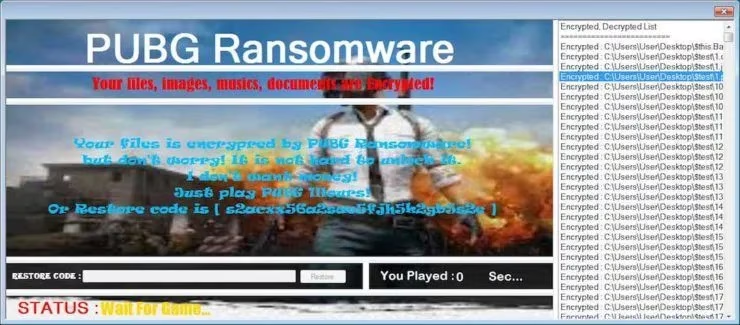
The decryption menu, as captured in the iconic screen above, outlines the methods with almost playful clarity. 😄 The first option is deceptively simple: enter the restoration code "s2acxx56a2sae5fjh5k2gb5s2e" into the designated field and hit restore. While the code is visible in the ransom note, forcing users to manually type it adds a layer of minor annoyance, characteristic of the malware's overall tone—more mischievous than malicious. Security analysts who dissected the code found it to be rudimentary, designed to encrypt only desktop files without spreading to system folders or networks, making it a low-risk nuisance. However, its very existence raises questions about intent; was this a bored coder's joke, a test for more sinister future attacks, or a bizarre tribute to a game facing stiff competition?
Ah, but the second method! This is where the ransomware truly earns its name. Instead of typing, victims can launch PlayerUnknown's Battlegrounds on their PC—if they own it—and play for over 3 seconds (despite the screen claiming an hour). The malware snoops for the process "TslGame.exe," the executable for PUBG, and upon detection, automatically decrypts everything. This loophole means users don't even need to actually play; just running any file named TslGame.exe could trigger the release. In 2026, with PUBG available on Android, iOS, Windows, and Xbox One, this created odd scenarios where mobile players might scramble to install the PC version just to unlock their desktops. The timing was ironic, given Fortnite's revenue dominance and PUBG Mobile's recent global rollout, fueling theories that this was a guerilla marketing stunt or a fan's protest against the battle royale rivalry.
🔍 Key Characteristics of the PUBG Ransomware:
-
Target: Encrypts files/folders on the desktop only.
-
Extension: Changes files to ".PUBG."
-
Decryption Methods:
-
Enter code:
s2acxx56a2sae5fjh5k2gb5s2e -
Run PUBG (or TslGame.exe) for >3 seconds.
-
Detection: Searches for
TslGameprocess. -
Risk Level: Low—no data theft or system damage reported.
Despite its harmless nature, the ransomware sparked a mix of amusement and concern in cybersecurity circles. Groups like MalwareHunterTeam highlighted its simplicity, noting it lacked advanced features like command-and-control servers or payload delivery mechanisms. For unlucky users infected in 2026, the experience was more baffling than traumatic—a fleeting inconvenience that often ended with a laugh or a shrug. Yet, experts warned that such jokes could normalize malware or serve as training wheels for more dangerous variants. The code's focus on a single game process also revealed its narrow scope; it wouldn't affect systems without PUBG or where the executable was renamed, making it an imperfect, almost artistic piece of digital mischief.
In the grand tapestry of 2026's cyber incidents, the PUBG ransomware remains a quirky footnote—a reminder that not all threats are born of greed or malice. Some emerge from the intersection of gaming culture and coding curiosity, wrapping a mundane act of file encryption in a layer of absurdity. For PlayerUnknown's Battlegrounds, it was an unintentional spotlight during a competitive era, perhaps even driving a few extra downloads from desperate users. As cybersecurity evolves, this episode underscores a timeless lesson: always backup your files, because the next ransomware might demand you dance in a virtual storm or bake a digital cake. 🎮💻 For now, though, this malware stands as a harmless, humorous blip, decrypting with a chuckle rather than a ransom payment.