The €1 Million PUBG Europe League: A Tiered System Driving EMEA Esports Forward
The PUBG Europe League (PEL) offers EMEA squads a €1,000,000 prize pool and true meritocracy through its five‑league structure.
The PUBG Europe League, known simply as PEL, still stands as the crown jewel of competitive PUBG in 2026, a tournament that has made and broken careers across the EMEA region since its explosive debut in early 2019. Brought to you by AORUS, the competition carries a staggering €1,000,000 prize pool and represents the top of a five‑league ladder that stretches from grassroots open qualifiers right up to the grandest stage of them all. Over seven years, the format has been tweaked, but the core philosophy remains intact: provide a true meritocracy where any squad can dream big—and have a realistic shot at glory.
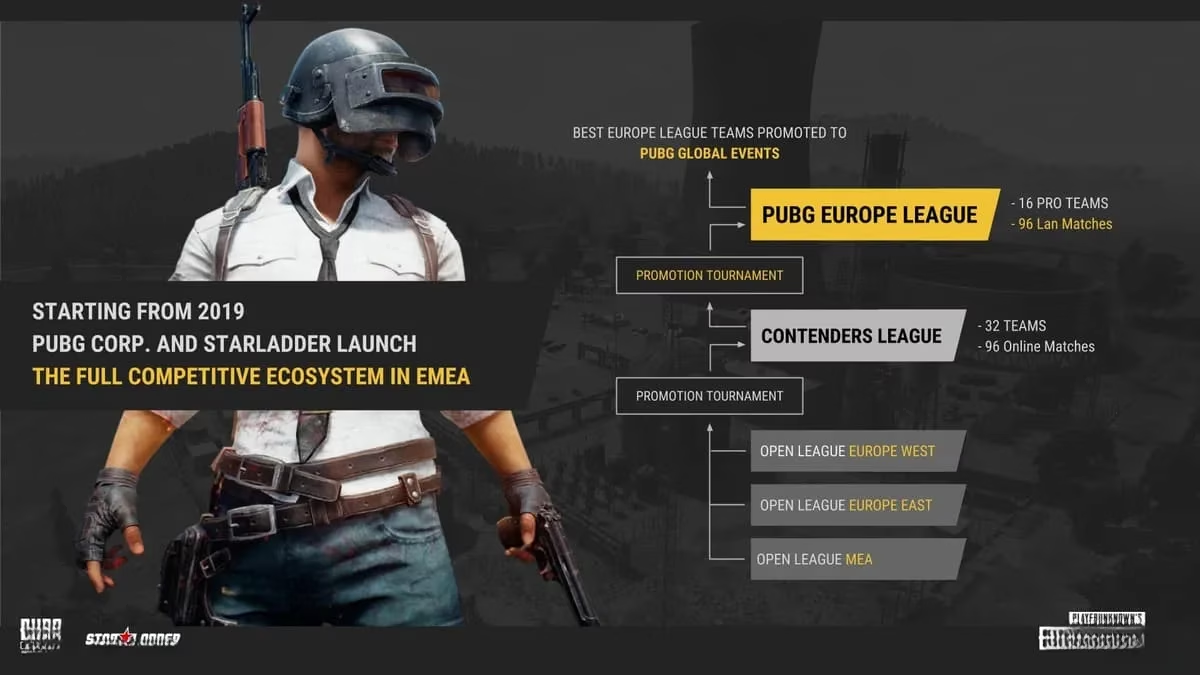
There is something almost romantic about the way the PEL is built. Unlike franchise models that hand‑pick organizations behind closed doors, the PUBG Europe League leans heavily on a promotion and relegation system. At the apex sits the PEL itself, the destination league. Directly below it, the Contenders league acts as the proving ground, and beneath that hum three open leagues. If you’re good enough, you climb. If you slip up, you drop. It keeps the big names honest and gives plucky underdogs a ladder to stumble right into the limelight. The league structure is not just a collection of tiers—it’s a living, breathing ecosystem that forces every team to stay sharp, and heck, it works.
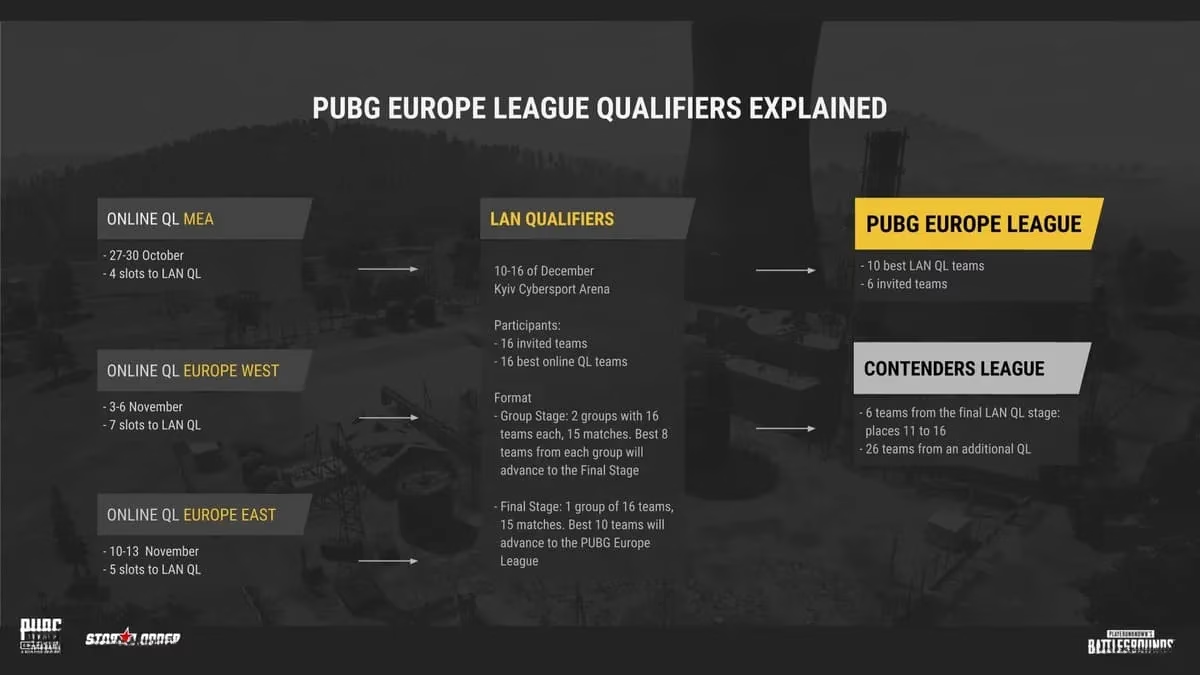
Every season tells a fresh story, and it all starts with the open qualifiers. Those online brawls are pure, unfiltered chaos—and absolutely anyone with a registered roster can throw their hat in the ring. The EMEA region is split into three distinct paths: Europe West, Europe East, and the Middle East & Africa (MEA). This regional approach ensures that talent from Lisbon to Istanbul, from Moscow to Johannesburg, gets a fair crack. Registration typically opens in the autumn, and in the run‑up to the 2026 season, the cadence held true to the rhythm pioneered back in 2018. The MEA slots usually kick things off first, followed by Europe East and finally Europe West, each block spanning about four days of non‑stop fragging to separate the contenders from the dreamers.
What’s the prize for winning an open qualifier? A ticket to the LAN qualifier, where things get intensely personal. Sixteen directly invited teams—organizations that have consistently delivered results on the international and European scene—join the qualifier champions for a pressure‑cooker event. Over 15 matches in a group stage, the field is slashed to an elite eight, which then brawls in a final stage to determine who punches their ticket to the PEL and who lands in Contenders. It’s a high‑stakes dance, and more than a few celebrated squads have been left biting their nails on the sidelines.
To navigate this gauntlet, teams need more than just mechanical skill. Map knowledge, rotation discipline, and a healthy dose of lucky red zone avoidance all come into play. The landscape of the 2026 PEL is a tapestry woven from hundreds of smaller storylines: a young duo from Algeria surprising the MEA qualifier, a veteran CIS squad clawing back from near elimination, or a freshly relegated organization burning through Contenders to reclaim their status. Each phase has its own seasonal flavor, and fans eat it up.
The three regional silos for the open qualifiers remain roughly as follows, a geography that hasn’t changed dramatically even as new nations find their esports footing:
🌍 MEA covers countries from Turkey across the Arabian Peninsula and through the entire African continent—places like Saudi Arabia, South Africa, Nigeria, and Kenya.
🌍 Europe West ropes in the classic Balkan and Western European nations: Germany, France, the United Kingdom, Spain, Norway, and many more.
🌍 Europe East (often called CIS+) includes Russia, Ukraine, Belarus, Kazakhstan, and the surrounding republics.
Each pathway filters into the same centralized LAN, ensuring that once the bullets start flying in person, only the quality of play matters, not your postal code.
The group stage and the final stage of the LAN qualifier have historically been slotted into mid‑December, a sort of early Christmas gift for die‑hard PUBG enthusiasts. These games are often where raw firepower collides with nerves of steel, and you just can’t script the kind of drama that unfolds when a spot in the million‑euro league is on the line. Observers often remark that the roar at the Kyiv venue—or wherever the LAN is hosted—can shake the very desktops, and honestly, you can feel that electricity through the stream.
Over the years, the PEL has become a proving ground not only for players but for the entire competitive ecosystem. The promotion and relegation mechanism has birthed legends and humbled giants, constantly refreshing the talent pool. While other esports have flirted with franchising, the PUBG Europe League sticks to its guns, insisting that performance alone should write the narrative. And you know what? The fans wouldn’t have it any other way. As the 2026 season marches on, the message remains clear: if you’ve got the nerve and the squad, the road to the very top is open—one headshot, one circle shift, one breathtaking chicken dinner at a time.