The Persistent Call for Region Locking China in PUBG: A Community's Battle Against Cheaters
PUBG's rampant cheating crisis, fueled by Chinese players, sparks the global #RegionLockCHINA movement demanding urgent region-locking to restore competitive integrity and preserve the game's future.
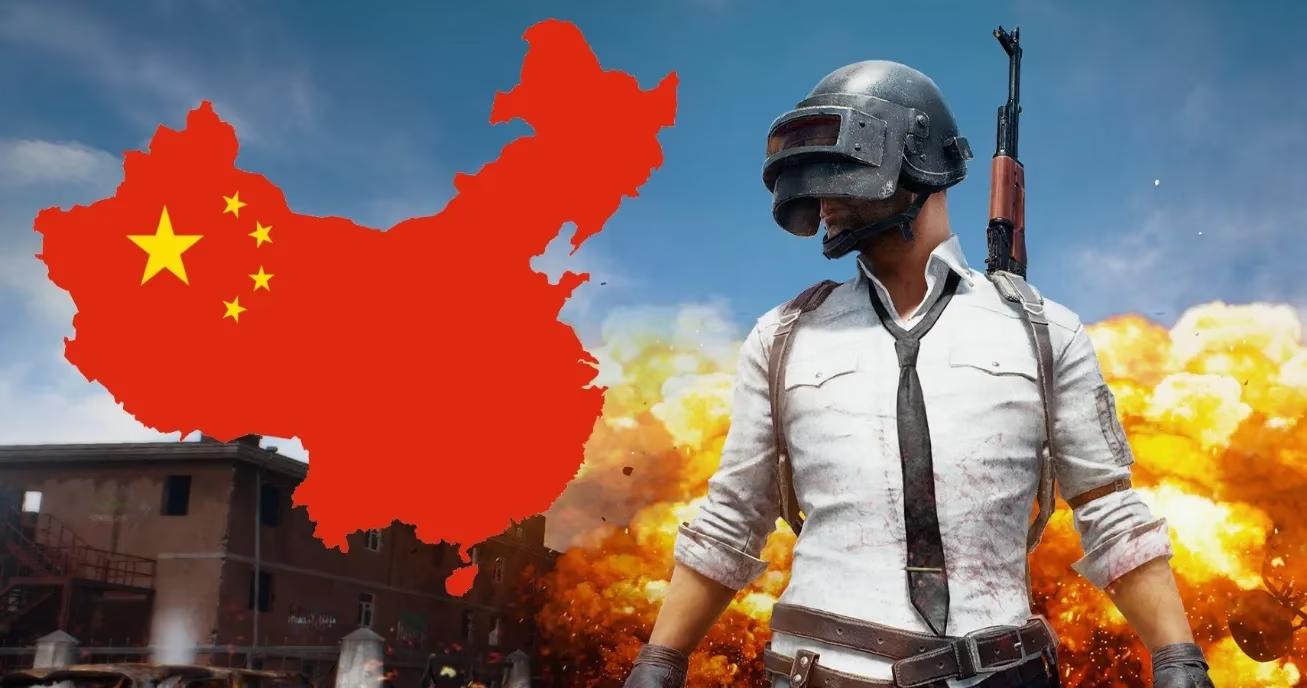
The Playerunknown's Battlegrounds (PUBG) community has long been vocal about a singular, pressing issue: the perceived rampant cheating originating from Chinese players. For years, players from around the globe have united under banners like #RegionLockCHINA, demanding that the game's developers implement stricter regional server segregation. The core of their grievance stems from an overwhelming number of encounters with hackers and cheaters, which many believe severely undermines the competitive integrity and overall enjoyment of the battle royale experience. Despite numerous updates and anti-cheat measures, the sentiment within the player base remains that a significant portion of these disruptive elements are geographically concentrated, leading to a persistent and heated debate about the potential solution of region-locking China.
The Community's Unified Voice
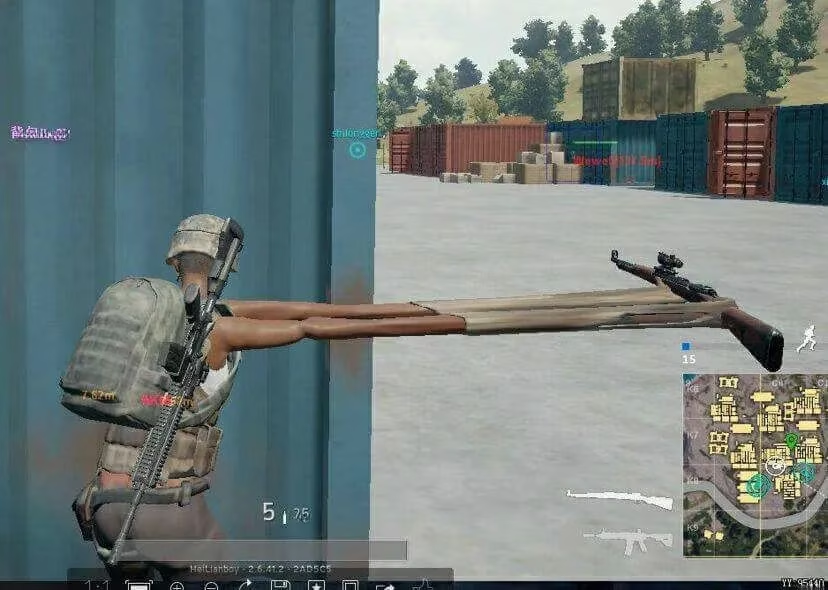
Examination of player forums and social media platforms reveals a remarkably consistent narrative. Gamers frequently report frustrating experiences where opponents seem to possess impossible knowledge or abilities. These anecdotes are not isolated; they form a chorus of discontent. Players describe situations where they are tracked through solid terrain or eliminated under highly suspicious circumstances, often attributing these events to sophisticated cheating software prevalent in certain regions. The community's proposed remedy is straightforward: restrict players from mainland China to their own dedicated servers. This, they argue, would isolate the problem and allow the rest of the world to enjoy a fairer gaming environment. The advocacy for this measure is not born out of regional bias, but from a desire to preserve the game's health and longevity, as many fear that continuous cheating could ultimately lead to PUBG's decline.
The Developer's Dilemma and the Cheat Market Reality
The developers at PUBG Corporation face a complex challenge. On one hand, there is immense pressure from the international community to take decisive action. On the other, data suggests that a massive portion of the game's player base hails from mainland China. Alienating such a large demographic carries significant financial and operational risks. This tension is at the heart of the developers' perceived reluctance. Furthermore, the creative director himself has publicly acknowledged the geographical source of most cheating software, highlighting a cultural and market reality. In some regions, the perception of cheating in video games differs, and the sheer population size means even a small percentage of bad actors translates into a large absolute number. The global cheat market is a lucrative underground economy, but its epicenter, as identified by the game's own anti-cheat partners, is often pointed in one direction.
Potential Solutions and Technical Considerations
Beyond a simple region lock, the community and experts have discussed various technical and design solutions:
-
Enhanced Server-Side Validation: Implementing more robust checks on the game server to detect and reject impossible player actions in real-time.
-
Hardware ID Bans: Moving beyond account bans to permanently block the physical devices used by repeat cheaters.
-
Trust-Based Matchmaking: Creating a separate queue for players with a long history of clean play, similar to systems in other competitive titles.
-
Cultural and Educational Outreach: Working with local partners in affected regions to shift perceptions about cheating and promote fair play.
However, the region lock proposal remains popular because it directly addresses the symptom—the high-frequency encounters in random matches. It is also a established practice in online gaming to partition regions based on latency, ensuring all players in a match have a roughly equivalent ping. The argument extends that this existing infrastructure could be adapted to also serve as a barrier against concentrated cheating.
The Stakes for PUBG's Future
The ongoing controversy touches on fundamental aspects of online gaming: fairness, community trust, and business sustainability. When players feel their time and effort are invalidated by cheaters, they become disheartened and may abandon the game. This creates a negative feedback loop where legitimate players leave, increasing the relative density of cheaters and further degrading the experience. For PUBG, a game that revolutionized a genre, maintaining a healthy ecosystem is paramount. The developers must balance effective anti-cheat enforcement, which may include stricter regional controls, with maintaining access for their vast global audience. The community's loud and consistent feedback is a clear signal that this issue remains a critical pain point. The resolution, or lack thereof, will significantly shape the game's reputation and player retention for years to come. The call for action is not just about stopping individual cheaters; it's about safeguarding the very spirit of competitive play that made PUBG a worldwide phenomenon.