The Shifting Battle Royale Landscape: PUBG's Fight for Relevance in a Crowded Arena
Playerunknown's Battlegrounds battle royale history and evolution reveal fierce competition and shifting loyalties in the gaming landscape.
As a long-time player who's seen the rise and evolution of the battle royale genre, I can't help but feel a mix of nostalgia and concern when looking at the current state of Playerunknown's Battlegrounds. The landscape has changed dramatically since PUBG first took the world by storm, and the recent trends are telling a story of shifting loyalties and intense competition. I remember the days when PUBG was the undisputed king, the game that defined what a battle royale could be. But now, in 2026, looking back at the journey, it's clear the game has faced monumental challenges.
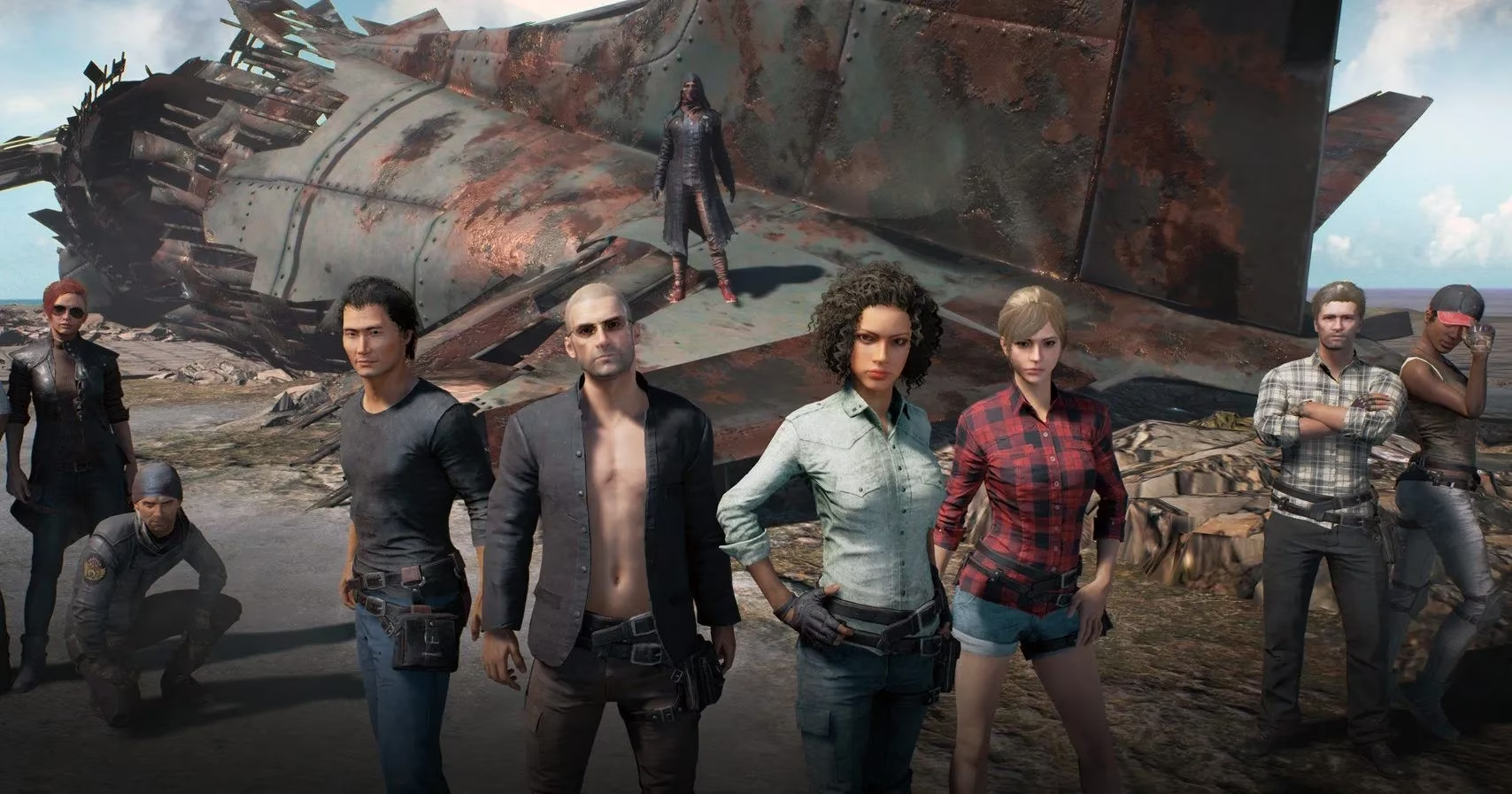
The numbers, as they say, don't lie. Back in the day, PUBG achieved something truly remarkable on Steam—it became the first game to maintain a concurrent player count of at least one million players every single day for an entire year. That streak, which began on September 8th of that pivotal year, was a testament to its initial, iron-clad grip on the genre. For a whole year, over a million of us were dropping into Erangel and Miramar simultaneously. That's a level of engagement most developers can only dream of. But even at its peak of roughly 3.2 million concurrent players in January of that year, the decline had already begun its slow, steady march.
The real wake-up call came when that historic daily million-player streak was finally broken. It wasn't a random dip; it coincided almost perfectly with the release of the Call of Duty: Black Ops 4 – Blackout beta. For the first time in over a year, PUBG's concurrent player count dipped below that symbolic seven-figure mark. For us in the community, it felt like a turning point. It was the moment a new, well-funded contender entered the ring, backed by the colossal Call of Duty franchise. The buzz around Blackout was palpable, and it siphoned off a significant portion of the player base, myself included, who were curious to see what a more polished, AAA take on the formula could offer.
Let's talk about the competition, because it's impossible to understand PUBG's journey without it. The battle royale space became a brutal war on two fronts:
-
The Fortnite Juggernaut: Epic's colorful, building-focused titan wasn't just a competitor; it became a cultural phenomenon. While PUBG Corp was grappling with technical issues, Fortnite was running smooth, free-to-play seasons with constant, exciting updates. It captured a younger audience and mastered the live-service model.
-
The AAA Incursion: Blackout was just the beginning. It proved that established franchises were willing and able to adapt. Its arrival signaled that the genre was mature enough for big-budget studios to invest heavily, raising the bar for polish, performance, and content pipelines that a smaller studio like Bluehole struggled to match.
In response, PUBG Corp launched its well-intentioned "Fix PUBG" campaign. I remember the community's cautious optimism. They promised a training map (which did eventually arrive), a new snow map (Vikendi, which became a fan favorite), and a slew of performance and anti-cheat improvements. They were trying to "right the ship," as they said, to win back the goodwill of players who were frustrated with bugs, optimization problems, and cheaters. The effort was visible, but it often felt like running on a treadmill—making progress, but never quite catching up to the competitors who were sprinting ahead.
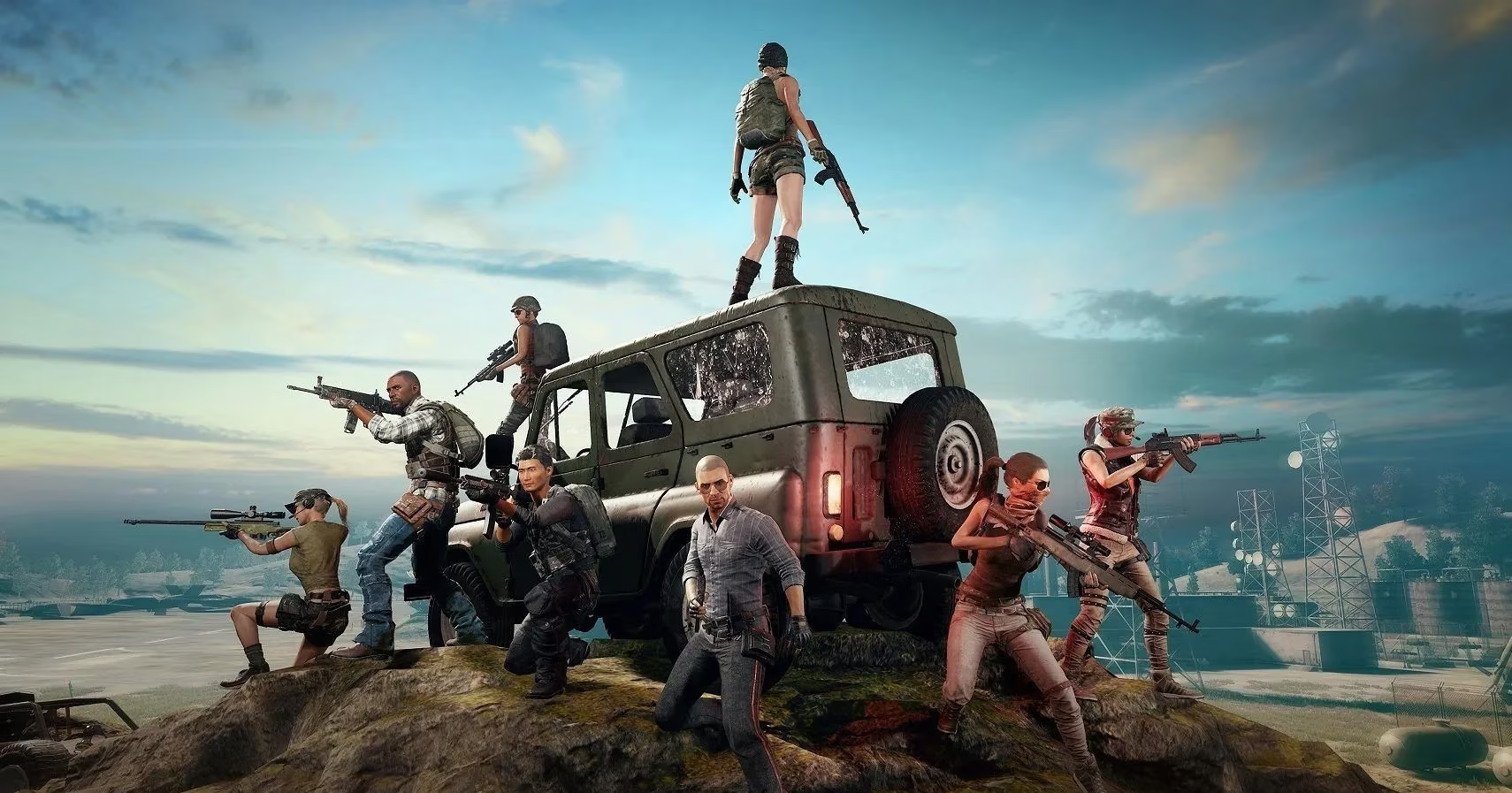
Here's the core lesson I've taken from watching this saga unfold: in a hyper-competitive market, fixing your game is just the price of admission. It's not a unique selling point. While PUBG was focused on fixing its foundations, its rivals were building skyscrapers on top of theirs. The "Fix PUBG" campaign was necessary medicine, but it wasn't the exciting new content or evolving meta that players craved to keep them engaged month after month.
So, where does that leave PUBG in 2026? It's not a story of failure, but one of adaptation and resilience. The game has found its niche. It didn't maintain its genre-dominating market share, but it solidified a dedicated, hardcore audience that values its specific, gritty, tactical realism—a feel that Fortnite's arcade style or the faster pace of later Call of Duty entries never replicated. The focus, wisely, shifted from trying to beat everyone at their own game to serving its core community exceptionally well.
Keeping the current fanbase happy became its saving grace. New maps, weapons, and careful gameplay tweaks kept the experience fresh for those of us who stayed. The esports scene, while not as flashy as some others, developed a deeply strategic and respected competitive circuit. The game learned to coexist rather than conquer.
Reflecting on it now, the arrival of Blackout and the dominance of Fortnite didn't kill PUBG; they forced it to evolve. The battle royale genre is no longer a kingdom with a single ruler. It's a continent with several powerful nations. PUBG may not be the empire it once was, but it has secured its borders and thrives as a respected and enduring nation-state within it. For us players, that's ultimately a good thing—more choice, more variety, and a classic title that's still kicking, precisely because it stopped trying to be everything to everyone and started being the best version of itself for the players who loved it first.