The Silent Truce: PUBG and Fortnite's Battle Beyond the Courts
Explore the PUBG lawsuit against Epic Games and Fortnite, revealing a strategic shift and the intricate ties shaping the battle royale genre in 2026.
In the ever-evolving digital coliseum of 2026, the echoes of a once-thundering legal clash have faded into a profound and strategic silence. The abrupt withdrawal of PUBG Corp.'s lawsuit against Epic Games over Fortnite was not a retreat, but a recalibration—a recognition that in the fluid landscape of modern gaming, shared foundations often outweigh public feuds. What began as a duel between two titans for the soul of the battle royale genre has matured into a complex coexistence, a testament to a market vast enough for multiple visions of survival and spectacle to thrive. The courtroom drama dissolved, leaving behind a more fascinating narrative about competition, collaboration, and the invisible architectures that connect even the fiercest rivals.
The Shared Foundation: More Than Coincidence
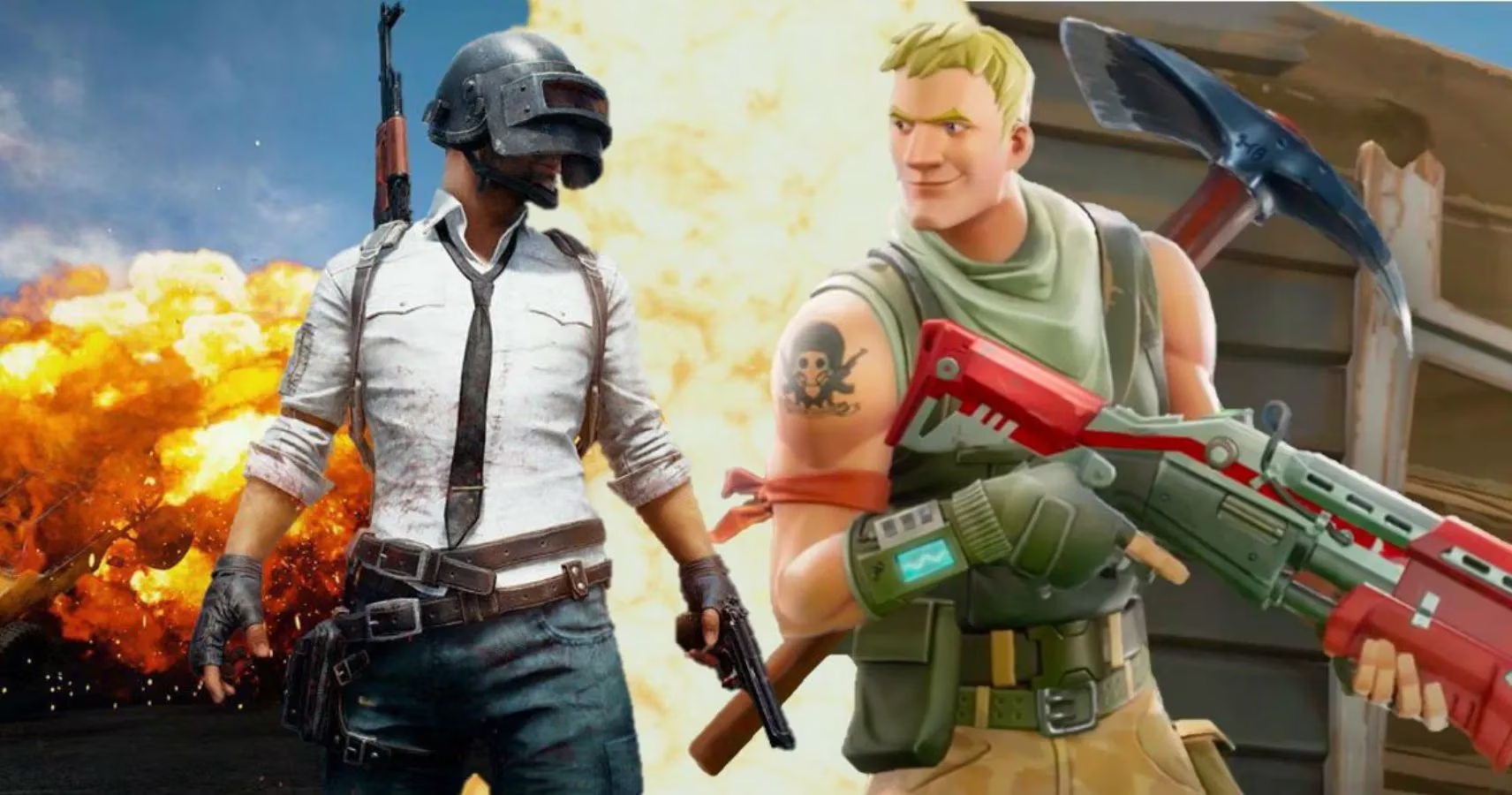
At first glance, the simultaneous rise of PlayerUnknown's Battlegrounds (PUBG) and Fortnite: Battle Royale seemed like a cosmic collision of ideas. Yet, their connection was far from coincidental; it was structural. PUBG Corp.'s initial allegation—that Epic Games had appropriated its "battle royale formula"—ignored a deeper, more binding truth: PUBG itself was built upon Epic's Unreal Engine. This relationship made the lawsuit not just a conflict between competitors, but a paradoxical quarrel between a tenant and the architect of their home. The legal proceedings were like a storm trying to rage within a sealed glass bell—ultimately constrained by the very environment that gave it form. The shared technological bedrock meant that a protracted legal war could damage the foundation upon which both games stood.
The Invisible Hand: Tencent and Strategic Symbiosis
Beneath the surface of public rivalry lay a web of shared interests that made continued conflict unsustainable. A pivotal, often overlooked, factor was the strategic influence of Tencent, the Chinese conglomerate holding significant stakes in both companies. This created a unique corporate ecosystem where outright destruction of one entity could harm the other, a scenario as delicate as two mighty oaks sharing a single, intertwined root system. The lawsuit's withdrawal in 2026 appears less as a surrender and more as a pragmatic acknowledgment of this symbiosis. It highlighted a modern business truth: in today's interconnected digital economy, competitors are often also stakeholders in each other's ecosystems.
Divergent Paths, Parallel Success
Rather than one game cannibalizing the other, the market performed a fascinating act of alchemy, transforming potential conflict into complementary offerings. Each game carved its own distinct niche, appealing to different facets of the player's soul:
-
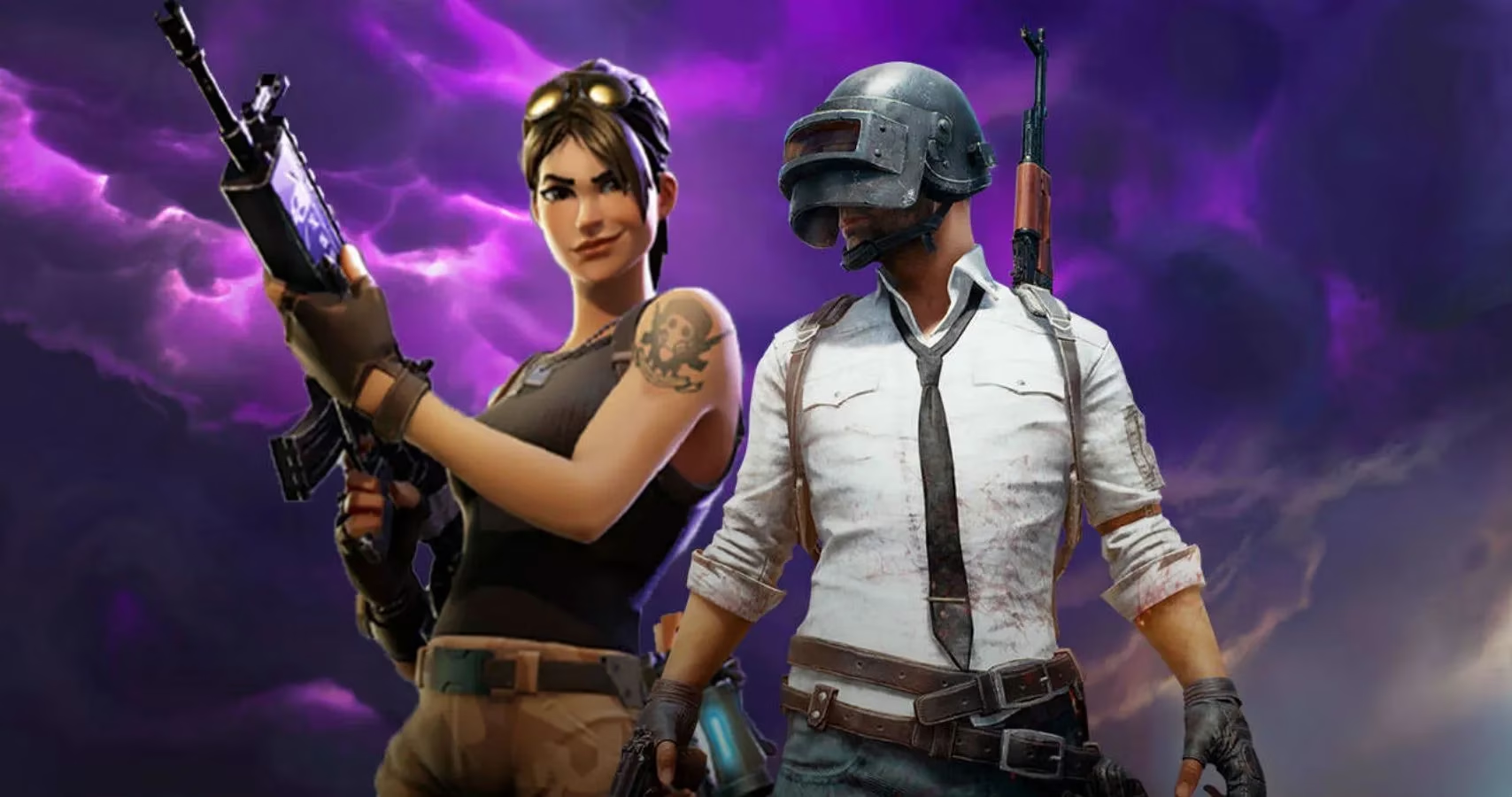
PUBG cultivated a reputation for gritty, tactical realism. Its gameplay was a tense, unforgiving ballet of survival where every rustle in the grass and distant crack of gunfire carried weight. It became the digital equivalent of a survivalist's field manual.
-
Fortnite, in contrast, embraced a philosophy of chaotic, creative fun. Its building mechanics, vibrant aesthetic, and constant stream of pop-culture collaborations turned the battlefield into a dynamic playground. It was less a war simulation and more a constantly evolving digital carnival.
This divergence proved the market's depth. Players weren't forced to choose a side in a genre war; many became digital bilingual, fluent in the tense vocabulary of PUBG and the whimsical grammar of Fortnite. The community split wasn't a schism, but a spectrum.
The Legacy of the Unfought Battle
The unresolved lawsuit has left a legacy far more impactful than any court ruling could have. It set a precedent for the industry, demonstrating that aggressive litigation over game mechanics and genres is often a quagmire. In its wake, developers in 2026 seem more inclined to compete through innovation and player experience rather than legal briefs. The "battle royale" concept itself was revealed not as a property to be owned, but as a language to be spoken in different dialects. The end of the case signaled a maturation—a shift from claiming territory to cultivating it.
Coexistence in the Eternal Arena
Today, both games continue to command colossal, dedicated audiences. Their ongoing updates and seasonal changes are like two great rivers constantly reshaping their banks, sometimes flowing parallel, sometimes diverging, but both heading toward the same ocean of player engagement. The silent truce between PUBG Corp. and Epic Games has allowed creativity, not courtroom strategy, to become the primary battlefield. This détente serves as a powerful metaphor for the modern creative industry: true influence is not exercised through exclusion, but through the enduring power to captivate and define a cultural moment. In the end, the players rendered the final verdict, not with legal documents, but with millions of hours of logged playtime, proving that in the arena of entertainment, there can be more than one victor.