Where Nations Are Forged: PUBG Nations Cup 2025 Selection Feels Like Poetry
The PUBG Nations Cup 2025 selection rules, including the two-player org cap, reshaped national rosters for a true battle in Seoul.
I still remember the first time I heard boots crunch on the virtual soil of Erangel while a national anthem played in my head. Not for a club, not for an org, but for a flag stitched directly into the heart. That feeling is what the PUBG Nations Cup has always promised, and as 2026 unfurls its own legends, the 2025 edition in Seoul now shimmers in hindsight with the clarity of a turning point.
Looking back at the months before last July’s tournament, I can still sense the shift in the air—something deeper than just a schedule drop. PUBG Esports didn’t just announce teams; they handed us a map of intent. The way players were chosen across EMEA and the Americas told a story about identity, competition, and the delicate alchemy of building a national squad that isn’t just a rebranded powerhouse roster.
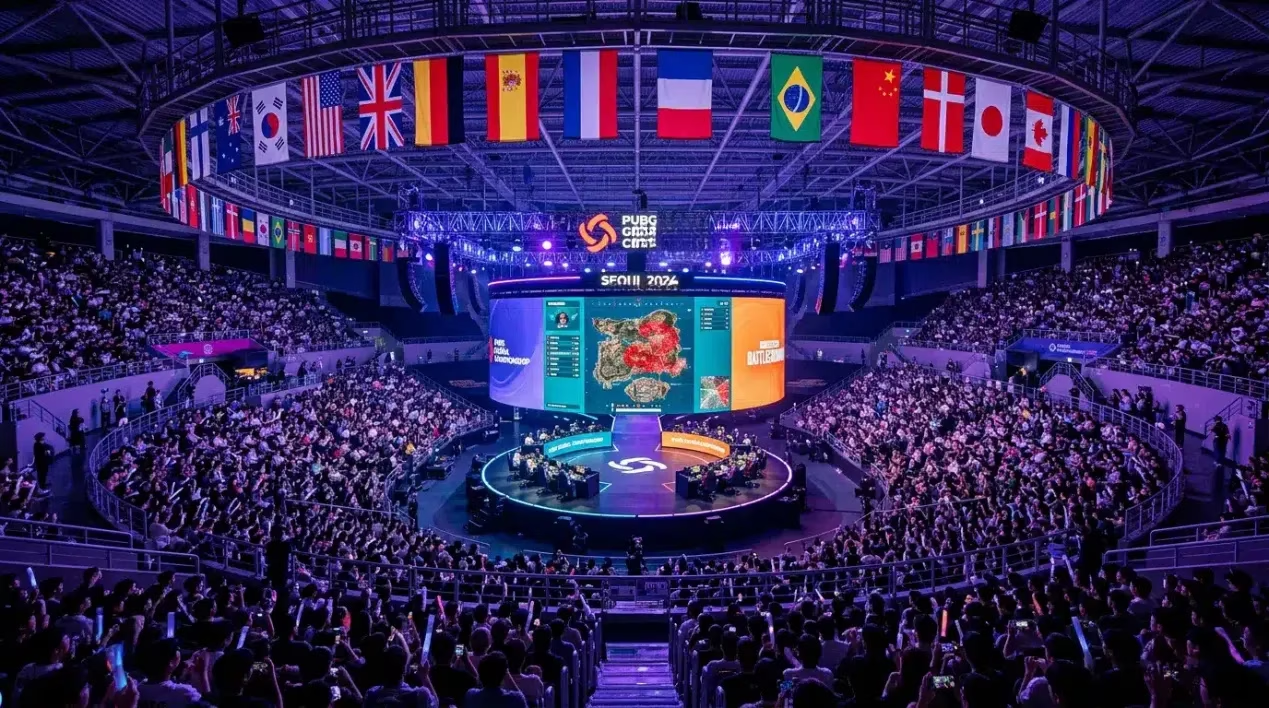
In the quiet hum of competitive ecosystems, selection rules are the bones beneath the skin. They decide whether a tournament lives as a true battle of nations or merely a festival of familiar faces. For PNC 2025, the structure felt almost lyrical: 24 teams, each a constellation of four players and one coach, bound for the Olympic Handball Gymnasium in Seoul. But how those stars were pulled together—that’s where the poetry begins.
EMEA’s nine countries danced to a rhythm set by PEC: Fall 2024 and PEC: Spring 2025. Denmark, Spain, France, Germany, Norway, Poland, Sweden, Türkiye, the United Kingdom—each name a stanza. Over in the Americas, Argentina, Brazil, Canada, and the United States moved to the beat of PAS4 and PAS5. The first three roster spots weren’t whispered in backroom deals but carved from performance data, from those sharp moments when a player held a flank or called a rotation that changed a series. That link back to the live circuit felt like a melody I’d been missing—the reminder that national pride is brightest when it grows directly from the soil of recent competition.
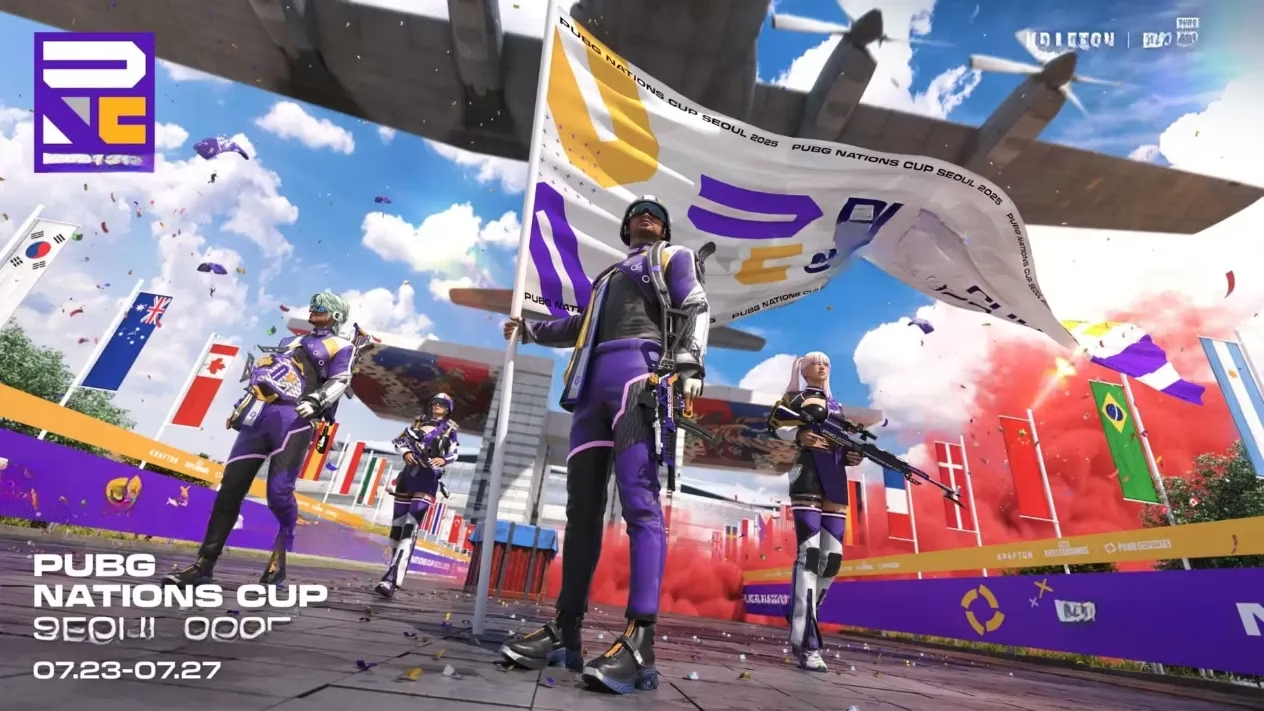
Then came the fourth player and the coach, chosen not by a distant committee but by the first three themselves. Mutual decision. It gave me chills then, and the memory still does now: imagine the hushed conversations, the weight of compatibility versus raw firepower, the need to trust someone with your nation’s hopes when the circle tightens. This wasn’t just a selection; it was a pact.
Yet the most exquisite tension lived inside a single rule: no more than two players from the same organization, unless an exemption was granted. I remember reading that line and feeling the competitive landscape crack open. Countries where a single domestic core had dominated suddenly faced a beautiful problem. How do we build a team, not a lineup? The org restriction was a guardian. It protected the fantasy of the Nations Cup, refusing to let it dissolve into a series of club exhibitions. Every roster decision became a balancing act: performance versus representation, chemistry versus legacy.
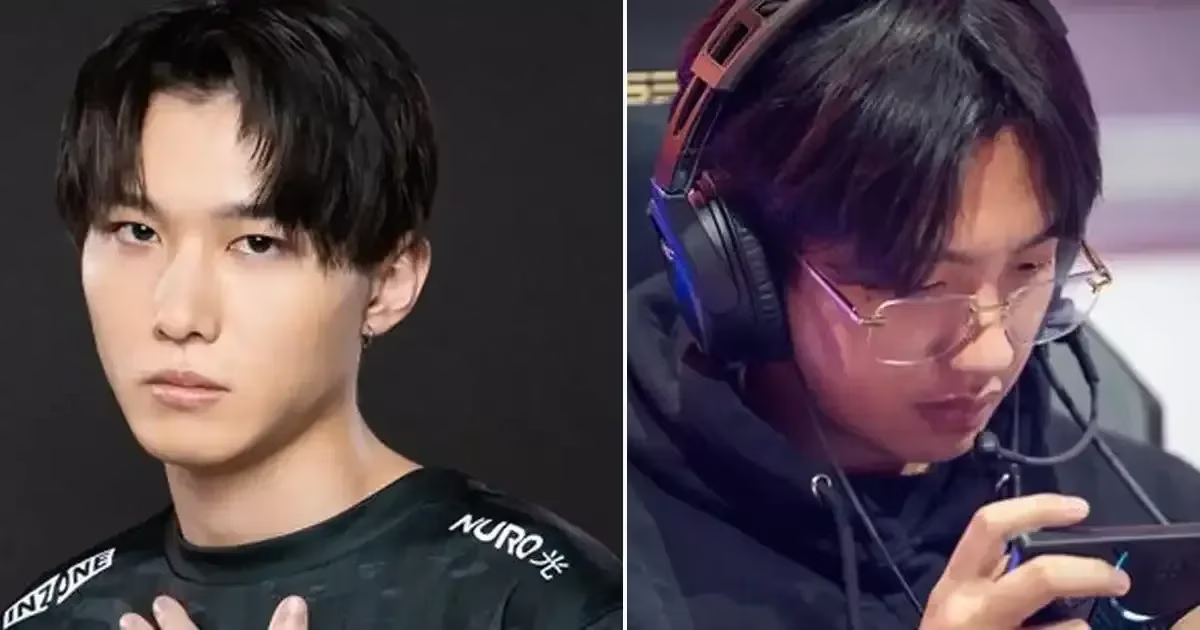
I thought about the pressure on those early qualifiers. The top performers from PEC Spring 2025 and PAS5 weren’t just securing their own tickets; they were inheriting the responsibility of a nation’s unfinished equation. In the days after those tournaments, I imagined group chats buzzing across time zones. Players who’d been rivals in the lobby now had to agree on the final piece of a puzzle. And for countries with clustered talent pools—where three gods from separate orgs could still leave a critical role unfilled—the drama felt almost theatrical.
And Australia, lone star of a different rhythm, carved its own path through PAS results and APAC qualifiers. That separate model reminded me that no nation’s story is the same, and the beauty of this cup rests in those asymmetries.
Table of EMEA & Americas Selection at a Glance:
| Region | Countries | Selection Basis for Spots 1–3 | Spot 4 & Coach | Org Cap |
|---|---|---|---|---|
| EMEA | 9 (Denmark, Spain, France, Germany, Norway, Poland, Sweden, Türkiye, UK) | PEC: Fall 2024 & PEC: Spring 2025 | Mutual decision of first three selected players | Max 2 from same org (exemptions possible) |
| Americas | 4 (Argentina, Brazil, Canada, USA) | PAS4 & PAS5 | Mutual decision of first three selected players | Max 2 from same org (exemptions possible) |
What elevates this from a simple rulebook to something worth feeling is the intention behind it. PUBG Esports was building a cathedral of continuity. They wanted Nations Cup to be less discretionary, more system-led, so that when a fan like me cheers for a player, I’m celebrating a journey through PEC Spring’s chaos or a clutch in PAS5 that still echoes. That connection between regional grind and international glory makes the stakes feel earned.

🎯 Why This Still Matters in 2026:
-
🏛️ System Over Sentiment: The selection rewarded recent regional performance, killing the old fear that national teams were just popularity contests.
-
🧩 Chemistry as Currency: The mutual fourth-player rule turned rosters into conversations, not mandates.
-
🛡️ Org Cap as Identity Shield: By limiting org concentration, the event stayed true to the “Nations” in its name.
-
🌏 Seoul’s Gravity: Returning to one of PUBG’s most iconic homes made it feel like a flagship, not a sideshow.
When I rewatch the highlights now, I see something more than gunplay. I see the invisible threads of that selection process—how the org cap forced creativity, how the fourth-player negotiation either birthed a brotherhood or a fracture. Exemptions, when they were granted, became tiny earthquakes that reshaped entire brackets before the first bullet flew.
Pondering this in 2026, with new tournaments already drawing their own lines, PNC 2025 stands as a template of how competitive integrity can feel poetic. It was a moment where rules didn’t constrain the sport—they defined its soul. And for someone like me, who finds meaning in the quiet machinery that lifts a flag before a crowd, that selection update was never just an announcement. It was a prelude to every heartbeat I’d feel when a nation’s anthem mixed with the roar of a plane over Seoul.
The next checkpoint back then had been the results pipeline from those spring events. But even before the teams landed, the real victory was already written: a structure that made me believe the players wearing my country’s colors were exactly the ones who’d earned it. Simple as that. Beautiful as that.